As we visited Tinker Air Force Base in Oklahoma, it was an honor to be part of a distinguished delegation from Langston University, led by our esteemed President, Ruth Ray Jackson, in May. This visit marked a significant step in our efforts to strengthen the relationship between Langston University and Tinker, fostering collaboration and creating new opportunities for our students and faculty.
In her official role as the new president, President Jackson demonstrated exceptional leadership and vision throughout the visit. Her commitment to expanding our university’s reach and impact was evident as she engaged in meaningful conversations with Tinker’s leadership. The goal was clear: to explore ways in which Langston University and Tinker Air Force Base can work together to enhance educational and career opportunities for our students.
The day was filled with insightful discussions and tours of Tinker’s state-of-the-art facilities. We were impressed by the innovative projects and the advanced technology being developed at the base. This visit showcased Tinker’s commitment to excellence and highlighted the potential for collaboration in areas such as STEM education, research, and workforce development.
As we toured the facilities, we met with several Tinker officials and employees who shared their experiences and insights. Their enthusiasm and willingness to collaborate were inspiring. We discussed potential partnerships, including internship programs, joint research projects, and professional development opportunities for our students and faculty.
This visit to Tinker Air Force Base was more than just a tour; it was a significant milestone in our journey toward creating lasting partnerships that benefit our institutions and the broader community. By strengthening our relationship with Tinker, we are paving the way for our students to access invaluable resources and experiences that will shape their careers and futures.
In closing, I sincerely thank President Ruth Ray Jackson for her leadership. I am excited about the future and the opportunities as we continue to work together with Tinker Air Force Base.
Returning to Oklahoma Baptist University (OBU) as a new business school dean is a momentous occasion. My previous tenure as a business professor at OBU was nothing short of transformational. I felt I profoundly impacted the students, colleagues, staff, and community. My business school colleagues embraced me without any questions. I was family.
Celebrating Terri Walker’s Retirement
That said, I returned to celebrate Terri Walker’s retirement in the academic center, also known as the registrar’s office. I have discovered that the OBU registrar’s office is truly unique. OBU doesn’t know that they have gems. Other places are not as smooth and customer service-oriented. I had to celebrate her. Her husband, Larry, has become one of my best friends. He has always given me positive vibes.
Mentoring Dr. David Gambo
During my visit, I had the opportunity to meet with Dr. David Gambo to celebrate his promotion to associate professor—mentoring matters, even for professors. I had the privilege of mentoring Dr. Gambo and visiting his classrooms. It was a rewarding experience to see him grow and succeed.
Celebrating Graduating Seniors
Beth Houghton: A Beacon of Leadership
Beth Houghton was a communication major; her father, Dr. David Houghton, was former boss, dean and chair. I often joked with David that he ran his daughter out of becoming a marketing major. Both David and I taught the marketing courses, and I also taught management, seeing a variety of students. Beth found herself taking my class. She was a great student in the honors program, but she had never taken a professor like me. I took the business theories and required students to demonstrate their proficiency. Yes, I introduced micro internships into her life.
At first, I could tell that Beth was a little confused in my class. But she did something that 99% of students never do. She came to my office and shared her questions. She always asked questions in class. In my classes, students are organized into teams. Students hate group work, especially top-performing students. You always have slackers. Beth was the team leader, finding herself trying to motivate her slothful teammates. She survived and learned a lot of lessons. She took me to another class and learned to navigate my class and my humor.
Showcase of her micro internship in my class:
I wish we had more self-starters like Beth. We would change the world.
Thomas Meadough: A Rising Star
I also had the opportunity to celebrate Thomas Meadough’s graduation from OBU. It is rare to get the chance to mentor a black male student, especially an athlete. Most of the business school has a significant athlete influence. The majority of black students are athletes in business school. Most athletes do not have time or find value in building relationships with their professors. Thomas was different. I had been his advisor since he came to OBU. His parents reminded me that we met on Zoom during the pandemic. I was pretty candid about the culture but upbeat about the opportunities for him.
Thomas felt more like a son. He was always “Yes, Sir” or “No.” He was super respectful. I tried to be honest with him. He was always candid with me about his professors and his classes. I told him to make it work, to figure it out. He did.
Showcase of his micro internship in my class:
Seeing him graduate and move on to graduate school was a reward. My life at OBU was not in vain. He has a great family and a great support network.
In Closing
Returning to OBU to celebrate these milestones and reconnect with former colleagues and students reminded me of the profound impact of mentorship and education. Beth and Thomas, though different in their paths, exemplify the qualities of determination, resilience, and excellence. Both are dear to me, and their successes reaffirm the importance of investing in our students’ futures. My time at OBU was not just a chapter in my career but a transformative journey that continues to inspire me.
As part of my duties as dean, I am committed to working with the Tulsa community. I must admit that I have a lot to learn. Although I have visited Tulsa several times for activities and events, I have not fully understood its unique culture. As I was told, Oklahoma City and Tulsa have different vibes. This realization has only deepened my resolve to forge strong bonds with the community.
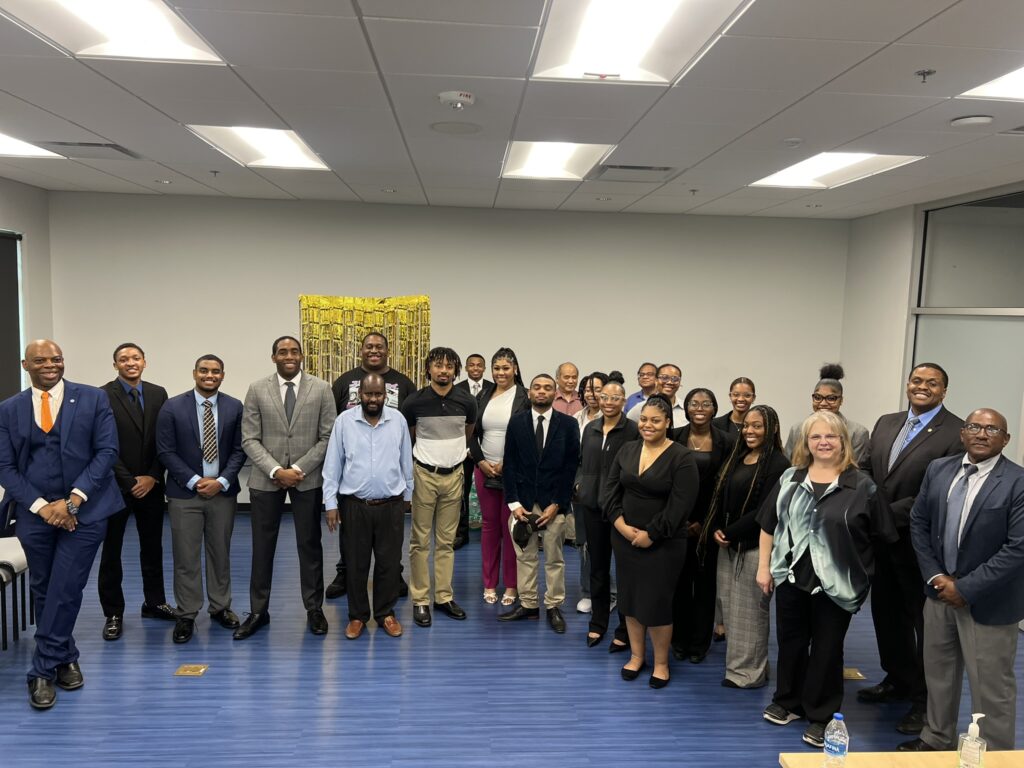
One of my key partnerships has been with Langston University-Tulsa Campus Director Dr. Sherri Smith-Keys. Together, we are working towards strengthening our presence and impact in Tulsa. During one of my visits, I had the opportunity to meet with Ashley Townsend of Chase Tulsa to discuss collaborations. One of our newest initiatives in the fall will be monthly corporate training sessions aimed at helping employers better connect with students on a personal level. Ashley expressed her enthusiasm for participating in this program.
While in Tulsa, I received a message that President Jackson was attending an entrepreneur’s event hosted by HBCUvc. This organization is a Black women-led initiative with five full-time staff, all of whom are HBCU graduates and identify as Black and Latina. I had the pleasure of meeting Cynthia Lopez-Dixon, the Chief Administrative Officer at HBCUvc and Langston graduate, who has been with the organization since its inception in 2017. Cynthia’s work focuses on delivering innovative solutions to operational and administrative challenges, showcasing the entrepreneurial spirit of HBCU graduates. I was honored that President Jackson connected me with such inspiring individuals.
The next day, I spent time with Rose Washington, CEO of TEDC Creative Capital. In 2023, Rose was named among the U.S. Black Chambers, Inc.’s Women of Power “Power 50” honorees. Her dedication to making a difference in the community is truly inspiring. I also met Rue Ramsey, Vice President of Workforce and Talent Strategies. Rue has over 20 years of experience creating initiatives and developing programs to align workforce strategies across various industry sectors better. Her efforts in creating internship programs, college and career fairs, and educator/business roundtables have been instrumental in ensuring that the Tulsa region is well-equipped to supply skilled workers.
Additionally, I had a productive meeting with Shamane “Shay” Glover, Supervisor of Talent Acquisition at OneGas. Shay and I met in person at a career fair several weeks ago at Star Spencer High School in Oklahoma. OneGas provides natural gas distribution services to more than 2 million customers in Oklahoma, Kansas, and Texas. The company comprises three operating entities in Tulsa: Oklahoma Natural Gas, Kansas Gas Service, and Texas Gas Service. Shay and I discussed potential collaborations, and I was excited to learn that she will be conducting one of our monthly corporate meetings.
In Closing
My visit to Tulsa was a great experience, with opportunities to connect with dedicated professionals and learn about the community’s unique needs and strengths. I am committed to being in Tulsa periodically to understand better and engage with the community. Together, we will continue to build bridges, create opportunities, and make a meaningful impact. The journey of connection and collaboration has just begun, and I am excited to see what the future holds for Langston University and the Tulsa community.
After seven successful years at Oklahoma Baptist University (OBU), I felt God’s calling to serve in a new capacity. Many people do not understand my passion and drive for service. As a man from Shreveport, Louisiana, with humble beginnings, I was not supposed to be where I am today. With 27 years in federal service managing nuclear and non-nuclear projects and nearly 20 years in higher education, my journey began as an adjunct professor at Knoxville College, where I volunteered my time.
I am not driven by wealth or fame; my mission is to make a difference in the world. Like Nehemiah in the Bible, I am passionate about helping the Black and other underserved communities. I want to bring hope and solutions. Langston School of Business has provided me with a beautiful opportunity to make an impact.
In my first year as Dean of Langston School of Business, I was blessed to work with eight dedicated faculty members, two administrators, and a host of adjuncts. We made significant strides in various areas:
Accomplishments
Retention Scholarships:
Provided over $16,000 in scholarships to assist 14 students with financial needs, a first for Langston University.
Community Engagement:
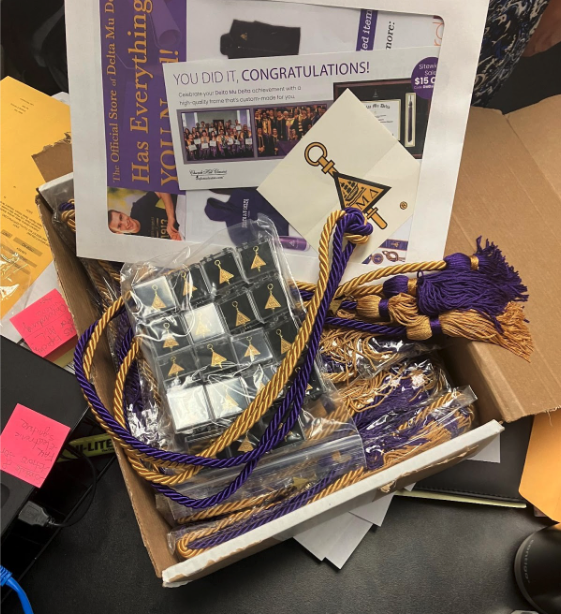
Reestablished the Delta Mu Delta Honor Society, which has been inactive since 2018, and initiated 19 senior students.
Innovative Programs:
Initiated new minors in personal finance entrepreneurship and small business.
Started discussions on an accelerated MBA program and micro-credentials in digital marketing, supply chain management, and entrepreneurial studies.
Faculty Achievements:
Recognized Dr. Michael Hamilton and Dr. Charles Mambula for participating in the “Teaching with Cases” seminar at Harvard Business School.
Numerous faculty publications and community activities.
Student Success:
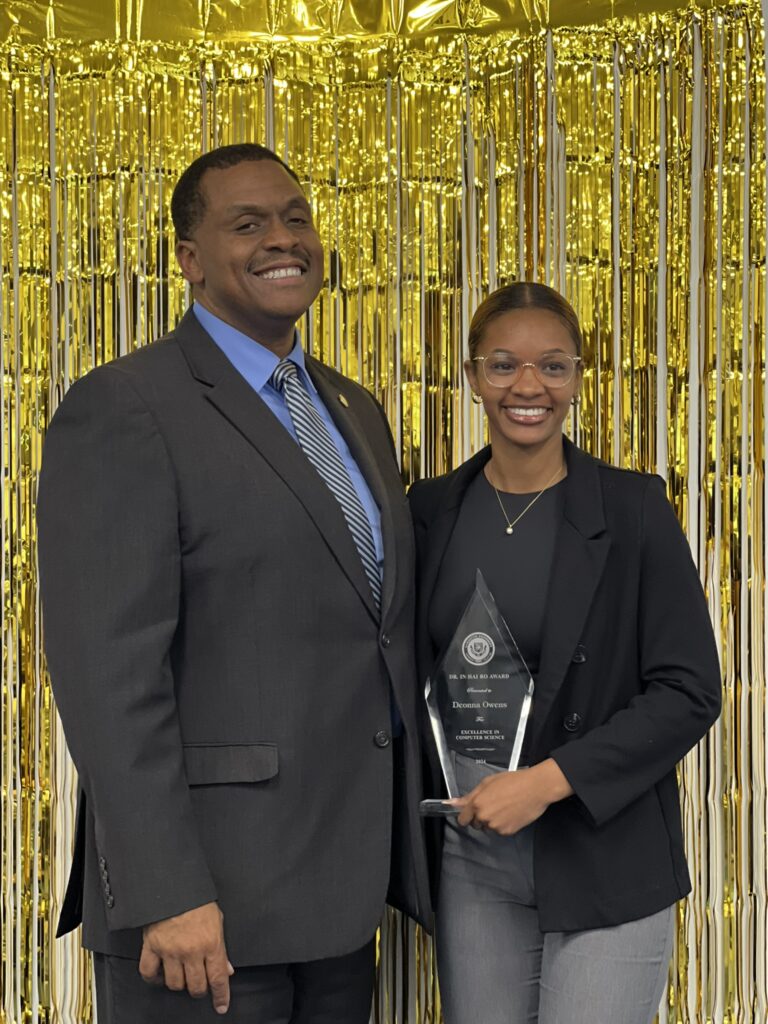
Celebrated the achievements of students like Tayren James, who received a $2,000 scholarship, and Deonna Owens, who was awarded the “Dr. In Hai Ro Award.”
Strategic Actions:
Implemented comprehensive faculty training for CANVAS LMS.
Developed an adjunct faculty pool and enhanced onboarding processes.
THE NEHEMIAH STRATEGY
My dean strategy is inspired by Nehemiah, who said, “When I heard these things, I sat down and wept. For some days I mourned and fasted and prayed before the God of heaven” (Nehemiah 1:4). I am driven by this quote from Erma Bombeck: “When I stand before God at the end of my life, I would hope that I would not have a single bit of talent left, and could say, ‘I used everything you gave me.’”
Langston School of Business is building a stronger coalition for the future, filling the gap left by the absence of a full-time dean. I want to use everything God has given me to create a better future for our community. The past year has been a testament to the power of faith, dedication, and the belief that the impossible is possible.
We will continue to ignite transformational growth, foster entrepreneurial mindsets, and spark social change. I am honored to serve and look forward to even more outstanding achievements in the future.
For a long time, I have eagerly anticipated the opportunity to share this truly transformative experience with you. My time at Langston University was a living testament to the power of faith and the potential for miracles. It was a journey that vividly illustrated that when we believe, anything is possible. I witnessed a miracle unfolding at Langston in the early weeks of February, a moment that will forever be etched in my memory.
My administrative assistant informed me that I had a call. I always try to be responsive, so I answered. On the other end was an enthusiastic person discussing my commentary featured in the Oklahoman newspaper titled, “How do we navigate change in 2024 to retool higher education for greater student success?” Although I was excited about this feature, I did not realize its impact.
The person on the call was not just anyone, but Oklahoma’s new Secretary of Education. She had just been sworn into office in January 2024. Governor Kevin Stitt appointed Nellie Tayloe Sanders the Oklahoma Secretary of Education on January 24, 2024. Nellie Tayloe Sanders, a graduate of Salve Regina University, shares our values and commitment to education. In 2013, she started working for the Center of Family Love, a hospice care center that supports disabled people. In February 2023, Senator Greg Treat appointed her to the Oklahoma Statewide Virtual Charter School Board. She is also the great-granddaughter of Nellie Tayloe Ross, the first woman governor in the United States. Her visit to Langston was not just a professional obligation, but a personal commitment to our shared mission.
Secretary Sanders, deeply impressed with our conversation, made a momentous decision. She chose to make her first visit to an Oklahoma university at Langston in February, a decision that underscored the importance of our institution. The impact of her visit was profound, sparking a wave of innovation and change. Meeting her was an extraordinary experience. She is a compassionate, dedicated individual who is truly committed to enhancing higher education. She brought Torrey Pervey, Star Spencer High School Band Director and an alumnus, along with her, further highlighting the significance of her visit.
We convened in the president’s conference room, where Secretary Sanders shared her transition to higher education. I was humbled to witness President Jackson’s interactions during our opening meeting. Secretary Sanders embraced our culture, proudly showcasing her “L up” pride hand gesture.
Later, I brought Secretary Sanders and Torrey to my office to discuss higher education challenges and innovative opportunities. She engaged with students, met faculty and staff, and was thoroughly immersed in the Langston experience. She dined in the café with students and attended our career fair.
Her visit was a monumental event for Langston. Secretary Sanders enjoyed her visit, and I knew that many were surprised by the feat of bringing the Oklahoma Secretary to our campus. During my first year as a business dean, navigating my inaugural position, this accomplishment is a testament to my faith and belief that the impossible is possible.
This remarkable experience capped off my first semester at Langston University. It’s a reminder of the magic and possibilities that faith can bring. I hope this impossible miracle at Langston will inspire you to reach higher and believe that with determination and faith, anything is achievable.
“Strength and dignity are her clothing, and she laughs at the time to come. She opens her mouth with wisdom, and the teaching of kindness is on her tongue.”
Proverbs 31:25-26
As another Mother’s Day recedes into memory, the echoes of its celebratory spirit linger, reminding us of the women whose profound influences shape our lives beyond measure. Today, I thank and respect a remarkable educator and cherished mother-in-law, Mrs. Lucy P. Andrews. My mother and Mrs. Andrews have been my life’s bedrock of wisdom and guidance. In recognition of their impact, my wife Estraletta and I established an endowed scholarship at Oklahoma Baptist University in their honor, where their portraits inspire future leaders within the walls of the business school.
Mrs. Andrews was an elementary school teacher in Mobile, Alabama, living embodiment of the virtues extolled in Proverbs 31. She was a woman of noble character whose life was a testament to hard work, trustworthiness, and wisdom—known affectionately as ‘Mrs. Lucy’ by some, commanded respect through her presence and approach to education, which has left an indelible mark on my career.
Below are Influential Lessons that I learned from Mrs. Lucy P. Andrews:
Model the Way: True to the Proverbs 31 archetype, Mrs. Andrews exemplified strength and dignity. She taught by example, demonstrating daily that leaders lead with actions.
Define Roles Clearly: She understood the dynamics of respect in the classroom and ensured everyone knew their roles. This clear distinction fostered an environment where respect was cultivated and maintained, allowing for effective teaching and profound learning.
Connect Theory with Practice: Mrs. Andrews believed in the power of practical application. She was adept at introducing concepts followed by hands-on experiences, bridging the gap between theoretical knowledge and real-world application. This method enhanced understanding and ensured that learning was relevant and enduring.
Many are surprised at how seamlessly I transitioned from managing complex projects in the federal sector to innovating teaching methods as a dean at a distinguished institution. I attribute much of this adaptability to the lessons I learned from Mrs. Andrews. Her teaching went beyond the confines of her classroom; it was about preparing her students for the practical challenges of the real world.
Mrs. Andrews’ approach to education and life was revolutionary. She taught us that wisdom isn’t just acquired but lived and practiced. Reflecting on her legacy, I am reminded of the influential impact educators like her have on their students and all those fortunate enough to learn from them.
Today, as we remember and honor such influential figures, let us strive to apply their lessons in our lives, perpetuating a legacy of practical wisdom that transcends generations. Mrs. Lucy P. Andrews’ teachings inspire and guide me, and I am eternally grateful.
At the new business school at Langston University, Dr. Green aspires to build a culture of innovation by partnering with strategic partners.
Introduction: The Rosie Lesson and the Future of Education
In my early career at the Department of Energy (DOE), I oversaw the development of an advanced robot named Rosie. This cutting-edge technology was designed for decontamination and decommissioning in radioactive facilities, aiming to minimize human risk. The project, driven by some of the brightest researchers, seemed promising. However, upon completion, we realized that Rosie had been developed in isolation without consulting the end users. The absence of customer buy-in rendered this innovative technology virtually unused—a considerable waste of taxpayer dollars. This experience taught me a critical lesson: the importance of engaging stakeholders early and often to ensure successful outcomes.
The Graduation Surge and Rising Questions
As the class of 2035 dons their caps and gowns, a critical question looms: Are our institutions indeed preparing these graduates for the AI-driven future that awaits them? With rapid advancements in technology and artificial intelligence, the employment landscape is evolving at an unprecedented rate. Graduates and employers alike face new challenges and opportunities. But are we ready for what’s to come? In the United States, approximately 3.7 million students are graduating from colleges and universities this May, joining the workforce with hopes and dreams of meaningful employment. However, many graduating seniors are left wondering if their education has equipped them for the realities of the job market. Employers are actively searching for fresh talent, but a significant gap exists between the skills these graduates possess and the competencies required by the modern workforce.
Dr. Green researches how to better prepare students for the ‘Future of Work.’
A 2021 report by McGraw-Hill Education revealed that only four in ten college students feel prepared for their future careers. Furthermore, the National Association of Colleges and Employers (NACE) identified eight core competencies essential for career readiness, yet many students are unaware of these expectations. The Job Outlook Survey highlighted that 89.4% of students rated themselves proficient in professionalism, while only 42.5% of employers agreed. This stark contrast underscores a critical issue in higher education: the misalignment between academic preparation and employer needs.
While teaching at Oklahoma Baptist University, Dr. Green revolutionized how to better prepare students for employment through micro internship arrangements with local small businesses. College students Morgan Martin and Kailee McCrary assisted Chris Bannon with his emerging photography business.
Navigating the Educational Gap with Key Solutions
To address these pressing challenges, we must first understand the current landscape. The job market increasingly demands advanced technical skills, adaptability, and real-world experience. According to Cengage’s Graduate Employability Report, nearly one-fifth of recent graduates felt their college education did not provide the necessary skills for their first job, and half refrained from applying to entry-level positions due to a lack of confidence in their qualifications. On the other hand, employers are eager to integrate AI and other technologies into their operations but struggle to find adequately prepared graduates.
How can we bridge this gap and ensure our graduates are ready for 2035 and beyond? Here are some critical solutions:
Engage Employers Early and Often: Institutions must actively involve industry partners in curriculum design to ensure that the skills taught are directly relevant to current and future job markets. Regular feedback from employers can help tailor educational programs to meet market demands.
Provide Real-World Experience:Practical experiences like internships and project-based learning are crucial. These opportunities allow students to apply theoretical knowledge in real-world settings, enhancing their employability and readiness for the workforce.
Focus on Core Competencies:Academic institutions should prioritize the development of NACE’s identified competencies, including career management, teamwork, communication, critical thinking, equity, professionalism, leadership, and technology.
Adapt to Technological Advancements:The rapid pace of AI and technological innovation requires a flexible and responsive educational approach. Institutions should continuously update their programs to incorporate the latest advancements and industry trends.
Promote Student-Centered Teaching:Shift the focus from traditional subject-centered teaching to a more student-centered approach. This includes creating engaging classroom environments that foster participation and practical application of skills.
Utilize Micro-Internships: Implement short-term, project-based internships that connect students with local businesses. This provides valuable experience and strengthens ties between academia and industry.
Engage Industry Experts: Involve professionals from various fields as mentors, visiting professors, and guest speakers. Their insights can help bridge the gap between academic learning and industry expectations.
Conclusion: The Rosie Reminder and the Road Ahead
As we look toward 2035, the imperative for higher education is clear: We must innovate and adapt to prepare our graduates for an AI-driven future. The story of Rosie serves as a stark reminder of what happens when innovation is pursued in a vacuum. Just as Rosie was rendered ineffective without user engagement, our educational institutions risk failing our students if we do not align our programs with the job market’s needs. Let’s not wait until it’s too late to make these critical changes. Our graduates’ futures—and the future of our workforce—depend on it. Let’s hope it is not too late.
“Lord, it is another Mother’s Day. Thank you to my mother. As I reflect on the elevation in my life as a leader, let me never forget the lessons from my mother that shaped me during my upbringing in Shreveport, Louisiana. Amen!”
Dr. Daryl. D. Green
Today, as I exchanged texts with my sister (Mary Evans), the only remaining member of our immediate family, I am reminded of our mother’s profound influence. My mother, Annette Green Elias, was a pillar of strength and a beacon of wisdom. On this Mother’s Day, I wish to honor her memory by sharing the leadership lessons she imparted, lessons that have been the cornerstone of my personal and professional life.
Critical Lessons of Leadership from My Mother:
Lesson
Description
Trust God
Life is full of challenges. My mother faced many, often with tears in her eyes, yet always thanked God for her strength.
Be a Leader, Not a Follower
As the youth director at First Baptist Church of Cedar Grove, she instilled in us the importance of leading, especially when it was most challenging.
Stand Your Ground
Growing up where confrontations were common, she taught us to defend our beliefs courageously.
Tell the Truth
Honesty was non-negotiable. The truth might be inconvenient, but lies catch up with you sooner or later.
Do Your Best
Whether it was digging ditches or anything more complex, she believed in doing everything to the best of her ability, a lesson in excellence from both of my parents.
Dress to Impress
My mother was a fashion icon at our church and strongly believed in presenting oneself with dignity. This respect for personal appearance became my professional mantra, symbolizing respect and readiness.
Be Resilient in the Face of Hardship
At 79, my mother faced a potentially debilitating health crisis but found the strength to persevere and walk into her 80th birthday party. Her resilience taught me to persist when faced with seemingly insurmountable challenges.
These lessons are more than mere words; they reflect a life of purpose. My dad, Edward Elias, was definitely the man of our home. Yet, my mother was not only a leader at home and in church but in every aspect of her life, demonstrating what it means to live with integrity, courage, and dedication.
Today, I urge all my readers to remember that our upbringing shapes us as leaders. In a world that often forgets its roots, I stand proud of mine—a testament to a remarkable woman whose lessons continue to guide me. Let us honor our mothers on Mother’s Day and every day by living the values they have instilled in us.
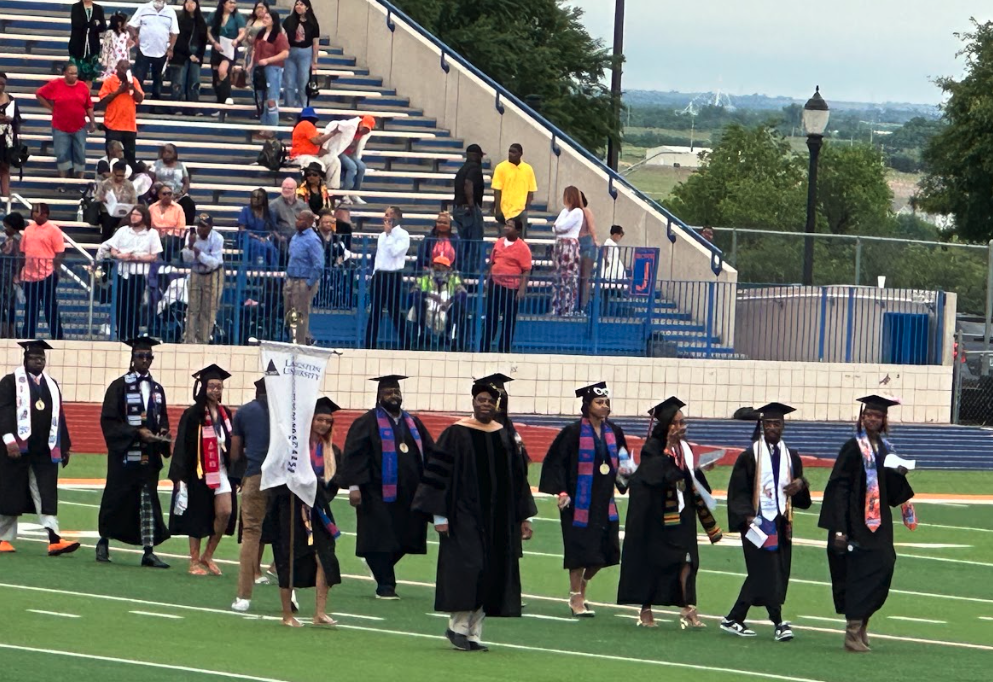
This past Saturday, under the looming threat of cloudy skies, Langston University proudly hosted its 124th Commencement Ceremony at the W.E. Anderson Stadium. As we gathered to celebrate the graduation of hundreds of students—many of whom are the first in their families to earn a college degree—the air was charged with a sense of accomplishment and hopeful anticipation.
Reflecting on W.E.B. Du Bois’s concept of the “Talented Tenth” and the transformative impact of the Emancipation Proclamation, I am struck by the profound journey of progress and liberation that has led to this day. What would my ancestors think seeing me in this role, ushering in the next generation of leaders? At Langston, an institution steeped in the rich legacy of HBCUs, we don’t just confer degrees; we ignite hope and champion the potential of every student.
As I sat with our graduates, sharing their joy and excitement, I felt an overwhelming sense of pride and humility. Unlike at many institutions, where deans and faculty may be distanced from the students during such ceremonies, we experience these pivotal moments alongside our graduates at Langston. Feeling their emotions and witnessing their triumphs up close, I am reminded of my journey—the first in my immediate family to graduate college—and the proud tears my mother, Annette Green Elias, would have shed seeing where life has brought us.
This graduation was not just a formal event but a personal celebration of each student’s unique journey and a communal affirmation of our continued commitment to education and empowerment. It reminded us of how far we’ve come and how far we can go when we support and believe in one another.
As I conclude my first semester as Dean of the Business School, I am honored to have been a part of this celebration and to contribute to the legacy of Langston University. Here, we are more than a school; we are a community that uplifts, educates, and inspires.
As the spring semester draws to a close and we approach the graduation milestone, I reflect on our shared journey. This last week has been a whirlwind of activities, filled with final preparations and heartfelt farewells to our graduating seniors.
Reviewing the graduation list to ensure all seniors met their requirements was a formidable task yet made smoother thanks to the incredible support of our dedicated staff. Their commitment helped guide our students across the finish line, and I am immensely grateful.
During the mandatory rehearsal on Friday, I had the privilege of standing with our soon-to-be graduates, half of whom I’ve enjoyed getting to know through classroom visits, casual encounters in the cafe, and their curiosity about the new dean. The other half, those I hadn’t yet met, surprised me with their warmth and enthusiasm as we shared laughs, making me wonder why our paths hadn’t crossed sooner.
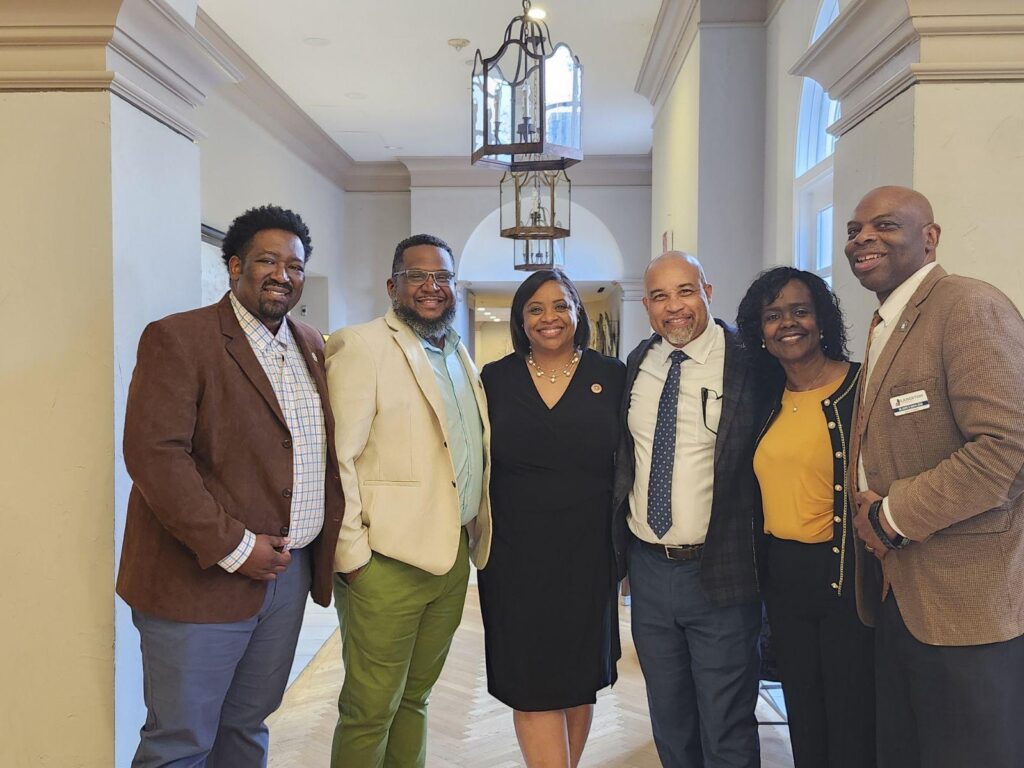
The week’s highlight came Friday night at the first official reception for Langston’s new President, Dr. Ruth Ray Jackson. It was a gathering of Langston’s finest, from leaders and legends like Foundation Chair Darrell Jefflo and Mr. Sherman Lewis to distinguished guests like Congressman Alma Adams from North Carolina. As a Southern University alumnus, reconnecting with fellow alums at this prestigious event was also a special treat.
This reception wasn’t just a formal event; it was a vivid demonstration of the love and commitment that the Langston community holds for this great university. Surrounded by Langston alums, I felt a deep sense of pride and belonging.