
We have reason to worry and be anxious about 2017. The United States citizens have just gone through one of the most bitter presidential elections of modern times. In fact, Hilary Clinton and Donald Trump had the highest unfavorable ratings in history. Most people were not discussing the candidate with the best vision, but ‘choosing the lesser of two evils.’
With Donald Trump taking the office of president as a Republican and both a Republican-controlled Senate and House of Representatives, there is still much uncertainty due to Trump’s fuzzy economic strategy and the will of elected officials to get things accomplished despite partisan politics.[1] The world is filled with risk and danger. Terrorism continues to ‘shock and awe’ at the destruction aimed at human life. Globalization combines countries together against their will.
Russian hackers attempt to influence our presidential elections. The dollar hits a 14-year high against 16 major trading partners; a sharp increase in the dollar has long-term consequences globally. For example, China fears that a rising dollar will destabilize their currency. Other countries worry about their own economic feat in 2017. Do you know what the future holds in 2017 for you? Are you now dreading the upcoming year with more demands on your own personal dreams and ambitions?
(more…)
Category: Leadership Development
-

Do You Know What the Future Holds? 2017 & Beyond
-

The Power of Gratitude for Professionals

I watched people get on and off the elevator at work. It was crowded with working professionals. Being a young employee, I and the janitor were strategically located in the back of the elevator. I greeted the janitor since I routinely would speak to all employees, regardless of their pecking order in the organization. Other professionals ignored this janitor in the elevator as if his existence didn’t matter. When the janitor or other service folks would do something for me, I would say ‘thank you.’ Well, I’ve done this act of gratitude as part of my learning from my parents who were hardworking class people. My mother would tell us (children): “You can’t go wrong doing good for others.” I believed her.
Yet, we live in a selfish world where the needs for themselves supersede the needs of others, with gratitude and thanks being a rare commodity in today’s working culture. When I talk with my college students, I attempt to show them how the little things like ‘thank you’ cards to guest speakers in class is more than a cute idea. For me, gratitude is a connection with humanity. Gratitude shows that you care. In fact, those individuals that master this act of kindness will have a competitor advantage over those who do not practice this virtue. Let’s examine the concept of gratitude for today’s working professionals in society.Professionals must overcome a world of selfishness in order to appreciate gratitude. Employees face a gloomy landscape before them with global competition reducing their standard of life and wages stagnant. People aren’t feeling thankful and grateful to be moving backward to the standard of living that their own parents had. Statistics support this ingratitude emerging before us. According to a 2014 Conference Board Job Satisfaction survey, the majority (52%) of US workers are not satisfied with their jobs. In 2010, worker dissatisfaction was at an all-time low of 43%.

Marketing students (MKTG 3303) take photo with Enterprise Manager Jackie Lovejoy. The students thanked her. Columnist Susan Adams has been tracking this unhappiness trend: “What worries workers most: layoffs. Even though hiring has picked up, only 46.6% of employees say they feel satisfied with their job security, compared to 48.5% before the recession.” Working professionals have many stressors to consider including layoffs, family issues, health care cost, career advancements, and wage compensation. How in the world can gratitude be at the top of their list for developing?
Gratitude is an invaluable trait in a world built of self-promotion and personal gratification. President John F. Kennedy said, “As we express our gratitude, we must never forget that the highest appreciation is not to utter words, but to live by them.” Management expert Brian Tracy further expounded on this concept of gratitude: “Develop an attitude of gratitude, and give thanks for everything that happens to you, knowing that every step forward is a step towards achieving something bigger and better than your current situation.”
Gratitude can be defined as ‘the quality of being thankful; readiness to show appreciation for and to return kindness.” Some people will argue that gratitude is rooted in biblical truths and communal relationships in society. From a faith perspective, gratitude is not taking. It is about giving to others despite how others have treated you.
II Corinthians 9:11 reads “You will be enriched in every way so that you can be generous on every occasion, and through us your generosity will result in thanksgiving to God.” Even if you don’t possess a religious bone in your body, showing individuals appreciation who do good for you can’t be foreign. Yet, the concept of gratitude is difficult to implement in the face of trials and tribulations in life. If people are able to look at others who are in a worse situation and appreciate the fact that they are better off, it is possible for gratitude to grow in people. Given the fact that gratitude is connected to relationships, words like gratitude, giving, and thanks are themes of helping and appreciating others in life.
Unfortunately, developing gratitude in working professionals is a difficult task. Many organizations are built on power structures that reward takers and those individuals who are great at putting situations at their own advantage. Most of who are only vaguely interested in recognizing or thanking others if doing these actions will benefit them professionally.
Some business-oriented individuals may argue that this gratitude characteristic is a weakness in a corporate rat race and that takers are at the advantage. In contrast, Dr. Adam Grant, author of Give and Take: Why Helping Others Drive Our Success, explains the different mentality of givers and takers in the workforce: “Takers have distinctive signature: they like to get more than they give. They tilt reciprocity in their own favor, putting their own interest ahead of other’s needs…If you are a giver, you might use a different cost-benefit analysis; you help whenever the benefits to others exceed personal cost.”
Dr. Grant’s research further demonstrated that givers are more successful in the long-run. Helping others provide leverage and influence in life. Givers are better at giving than takers because of their genuineness in striving to be generous in their time, energy, skills, knowledge, and connections to benefit others. How do I grow my gratitude in my life? That’s a great question to consider.
Unless it’s Thanksgiving or a special occasion, most professionals will not consider the merits of gratitude in helping them in life. This article demonstrated that employees are unhappy in the workplace and face many hardships in life that causes them to look inside themselves instead of helping others. Gratitude is a soft skill that has a positive effect on others.
Even celebrities like Marilyn Monroe realized the importance of gratitude: “When you have a good friend that really cares for you and tries to stick in there with you, you treat them like nothing. Learn to be a good friend because one day you’re gonna look up and say I lost a good friend…Always remember to smile and look up at what you got in life.” Life is a like a blade of grass that passes with time. Gratitude is something that you can use for a lifetime. Don’t wait until it’s too late.
© 2016 by Daryl D. Green -

Humility in Leadership: The MIT Principle
I just sat and listened. Bob, the director, talks about how the universities wanted to give back to the society. In fact, this prestigious university opened its doors to young engineering students who were a part of the National Society of Black Engineers (NSBE). Faculty and staff were all communicating that the impossible was possible. The place was the highly regarded Massachusetts Institute of Technology (MIT) Lincoln Laboratory. Everyone goes by their first names, doctorate or not. Egos are checked at the door (well everyone is brilliant).
One MIT staff member explains this reality, “Everyone here is smart.” If someone comes in cocky, there is someone who is smarter than him in another area. That keeps people ‘in check’. I was a little stunned. I had imagined an MIT culture where innovative mavericks were left to their own devices independent of others to produce incredible solutions for society. Yet, sharing, service, and working together appeared to carry a lot of weigh on campus.
Many people feel that leadership is about being the brightest and sharpest ‘cat on the block.’ At times, I have worked with some of the most brilliant people in the world, having federal oversight of two national laboratories in my career. This article examines the concepts of humility in today’s leaders. Additionally, the MIT Principle is developed so that all leaders understand that even high achievers need a sense of humility to work in high performing organization.
Even brilliant students at MIT need humility in order to be successful on campus. The MIT Principle, as I dubbed, can be an important lesson to learn. Massachusetts Institute of Technology (MIT) is a special place filled with innovators and overachievers. MIT is a private institution which was founded in 1861.1 In 2016, MIT was ranked 7th best university in the nation in the 2016 edition of Best Colleges is National Universities.
The school’s mascot is a beaver, which MIT chose because of its “remarkable engineering and mechanical skill and its habits of industry.” High achievers from across the nation flock to MIT to gain great tutorage in their disciplines and make their market on society with their ‘geniusness.’ MIT boasts in highly regarded programs in engineering, management, and sciences. Additionally, research expenditures generally exceed $650 million each year. 2
In MIT culture, students are expected to be leaders in their respective fields and problem solvers with new novel ideas. Yet, collaboration is a high principle at MIT. In fact, sharing and service are part of this culture. Students, faculty, and support institutions are expected to work together for a common good. Given this scenario, each student must find a valuable contribution that he/she can make to the student project, teams, and industry collaborations. Even the most brilliant individual at MIT must apply some humility in being successful because they must submit to the good of the organization instead of their own selfish ambitions. The MIT Principle states that in order to achieve overall success for the organization or team, individuals at some point will have to sacrifice their own personal goals for the organization.Dr. Green’s Visit to MIT (Animoto video) – Click Here
Humility is a character trait that will serve leaders well in a knowledge-based economy. Humility can be defined as ‘a modest or low view of one’s own importance.’ When one thinks about humility, one of the first adjectives that come to mind is humble or humbleness. Some ideas come to mind about a humble individual; not proud or arrogant. If you are a sport fan, you have probably seen star athletes that ‘show boat’ and bring attention to themselves that they are great.
Certainly, some of the greatest like Muhammad Ali used this attitude to build his own confidence. Ali noted, “At home I am a nice guy; but I don’t want the world to know. Humble people, I’ve found, don’t get very far.” Humility often requires a person to defer or submit to other people.
Jonathan Edwards, a Puritan theologian in the 18th century, examined the matter of humility in human existence; he defined a humble man as one who is sensitive to his natural distance from God.3 Thus, man has a dependency on God that shows humans their insufficiency of their own wisdom and power. Edwards explained: “Some persons are always ready to level those above them down to themselves, while they are never willing to level those below them up to their own position. But he that is under the influence of true humility will avoid both these extremes.
On the one hand, he will be willing that all should rise just so far as their diligence and worth of character entitled to them; and on the other hand, he will be willing that his superiors should be known and acknowledged in their place, and have rendered to them all the honors that are due to them.” Leaders are no exception. Leadership guru, John Maxwell notes, “A good leader is a person who takes a little more than his share of the blame and a little less than his share of the credit.” The following are ways that leaders can cultivate a humble spirit:
* Have a faith that supersedes your wisdom.
* Learn lessons from each defeat, dejection, and heartache in which you have no control and are forced to humility.
* Respect others regardless of their position and title in your organization.
* Seek wise counsel from folks you trust and who have an interest in your success.
* Learn how to listen to others.
As organizations research ways to be more effective and productive, leaders explore how they can navigate uncertainty. Leaders can start by applying some humility in the manner that they relate to their employees, managers, and other stakeholders. Like MIT, individuals often need to control their own personal ambitions in light of the organization. If organizations are willing and capable to infuse their organizations with a good sense of humility, they will be infusing their organizations with a healthy trait that will serve them well in the current climate of uncertainty. I pray that it’s not too late for them!
© 2016 by Daryl D. Green
Sources
“Massachusetts Institute of Technology” by Colleges.usnews.rankingsandreviews.com
“Jonathan Edwards” by Theopedia.com
-

Being An Authentic Leader

When I was sitting in my Sunday lecture, my teacher brought home what it meant to be hypocritical when discussing Jesus’ interaction with the leaders of his time, The Pharisees. Jesus openly criticized their actions to his followers in Matthew 23:2: “Therefore, whatever they [Pharisees] tell you to observe, that observe and do, but do not do their works. For they speak, but do nothing.4 They fasten heavy loads that are hard to carry and lay them on men’s shoulders, but they themselves will not move them with their finger.”
Sadly, many workers face some less than genuine managers that fail to inspire them for greater performance. In this blog discussion, we will explore the the concept of authentic leadership in today’s society.
Competition is fierce across the globe. Managers are often forced to act genuine with their employees because financial circumstances force them to behave in ways that are in the best interest of shareholders and investors, not their employees. Yet, organizations need talented and inspired employees who go beyond the basic requirements to excellence. Yet, employees are reluctant to give this type of performance to self-serving leaders who do not care about them.
Forbes contributing writer Victor Lipman, in his article “The Foundational Importance of Trust in Management,” notes the alarming levels of distrust among workers. According to a Gallup survey, 70% of workers are disengaged in the organization.[1] Lipman found several contributing factors to this problem, which were: disingenuous communication, lack of modeling behavior, and financial pressure. Lipman explains, “As a manager myself, I recognized it was critical for my employees to trust me if I expected them to be fully productive on my watch.” With trust on the downturn with numerous layoffs and higher unemployment, managers must be sincere and genuine with their workforce if they want a different type of performance.Organizations must foster authentic leadership in today’s environment. Leadership denotes the ability to influence others. When the adjective of authentic is modified on the word, something special emerges. The adjective authentic conveys “something that is real or genuine and not counterfeit.” In the case of the Pharisees, they were influencers of their followers. However, the reality of the matter was that their type of leadership was not genuine or sincere. Authentic leadership defines the leader’s ability to have honest relationships with followers through transparent relationships. In this mode, the leader may leave himself/herself vulnerable to others.
Bill George, author of Authentic Leadership, describes authentic leadership as ‘a leadership style that is consistent with a leader’s personality and core values, and that is honest, ethical and practical.’[2] Dr. Richard Daft, author of Management, further outlines the following key characteristics of authentic leadership: (a) Authentic leaders pursue their purpose with passion; (b) Authentic leaders practice solid values; (c) Authentic leaders lead with their hearts as well as their heads; (d) Authentic leaders establish connected relationships; and Authentic leaders demonstrate self-discipline.[3] With these traits, authentic leadership would be synonymous with an unselfish leadership approach.
In closing, today’s workers want managers who can inspire them for higher performance. However, workers are not looking for managers who are not genuine in their relationships with them. By utilizing authentic leadership in their organizations, managers will be better able to build these types of positive relationships with workers. Start today!
Please explain the concept of authentic leadership from your professional or personal experience.
© 2016 by Daryl D. Green
[1] “The Foundational importance of Trust in Management” by Victor Lipman
[2] Authentic Leadership by Bill George
[3] Management by Richard Daft
-

Grit in Effective Leadership

As the U.S. presidential election goes into full swing following both major conventions, voters will be considering which candidate will serve best as the nation’s leader. This decision is not an easy one, as both Donald Trump and Hillary Clinton have some of the worst favorability ratings in history. Ideally, voters should be thinking about candidates’ character traits, but most will prioritize self-interest and vote based on their pocketbooks. Media pundits will analyze every insignificant point as if it is…well, significant. In the face of global terrorism and financial uncertainty, what character trait genuinely sets a successful leader apart? Problems will arise. Trouble will come, and leaders who possess intrinsic drive will have the highest chance of overcoming obstacles and external factors in their environment. We will examines the nature of grit for leaders caught in today’s chaotic world.
Effective leaders have a special quality called “grit,” which refers to a drive to overcome all sorts of hurdles. People define grit in various ways: according to Gostrengths.com, grit is “a personality trait possessed by individuals who demonstrate passion and perseverance toward a goal despite being confronted by significant obstacles and distractions.” Along similar lines, blogger AJ Julian wrote an article on grit in education in which he shared an outstanding acronym: Guts, Resilience, Integrity, Tenacity.[1]
(more…) -

Living Purposefully – Special Tribute to Coach Pat Head Summitt
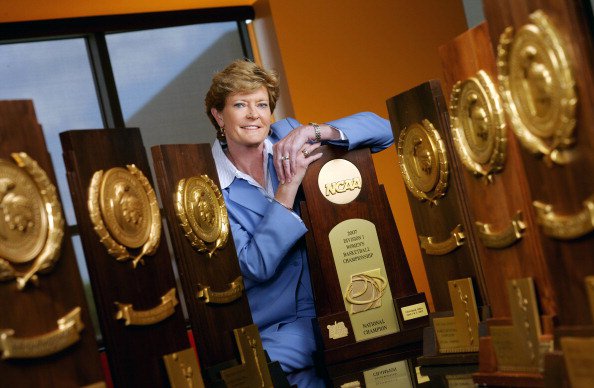
Amidst turmoil across the world, there is still good among us. Living in Tennessee, I had the opportunity to witness the exemplary character of Coach Pat Head Summitt, former head coach of University of Tennessee Lady Vols. I would like to pay my own tribute to this special leader in our community. Most people affectionately called her ‘Coach Pat.’
Coach Summitt lived a life of purpose from a humble beginning. Her success in life was incredible: Coach Summitt achieved 1,098 career wins, the most in NCAA basketball history. She won 8 NCCA championships – and the Lady Vols never missed an NCAA tournament under Coach Summitt.[1] In one NCAA tournament, Summitt posted a 112-23 record, achieving a Division I record with the 112 wins. Additionally, she won two Olympic medals: one as a coach and one as a player, alongside numerous awards, including the Presidential Medal of Freedom and the Arthur Ashe Courage Award. [2] (more…) -

Executive Presence—Guest Blogger
EXECUTIVE PRESENCE—YOUR LEADERSHIP “IT” FACTOR
George Washington had it.
As did Lincoln.
Vince Lombardi too.
So also have countless leaders over the centuries.
It’s the elusive secret of successful leadership: leaders with presence radiate a magnetic effect that comes from being authentic and inspires people to trust them. (more…) -

Authentic Leadership in a Global Environment

Today’s employees expect managers to model corporate values. Sadly, some managers do not take this invisible code seriously. Hypocrisy is the rule of the day. When I was sitting in my Sunday lecture, the instructor brought home what it meant to be hypocritical when discussing Jesus’ interaction with the leaders of his time, The Pharisees. Jesus openly criticized their actions to his followers in Matthew 23:2: “Therefore, whatever they [Pharisees] tell you to observe, that observe and do, but do not do their works. For they speak, but do nothing. They fasten heavy loads that are hard to carry and lay them on men’s shoulders, but they themselves will not move them with their finger.” Sadly, many workers face some less than genuine managers that fail to inspire them for greater performance. In this post, we will examine the concept of authentic leadership in today’s society. (more…)
-

The Great Global Talent Search: Retooling for Greater Employability
 I watch and listen. Industry leader Yasir Abulrahman was sharing with my undergraduate class an overview of cross-cultural interests as they related to operating a business in the Middle East. Yasir, who has Middle Eastern roots himself, explained how some U.S. managers went abroad on work assignments without understanding cultural sensitivity.
Sadly, these managers underestimated the problems associated with continental differences. Yet, most companies cannot afford to make these international debacles. Can you? This article examines how individuals can position themselves with greater employability by acquiring the necessary global competencies for the future. (more…) -

Better Decision Making for a Better Life

Have you ever wondered why some people continue to make bad decisions? You see million-dollar celebrities doing it. You can see this action in government officials and business leaders. There are no discriminators. From the very rich to the poorest of the poor, we see people caught in a vicious cycle of bad decision making. Sadly, we see it much closer than that. We witness relatives making those bad decisions. Despite all the wise counsel, the poor decisions continue.
Why is it important to teach people how to make better decisions? Anthony Robbins, author of Awakening the Giant Within, attributes good decision-making as a key attribute to a happy life. Bestselling author Brian Tracy argues, “The further you think into the future, the better decisions you will make in the present to assure that future becomes a reality.” Making better decisions improves the quality of one’s life.
https://www.youtube.com/watch?v=Cpc-t-Uwv1I
As a young advisor and college professor, I constantly hear students proclaim, “I’m grown.” This statement implies I don’t have to listen to anyone. I know best. Therefore, I can make my own decisions. Through series after series of bad decisions, the youth continues on merry ride of worsening consequences. Two things generally can stop this dead-end trap.
One lies in becoming more mature with age, and the other is experience. In going through a series of bad decisions, a wise person gains insight on the consequences of a bad decision. Every person, regardless of their background or social standing, can benefit from good decision-making techniques. Here are some methods to use: (a) define the problem or issues, (b) conduct research on the matter, (c) discuss with respected individuals with similar circumstances, (d) consider at least two alternatives, (e) select best decisions, based on your value system, and (f) move on and accept any consequences.
Making the right decision is a difficult process. No one will usually applaud your many good decisions; however, you will probably catch heat over the bad ones. Les Brown, author of How to Become the Person You Always Wanted to Be-No Matter What the Obstacle, explains, “Your values are not set by government or church leaders. Your values give you consistency in the way you approach life…By holding to your beliefs, you can always stay on track toward your dreams.” By making better decisions, individuals can look forward to a better quality of live.
© 2014 by Daryl D. Green
