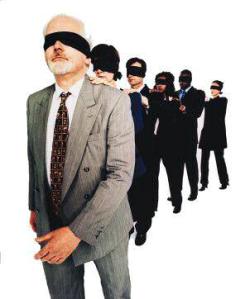
Who wants to work with shallow people? Most people want to interact with individuals who have a solid core of values. In fact, can you imagine being in an intimate relationship with a superficial individual. It’s not a good thought.
You like that person, but the superficial nature of that person is a barrier to any genuine relationship. This situation is a case where actions speak louder than words. You see them saying the right words and attempting to do the right things.
However, sooner or later, their superficial disposition comes out, and you can’t believe they are that way. If you were honest with yourself, you knew that person was pretty hollow in the beginning, but you didn’t want to accept it.
First, there are no physical characteristics that can identify a superficial person. In many organizations, teamwork is the way to accomplish my tasks. Richard Daft, author of Management, notes the connectedness of teams: “When people become part of a team, their success depends on the team’s success; therefore, they must depend on how well other people perform, not just on their own individual initiative and actions.”[1]
Consequently, the best leaders want the right folks on their teams. Clearly, shallow people come in all shapes and sizes. They have varying backgrounds. They live in every community. However, these people all have a common characteristic: They are externally-driven. This article explores the dynamics of building relationships and the nature of superficial people.
When an individual understands the nature of genuine relationships, they will be able to foster better relationships with family, friends, co-workers, and loved ones.
Second, an individual’s character still counts in fostering meaningful relationships in spite of power or material wealth. Leaders set the tone in most organizations.
Gareth Jones and Jennifer George, authors of Contemporary Management, agree with this premise: “Managers determine and shape organizational culture through the kinds of values and norms they promote in an organization.”[2] Therefore, superficial leaders often surround themselves with superficial followers which are problematic at best.
Superficial people care little about the value of other people, so they focus on themselves, always thinking, “What is in it for me?” Because shallow individuals are constantly trying to make the world conform to them, they focus little on building good personal content.
England’s best-known preacher Charles Spurgeon once noted, “A good character is the best tombstone. Those who loved you and were helped by you will remember you when forget-me-nots have withered. Carve your name on hearts, not on marble.”
Shallow people are often distracted with other things besides good character. Some chase money. Others chase power or fame. Unfortunately, these things lack much substance. Like eating frosting on a cake, these people never get a nutritious meal to promote a healthy spirit. Yes, the frosting provides a short-term boost in life, but it is not lasting. Therefore, superficial people spend little time on good content.
In the frantic pace of modern living, many people are in the pursuit of the wrong possessions. The media bombards us with the notion that “We deserve it all.” When this philosophy is believed, it creates a generation of inwardly focused people. We become a “Me” generation.
Because this person feels he is entitled to be happy, he focuses on what can make him happy now. Obviously, it is far easier to pursue things (money, power, right clique, etc.) in terms of happiness because they are tangible to the eyes. However, this short path is not a road to fortune, but perhaps a highway to destruction.
If you are in relationships with superficial person, you can be assured that your intimacy will lack any significant depth. Your relationship may feel like the real thing, but over time the truth usually will reveal itself. How does an individual then seek to surround themselves with people of good content? In addressing this question, here are some things to consider in any relationship:
Finally, building true relationships is dependent on the right idiosyncrasies. An individual’s character is more important than what he or she brings in terms of assets. Sadly, some people do not have this deepness of character.
They exist on the shallow end of the spectrum; they rarely make serious relationships. Why is this factor the case? These people are more concerned with what’s on the outside of an individual than what is on the inside. Clearly, this is a mistake. Real individuals want quality, meaningful relationships and are unwilling to settle for less.
Discuss your experience with superficial people.
© 2013 by Daryl D. Green
Category: Leadership Development
-

Dealing With Superficial People
-

The Human Factor

Businesses that don’t under the value of their human capital resources are in error. In spite of the power of technology and automation, it takes people power to make business operations work. Failing to understand this reality will leave an organization vulnerable to their competition. This week we will cover human factor buy-in, the last element in socio-technical systems.
Organizations must shift their paradigm to viewing workers as more than mechanical parts for their organizational objectives. Gareth Jones and Jennifer George, authors of Contemporary Management, maintain that managers have a responsibility to effectively oversee their human resources which includes the people involved in the creation and distribution of goods and services. [1] Given this reality, the ability of managers to leverage their talent is crucial.
Talent management is the process through which employers anticipate and meet the needs for human capital.[2] Peter Cappelli, author of Talent Management, explains how mismanaging employees in organizations is problematic for an organization’s sustainable success: “The failures in talent management includes mismatches between supply and demand on the one hand, having too many employees, leading to layoffs and restructuring, and on the other hand, having too little talent, leading to talent shortage. [3]
In the United States, talent management miscues fall into the following categories: (a) Do Nothing Mode – makes no attempt to anticipate human resource needs and develops no plans for addressing them and (b) Reactive Mode – relies on outside hiring to meet human capital needs, but this approach has begun to fail now that the surplus of management talent has eroded.https://www.youtube.com/watch?v=jTMs3hp-LFU
Trust is the cornerstone of any meaningful relationships in organizations. Yet, many employees do not trust their organizations due to the lack of employment security in most companies. According to a USA Today poll, nearly half of those interviewed said that corporations can be trusted only a little, or not at all, when it involves looking out for the best interest of employees.[4]
Michael Hackman and Craig Johnson, authors of Leadership: A Communication Perspectives, argue that a leader’s credibility is directly related to the quality of his relationship with followers.[5] Marios Katsioloudes, a researcher specializing in Socio-technical analysis, explains that as profitability of mechanization increases, the importance of technology is implied while there is a devaluation of the workers. U.S. businesses cannot point to the lack of employee performance on a global front for mismanagement errors.[6]
Japan, a long-time benchmark for American companies, is being defeated by American employees; today, the average U.S. worker puts in 36 more hours per year than Japanese workers (1,825 vs. 1,789).
Over the last two decades, balancing work and home life have been difficult since Americans have added 200 hours to their annual work schedule.[7] Employees want to be valued.
Jeffrey Pfeffer, author of The Human Equation, acknowledges that organization success is directly related to implementation, and this capacity comes from the workers, how they are treated, their skills, and their efforts as it relates to the organization.[8]
Leaders should see followers as more than mechanical parts for their organizational objectives. Managers assume that giving employees new technology is enough to keep them happy. Likewise, leaders should view followers as a vital component of the socio-technical system.
Discuss the concept of human factor buy-in for today’s organizations.
© 2013 by Daryl D. Green
[1] Contemporary Management by Gareth Jones and Jennifer George[2] Talent Management by Peter Cappelli[3] Talent Management by Peter Cappelli[4] “Leading others while supporting organizational values” by Daryl D. Green[5] Leadership: A Communication Perspectives by Michael Hackman and Craig Johnson[6] “Leading others while supporting organizational values” by Daryl D. Green[7] “Leading others while supporting organizational values” by Daryl D. Green[8] The Human Equation by Jeffrey Pfeffer
-

Guest Blogger – To Walk the Global Walk, Talk the Global Talk
The Walk
The ‘walk’ refers to global development process that precedes communication. Leaders know how to attract followers. It is the hope that they are able to lead effectively, especially leading those within their own organization, in their home countries. But what happens when the boundaries expand abroad? Does the level or type of leadership change? Indeed it does.
A key leadership attribute of the twenty-first century leader will be the ability to see the world and the workplaces with a global mindset[1]. There is a principle of relativity in culture; experience is something people project on the outside world as they gain it in a culturally determined form[2].
Leaders of organizations must learn to be global leaders when making the efforts to expand beyond the home country. Research needs to be done; they should educate themselves about the area of interest and their cultural practices. Having that knowledge can give a global leader the winning edge when developing staff in other areas of the world.
With the lack of knowledge, come challenges. Sometimes global leadership is not successful due to the minimal research and information acquired prior to organizational expansion. It is wise for global leaders to be mindful of these potential barriers.
Acquiring personal literacy can give the global leader aggressive insight on key cultural behaviors[3]. The global leader should understand the culture to the point where he/she can almost walk in the shoes of a person who lives in the country abroad. The global leader should:
1) Immerse oneself in the target culture
2) Train future leaders as global citizens, and
3) Involve everybody in the organization’s global strategy at the right time[4].
The Talk
Culture is communication and communication is culture[5]. There are several modes of communication from which a global leader can choose and determine is most effective. If the global leader is very familiar with the cultural practices of the partner country it may be easier for them to decide what works and what does not.
For the global leader who is experiencing global outreach to a specific country for the first time, further research and opportunities to understand the culture may be required; additionally, learning through trial and error may become the platform from which the global leaders will acquire which communication strategies are most effective.
The most important thing is to ensure that the message spoken is equivalent to the message received. As mentioned previously, people of other countries can misconstrue the language of Westerners. Global leaders must be aware of how receptive others are to active (direct) or passive (indirect) speech.
Sometimes the direct speech Westerners often have is taken as rude and disrespectful in, for example, Asian cultures. Global leaders must talk the same talk of the people in the country in which they plan to expand; otherwise, organizational failure is imminent.
All of this to say, global leaders should learn effective ways to communicate with remote agencies in countries that are different from that of the home country. When leaders are presented with organizational goals that are used to build or expand the organization, it becomes a greater challenge when achieve those goals may require remote modes of communication.
Whether written, spoken or non-verbal, types and modes of communication are influenced by the culture in which we communicate. Global leaders must recognize the appropriate global walk or processes needed to maintain effective global leadership. Also, they must utilize different ways to communicate to ensure that their businesses and organizational processes are running smoothly. In order for leaders to walk the global walk, they have to also talk the global talk!
What are some other ways organizations can be successful as they cross global boundaries?ABOUT THE GUEST BLOGGER

Dr. Janice A. Armstrong is a leadership consultant, lifestyle coach, and owner of LiHK Consulting, LLC, based in the Washington, D.C. area. She received her Doctorate in Strategic Leadership, with a focus in Leadership Coaching, from Regent University. Her background in counseling psychology and leadership development fostered her love for leadership and lifestyle coaching.
Dr. Armstrong provides a wealth of personal and professional development information that has been built over 18 years of training, professional, and organizational development experience. She has shared her knowledge and experiences in her book, “From the Street to the Executive Suite: Remixing Street Smarts and Life Lessons into Leadership Success.”
© 2013 LiHK Consulting, LLC. All rights reserved.
[1] Marquardt, M.J. & Berger, N.O. (2000). Global Leaders for the 21st century. Albany, NY: State University of New York Press, p. 19[2] Hall, E.T. (1959), p. 187[3] Rosen, R., Digh, P, Singer, M., Phillips, C. () Global Literacies: Lessons on Business Leadership and National Cultures. New York: Simon & Schuster, p. 61.[4] Zweifel, T.D. (2003). Culture Clash: Managing the Global High-Performance Team. New York: SelectBooks, p. 72-73.[5] Hall, E.T. (1959). The Silent Language. New York: Random House, p. 186 -

Solving the Sustainability Puzzle

Gridlock can often derail sturdy locomotives when all the leaders are driving it in different directions. The Federal government is no exception. Political in-fighting is the game of the day. President Obama delivered his State of the Union Address this month which earned mixed reviews depending on their party affiliation.
Yet, many politicians recognize that America’s massive financial debt isn’t sustainable. The latest crisis involves sequestration which requires automatic cuts across the government, including defense and domestic programs based on a specific deadline.
According to a recent George Mason University study, over 2.14 million American jobs would be lost if sequestration took place. The original concept of sequestration was to create an artificial doomsday that would force both political parties to work together. It didn’t work!
Senator Rand Paul of Kentucky made a plea for deep spending cuts and congressional term limits: “The path we are on is not sustainable, but few in Congress or in this administration seem to recognize that their actions are endangering the prosperity of the nation.”
If the federal government, with its massive resources, is unable to deal with the issues of sustainability, what hope do other smaller organizations have then? “Instead of negotiating, party leaders were busy issuing ultimatums and casting blame,” noted Washington Post columnist Lori Montgomery.
With the ever increasing chaos and complicity of business operations to achieve a profit, the concept of sustainability becomes more than an Ivy League Business School buzz word. The speed of change and the constant bombardment of market problems continue to haunt business executives who hope to survive another crisis situation.
Organizations that do not understand this necessity soon find themselves looking at the behinds of other organizations that are in front of them. In order to survive, today’s business leaders need to understand the market environment, recognize their strengths, pursue market opportunities, and obtain continuing profitability while taking a long-view perspective of their operations to achieve sustainability.
More and more organizations recognize that sustainability is more than keeping the environment clean. Yet, the concept of sustainability is often difficult to define. According to the U.S. Environmental Protection Agency, sustainability is defined as “everything that we need for our survival and well-being depends, either directly or indirectly, on our natural environment.”[youtube=http://www.youtube.com/watch?v=6rYHbDJQc7Q]
Consequently, one person may view sustainability simply as the ability to use resources continuously without any long-term depletion. Andres Edwards, author of The Sustainability Revolution, breakdowns sustainability in several key components which are ecology/environment, economy/employment, equity/equality, and education.
Some businesses executives quietly argue that profitability supercedes many other priorities such as the environment. Edwards disagrees: “Creating a healthy environment, free of pollution and toxic waste, and simultaneously providing the basic for a dynamic economy that will endure for an extended period are viewed as complementary rather than conflicting endeavors.”
However, are there many things that are possible to be sustained without proper planning for them? In order for businesses to avoid these conflicts of interest between capitalism and the sustainability model, visionary leaders must communicate their expectations to all members of their organizations and throughout their supply chain.
Discuss the concepts of sustainability as it relates to your profession.
© 2013 by Daryl D. Green -

Leveraging Talent Advantages During Disrupted Change

In his book 32 Ways to Be a Champion in Business, Earvin “Magic” Johnson notes how he developed his entrepreneurial spirit, took advantage of business opportunities, and used his economic power as a force for social change.
As a megastar with the Los Angele Lakers in the 80’s, Magic soon established himself as one of the best to ever play in the NBA. Unlike other super-athletes who failed to make the transition from superdom after their prime, Magic used his athletic platform to give him access to some of the most successful business leaders in the world.
Loaded with the internal business drive he inherited from his father, Magic began to use his athletic instincts to his advantage in the business world. Magic found power in building on his core strengths, not being consumed with his weaknesses: “Rarely can you turn a weakness into a strength. Greatness is achieved by building on strengths and managing your weaknesses so they do not matter.”
Sadly, many professionals are also succumbed by their weaknesses too. Rev. Joe Tolbert, a dynamic motivational speaker, warns about how culture influences our personal perceptions: “The world teaches us to focus on weaknesses rather than strengths.” Given the tremendous financial turbulence in the world, today’s leaders need to focus on their talent management if they are to survive. In this blog, I will examine the concept of talent management.
Talent management is a critical asset for high-performing organizations in a global economy. In fact, finding the best talent and retaining the best people in a business will eventually overtake many other advantages such as technology and capital. Talent power will rule the future economy.
Talent management is defined as the process through which employers anticipate and meet their needs of human capital. Yet, employees cannot dismiss talent management as only an employer’s duty.
Since the post-World War II era, workers have enjoyed a lifetime employment model where workers were assured of financial stability. That is not the case today where younger workers can expect to change jobs frequently.https://www.youtube.com/watch?v=gRjNHIGlykk
Peter Cappelli, author of Talent on Demand, outlines the dangers of poor talent management. In the past, with a good economy, American businesses could afford to mismanage their talent pool. Today’s businesses often are short-sided and do not want to develop internal talent; instead, they are depending on others for their talent.
Cappelli explains, “Relying on outside hiring seems to fly in the face of the imperative that organizations should be engaged in knowledge management practices that capture and organize what they know about their operations to improve performance.” However, these failures in managing this talent pool are often negative. For example, having too many employees leads to layoffs and restructuring, while having to too few talented people leads to talent shortages.
John Wiedmer, Robert Wiedemer, and Cindy Spitzer, authors of America’s Bubble Economy, wisely forecasted the bursting of America’s bubble in 2008 while other economists were predicting economic fortune for all. In fact, the authors now predict that an even bigger financial cliff is ahead for the world. However, they advocate the importance of talent management: “The fall of America’s Bubble Economy will shake up many industries, drive businesses into bankruptcy, derail countless careers, and force dramatic numbers of workers into temporary unemployment. It will also create thousands of successful companies that don’t currently exist, lead all sorts of people to rethink their life’s work, and make many entrepreneurs and investors fabulously wealthy.”
Most firms would prefer to invest in technology and automation to reduce their labor cost or outsource their labor needs abroad to obtain cheaper resources. In the case of talent management, these short-term gains can be fatal. Cappelli further argues for strengthening talent management in organizations: “Growing competition in product markets further weakens the traditional talent management model by sharply increasing the uncertainty associated with planning.” Therefore, talent management becomes a vital component of corporate strategies for businesses that desire sustainable growth.
Discuss the concepts of talent management for today’s businesses.
© 2013 by Daryl D. Green -

Ethical Leadership in 2013

If you can’t trust people with your mother, we are in trouble! My 74-year-old mother was in the market to buy another car. She finally bought it at a used car dealership (mom n pop). They convinced her that this used car (PT Cruiser) was great!
In a few days, the car had problems. She took it back to the used dealership; the owner told my mother she had purchased bad gas. Eventually, my mother took it to an independent car repair shop. The computer was dead! To date, the used car dealership has not returned any of my mother’s calls.
Situations like this undermine the public trust in human beings. We have become cynical of our leaders, public or private. With the number of high profile scandals with government officials and business executives, many people would describe ‘ethical leadership’ as an oxymoron. Can you have ethics and leadership side by side?
Denis Collins, author of Business Ethics, further explains, “Subordinates are constantly evaluating the ethics of a manager’s decisions and behaviors. Actions speak louder than words.” Therefore, any meaningful ethic program must start with senior management behavior.
Trust is the foundation of any meaningful corporate structure. Gareth Jones and Jennifer George, management experts maintain that when leaders are ineffective chances are good that workers will not perform to their capabilities.
Mark Johnston and Greg Marshall, authors of Relationship Selling, further suggest senior management style (do their actions match their words), the established culture of the organization and external forces can create a climate where unethical or even illegal behavior is tolerated. Therefore, senior managers should lead the way by example.
Furthermore, organizations must evaluate their current corporate culture. There are both written and unwritten rules and behaviors that come into play. For example, Enron senior management demonstrated a lack of moral and ethical judgment that played a critical role in its decision-making (i.e. breaking laws).
Enron in the boom days of the late 90’s
In addition to analyzing an individual’s personal behavior, individuals need to analyze the organization’s leadership and culture climate to see the big picture. Therefore, ethical leadership becomes an essential ingredient for making a highly effective organization.
State your professional experience with ethical leadership or lack of.
© 2013 by Daryl D. Green
-

2012 in Review – Our Nuleadership Blog
The WordPress.com stats helper monkeys prepared a 2012 annual report for this blog.

Here’s an excerpt:4,329 films were submitted to the 2012 Cannes Film Festival. This blog had 19,000 views in 2012. If each view were a film, this blog would power 4 Film Festivals
-

Writing for Greater Employability

Sadly, I see too many people who feel that are helpless in life. It is easy to see how some folks could be discouraged due to the current economic crisis. There are more than 15 million individuals unemployed. Good jobs are going abroad.
Today’s companies view outsourcing as part of their daily operations. Consequently, many working professionals are concerned about keeping their jobs. Being viewed as a valuable asset to an organization is critical for sustainable employment.
Gaining more influence can help working professionals with more job opportunities, increase their wealth power, and give them the confidence they need to be successful. In my new book, “Writing for Professionals”, I share advice with professionals looking for a tool to improve their employment prospects.

In fact, people who are become recognized writers bring added value to their organizations, often measured in notoriety. There is nothing more powerful as being an industry expert. Prolific writers are often perceived as authority figures.
Therefore, professionals across the country can use the power of the written word to build their careers. In my new book, I provide a step-by-step guide needed to write for the recognition that results in better employment opportunities.[youtube=http://www.youtube.com/watch?v=yIzt-jEHyhc]
We live in a media crazed world where communicators are highly valued and often the first to be hired. For many working professionals, the path to a better job, more authority, and greater peer respect is being published. Professionals across the country are discovering the power of writing for more influence. Therefore, it’s never too late for individuals to benefit from their insight and experience by putting their views on paper.
Please share your thoughts on this subject.
@ 2012 by Daryl D. Green
-

Ethical Compromises in Organizations

Organizations have their own set of ethical issues. On July 12th, former FBI Director Louis Freeh requested a blistering report about the cover up associated with the Jerry Sandusky case. Freeh’s report found coach Jerry Paterno (now deceased), former president Graham Spanier, athletic director Tim Curley, and vice president Gary Schultz had ‘repeatedly concealed critical facts about Sandusky’s child abuses.”
The reviewers found handwritten notes and emails in a decision to hide information from child welfare and police authorities. Sandusky is awaiting sentencing after being convicted on 45 criminal counts of abusing 10 boys.
Freeh noted, “The most saddening findings by the Special Investigative Counsel is the total and consistent disregard by the most senior leaders at Penn State for the safety and welfare of Sandusky’s child victims. The most powerful men at Penn State failed to take any steps for 14 years to protect the children who Sandusky victimized.”
Reports showed Paterno and administrators knew about Sandusky’s child abuse activities as far back as 1998. However, they attempted to conceal this information for the school’s reputation and perhaps—Coach Paterno’s legacy as a dynamic coach. The blanket cover up went beyond the school.[youtube=http://www.youtube.com/watch?v=g_afZMa5HlA]
The local district attorney when provided with evidence of Sandusky’s child abuse did not prosecute. Many people in the community were in denial because Coach Paterno was a national icon and local legend.
For many organizations, it is the proverbial “doing as I say and not as I do” for some managers. Most managers can get away with this philosophy. As businesses continue to falter and competition begins to bear down on the economy, workers are looking for leadership.
However, it is virtually impossible to lead an organization if you’re unethical. Why is this true? Well, followers will not respect leaders without integrity. A leader can’t trick them with promotions or bribe them with money. In the long run, character does count in an effective organization. We will discuss the dangers of empowering unethical leaders.
Ethics plays a critical role in good leadership. Charles Hill, author of International Business, defined as ‘accepted principles of right or wrong that govern the conduct of a person, the members of a profession, or the actions of an organization. It is one situation when an individual makes an unethical decision. However, it is a very complex matter when an institution or a group of leaders representing an institution acts in an unethical manner.
Richard Daft, an organization management expert, explains that leaders at the highest management levels develop internal moral standards that can often allow them to break laws if necessary. However, managers should be personally connected with their organizations’ values. Sadly, some managers feel they are bigger than their organizations.
In fact, ‘they are the organization!’ In this scenario, leaders become the problem, not the solution. They become trapped by the “Seven Deadly Sins,” which consist of pride, avarice (greed), envy, wrath, lust, gluttony, and slothfulness.
These attributes are not good leadership qualities. Evidently, these unethical leaders bring about their own demise, shaming their organizations. Penn State was no exception. Unfortunately, it only takes one bad leader to destroy the core values of an organization.
How does Penn State recovery from this leadership void?
© 2012 by Daryl D. Green
-

Guest Blogger – The Retirement of the Baby Boomers….real or fantasy?

My initial thoughts on the pending dilemma of retiring Baby Boomers within my industry were that of alarm. The knowledge and skill set that would be lost is an issue that most US institutions face daily. My background is in the engineering field where I have always worked with the Utility, Industrial, and Government markets.
Therefore, when I work for a company that averages 36% of their workforce being Baby Boomers, I find myself cringing. Anyone who works in a diverse age group of people (or to be politically correct, we’ll call it a “multigenerational” workforce) know that these work environments can breed misunderstanding and conflict and may compromise growth.
And as I begun thinking this dilemma through, a few points cropped in this crazy blonde brain of mine….that’s right, I do have real moments of clarity at times!- With the financial and economic crisis these past few years, many soon-to-be retirees are choosing to stay employed.
- The trend of salaries for Baby Boomers is significantly higher than that of entry level employees. Therefore, my company is noticing a decrease in project awards due to the fact we are out pricing ourselves with our competitors.
- With the Baby Boomers continuing to work longer, we are not bringing in younger employees to mentor out of college. The employee pool is becoming stagnant.
So what is the answer? Is the issue of retiring Baby Boomers really a crisis or is it just an adjustment period for employers to incorporate new blood? Dave Bernard of U.S. News stated that retirement can be a time to explore creative new avenues, and put the skills you have cultivated throughout your career to work in new ways (June, 2012).
He is dead on when I notice that many retirees are returning back into the engineering field as “consultants” or they are reducing their hours to continue their insurance coverage and reducing their pace a little.
[youtube=http://www.youtube.com/watch?v=UrL0q_ET2YA]
However, the demands on today’s knowledge workers are more mental than physical. Many baby boomers, who have already begun to reach age 65, are far from physically exhausted and often have much more to give (Bernard, 2012).
Whatever happens, the baby boom retirement crisis is bound to have its unexpected turns. As they age, they’ll surely continue to change the economy, though the effects are hard to predict (Gelinas, 2011). Employers today must strategize on how to best incorporate the knowledge skills from these employees through Mentoring programs or Internships.
Ultimately, we must stay competitive in the marketplace to keep the jobs here at home.
References:
Bernard, D. (2012, June). Baby Boomers Search for Second Careers. U.S. News. (http://money.usnews.com/money/blogs/On-Retirement/2012/06/01/baby-boomers-search-for-second-careers).
Gelinas, N. (2011, November). As baby boomers retire, the times will be a-changin.’ The Los Angeles Times. (http://articles.latimes.com/2011/nov/06/opinion/la-oe-gelinas-baby-boomers-retire-20111106).
Please share your comments with this industry leader.ABOUT THE BLOGGER

Brandi Reilly currently works for Mesa Associates, Inc., a multidiscipline engineering design firm based out of Knoxville, TN. Her experience spans 16 years in engineering, project management, and consulting services. She graduated from Clemson University with a Bachelor’s degree in Environmental Engineering and recently completed her MBA at Lincoln Memorial University in 2011. She has completed her Project Management Professional (PMP) accreditation and is currently pursuing her Professional Engineering (PE) license.
(c) 2012 by Dr. Daryl D. Green