
Category: Strategy

  • Why Cultural Intelligence Should Matter for Today’s Small Businesses: 9 Recruitment and Retention Strategies

    Why Cultural Intelligence Should Matter for Today’s Small Businesses: 9 Recruitment and Retention Strategies

    I watched and listened. Industry Leader Yasir Abdulrahman shared an overview of cross-cultural interests related to operating a business in the Middle East with my undergraduate class. Yasir explained how some managers from the U.S. had gone abroad without understanding cultural sensitivity. It was a fatal mistake. Companies cannot afford to make these kinds of errors in a global environment. After Yasir’s dynamic presentations, I knew that emerging U.S. leaders would need a broader global perspective to achieve future business success.

    Across the world, there is a search for talented and gifted employees. Some companies hope they may hire the next Steve Jobs of Apple. Having the right human capital strategy can elevate a country’s financial well-being. India and China fleck their mighty muscle due to the dominance of their outsourcing efforts. As American businesses expand globally, today’s leaders need to evaluate what diversity will mean in the near future. Sadly, diversity and inclusion have become synonymous with ‘Wokeness’ and ‘Shaming.’ Those individuals who negatively perceive the changing demographics as fearful must understand that they cannot stop the impending global transformations. Over the next decade, the world will become different. The article examines the need for high cultural intelligence for today’s small businesses.
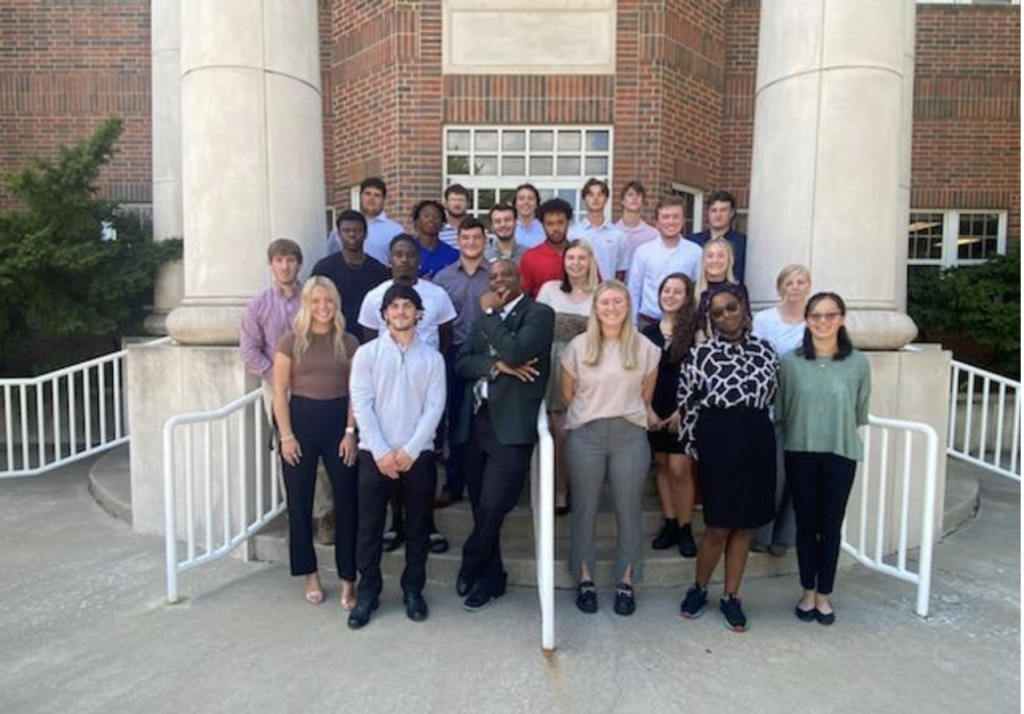
    Caption: Dr. Green coaches college students to build a talent pipeline for small businesses and other organizations.

    The US workforce dynamic is changing. According to the US Census, the U.S. population is projected to increase from 319 million to 417 million, reaching 400 million in 2051. The U.S. population is projected to grow more slowly in future decades than in the recent past. In fact, immigration and higher fertility rates in racial and ethnic groups have increased the labor force base, creating a much more diverse workforce. By 2044, more than half of all Americans are projected to belong to a minority group (any group other than non-Hispanic White alone); and by 2060, nearly one in five of the nation’s total population is projected to be foreign-born. As a consequence, businesses have adapted and have a more diverse workforce. Diversity is only adding fuel to a fire that is already smoking. Today’s employees don’t want to be a component of a big machine; employees want to be valued.

    Why does cultural intelligence matter for today’s small businesses? Today’s leaders need a high sense of cultural intelligence in the United States as it relates to African-Americans and People of Color. With the complicated history of race relationships, individuals do not see their own biases when dealing with others who are different from the majority. Yet, the acceptance of individual differences is essential in building trust and a productive workplace. Dr. David Livermore, author of Leading with Cultural Intelligence, provides a framework for global leaders to address the complexities of cultural differences. Cultural intelligence (CQ) is related to “a person’s capability to function effectively in situations characterized by cultural diversity.” 

    Western mentality often brings a superior to other cultures. For example, travelers from the United States visit other countries and attempt to use their own cultural beliefs in the host country. Dr. Livermore adds, “Leadership today is a multicultural challenge. Few of us need to be convinced of that fact. We’re competing in a global marketplace, managing a diverse workforce, and trying to keep up with rapidly shifting trends… cultural intelligence helps a leader develop an overall repertoire and perspective that results in more effective leadership.” When the head, body, and heart work together, leaders have a high CQ. Contrarily, leaders have a low CQ when these key elements do not align well. Miscues are bound to happen with a leader with low CQ in a different culture.

    The following strategies are suggested for building a high culture intelligence organization:

    • Build a welcoming culture.
    • Lead by modeling the way of an inclusive culture.
    • Hold leaders accountable to an inclusive culture.
    • Assess the cultural intelligence of your organization as well as the leadership.
    • Develop human capital strategies that value all people.
    • Create a diverse pipeline by partnering with underserved community organizations.
    • Provide incentives to current employees to refer diverse candidates.
    • Grow your pool of candidates through minority media and sponsoring events in diverse communities.
    • Commit to continuous learning and professional growth.

    What have you prepared for the future workforce? Many organizations are struggling to understand the meaning of a culturally diverse organization. Unfortunately, most managers miss what diversity is all about. The future of work will require today’s organizations to make significant adjustments or become extinct. Today’s small businesses are no exception. Therefore, organizations that can effectively recruit, manage, and retain a diverse workforce will have a clear advantage in the marketplace. The article demonstrated the need for high cultural intelligence for today’s small businesses. I pray it won’t be too late.

    © 2023 by D. D. Green

    About Dr. Daryl D. Green:

    Dr. Daryl D. Green is a business strategist, speaker, and noted author. He is the Vice President of Marketing at AGSM Consulting LLC. He is the author of the business book Small Business Marketing

    Dr. Green has been noted and quoted by USA Today, Ebony Magazine, and the Associated Press. He provides consulting guidance and management training for today’s small businesses. Additionally, he is an award-winning college professor, developing new innovative approaches for today’s small businesses. If you would like more information about this article or business assistance, please contact Dr. Green at drdarylgreen@gmail.com or visit www.drdarylgreen.com.


  • Do You Enjoy Your Job in 2020? Mapping Out Life After Retirement

    Do You Enjoy Your Job in 2020? Mapping Out Life After Retirement

    “In my early 40s, I started thinking about retiring early. I sat through my organization’s mid-career retirement classes and had gotten several retirement estimates (i.e., different retirement years). I had kept myself marketable by continuing to take advantage of career opportunities and obtaining additional education in my professional field. Some co-workers mocked me because they said any scholarly education would not advance my career. 
    Yet, I felt that professional growth and a continual learning mindset would only increase my value in the market. I had developed an exit strategy. Working with my friend (Dr. Gary Roberts), I had mapped out a future purpose in academia. However, things did not work out as planned. In fact, it took 9 years and more than 200 job applications for the exit strategy to work. Having an exit strategy was invaluable!”
    Are you happy with your current job? Are you working in a job and the environment that you hate and bring you hate? If so, let 2020 be different. In general, US employees are satisfied with their work-life. According to a 2016 Pew Research Center study, about half (49%) of American workers say they are very satisfied with their current job. 
    Yet, 30% of them are somewhat satisfied, and the remainder says they are slightly dissatisfied (9%) or very dissatisfied (6%). When individuals are not happy at work, this mindset impacts other aspects of their lives. When I wrote my own ‘soul searching’ book, Mapping Out Life After Retirement, I hope to assist prospective and current retirees on how to have a more fulfilled life. This article discusses how individuals can retire early with the right kind of strategy.
    Retiring early is a difficult task in today’s financial requirements for living. In 2016, I retired from my career of 27 years at the age of 50 years old. To retire early is indeed a blessing from God. However, I had planned my exit strategy for several years. Yet, millions of Boomers may not be physically and mentally ready for retirement savings today to retire. In the Insured Retirement Institute (IRI) survey, “Boomers Expectations for Retirement 2016, there are some startling statistics that will clarify some of the challenges for a Baby Boomer retirement:

    • The percentage of Baby Boomers who are satisfied with how their lives are going from an economic perspective has fallen to 43%, which is the lowest level since 2011.
    • Boomers are less confident than they were five years ago about almost every aspect of retirement.
    • Among the 55% of Boomers with retirement savings, 58% have saved $100,000 or more for retirement. When Boomers work with financial advisors, this increases to 78%.
    • Only one in four Boomers expect significant income from an employer-provided pension.
    • One in five Boomers are worried they will not have enough savings for necessary expenses.

    Some individuals do not want to sit at home after retirement. Other people want to explore their vocation. To these people, I will provide a new term for them; ‘rebooting.’ In the computer/software world, rebooting is a normal function, unlike retiring. Rebooting is defined as “starting a computer a second or a third time, often necessary after a system crash or malfunction.” 
    In the career planning space, I define rebooting ‘as an individual who has retired and decided to continue working. In this line of thinking, an individual may move away from his/her past career path and pivot to a totally different occupation of vocation. This situation is feasible. Most individuals, especially Boomers or GenXers, are in careers that they hate only because of the necessity of income.  
    As the statistics have shown, there are many reasons why many folks will not retire anytime soon due to the current economic conditions and their lack of serious planning. In this case, retiring early will take a different strategy to be successful. Thus, sitting down and mapping out a personal exit strategy for retirement is critical. Based on my exit strategy that I utilized in my retirement, below are some simple suggestions for developing your exit strategy for retirement:

    1. Talk with retirees about the pros and cons of retirement. 
    2. Establish objectives/goals for retirement.
    3. Pick a realistic date for retirement.
    4. Evaluate current financial and lifestyle situation.
    5. Research materials on retirement.
    6. Take company/organization-sponsored retirement courses.
    7. Talk with several financial planners about your personal goals.
    8. Come up with a magical number that makes retirement possible.
    9. Talk with trusted family and friends about exit strategy on retirement. 
    10. Surround yourself with individuals who will support your decision, but are willing to give you honest, candid feedback. 
    11. Develop and implement your exit strategy once developed.
    12. Know your worth in the market (especially in job hunting).
    13. Be happy and content with your decision! I’ve met people who habitually second-guess themselves in every decision that they make.

    Without a good exit strategy, retiring early will be a fairy tale and not a reality for many people.
    This article showed how individuals can retire early with the right kind of strategy. Some working professionals rely on the fact that they have significant incomes. Yet, they live miserable lives in the process. Thus, these individuals dream about retirement as a way of living a more filled life. What is holding you back in your retirement plans? Let’s get started!
    © 2020 by Dr. Daryl D. Green


    About Dr. Daryl Green:
    Dr. Daryl Green provides consulting, guidance, and management training for today’s business leaders. He is the Dickinson Chair at Oklahoma Baptist University. In 2016, he retired as a Senior Engineer and Program Manager with the Department of Energy after a successful career. He is the author of Mapping Out Life After Retirement. Dr. Green has over 25 years of management experience and has been noted and quoted by USA Today, Ebony Magazine, and Associated Press. For more information, please visit www.darylgreen.org.

  • An Uncertain World:  Mapping Out Trump-Kim’s Nuclear Challenge

    An Uncertain World: Mapping Out Trump-Kim’s Nuclear Challenge

    We live in a world riddled with risk and uncertainty. If you don’t believe this statement, please check the news. For example, President Trump increased global tension by canceling the US-North Korea summit in Singapore. Too many, canceling the historical meeting between the two countries were no surprise. Columnist Zach Beauchamp put it bluntly, “From the get-go, the Trump administration wanted something North Korea was never going to give: the North handing over its entire nuclear arsenal before the United States gave it anything tangible…there’s a fundamental flaw with America’s approach to North Korea that preceded Trump. That’s the fantasy that the US can somehow convince North Korea to voluntarily give up its nukes.”

    Video

    President Trump and North Korea’s Leader Kim Jong Un have hurdle insults at each other (especially through social media) for months. President Trump proclaimed about Kim: “The United States has great strength and patience, but if it is forced to defend itself or its allies, we will have no choice but to totally destroy North Korea. Rocket Man is on a suicide mission for himself and for his regime.” Kim fires back to Trump: “If the American imperialists provoke us a bit, we will not hesitate to slap them with a pre-emptive nuclear strike. The United States must choose! It’s up to you whether the nation called the United States exists on this planet or not.” This rhetoric between the two leaders have many citizens worried about a nuclear war. (more…)

  • Disruptive Change: How Leaders Navigate Uncertainty

    Disruptive Change: How Leaders Navigate Uncertainty

    Panicattack-stock

    As companies continue to wage war with global competition and attempt to figure out their next steps due to advanced technologies, organizations are dealing with unpredictable change that is disruptive. In fact, disruptive change is impacting everyone in all walks of life, from Wall Street to entertainment. The casualties of disruptive change are evident.
    In a statement to the Associated Press about joining a Silicon Valley boardroom, Serena Williams said, “I feel like diversity is something I speak to. Change is always happening. Change is always building. What is important to me is to be at the forefront of change and to make it easier for the next person.”   we will examine disruptive change and what leaders can do to navigate the resulting uncertainties.
    Disruptive change is wrecking traditional thinking of industries and institutions. Long-standing organizations have long attempted to maintain the status quo, allowing flagship institutions like Harvard University and Princeton lead the pack. Non-traditional institutions, like the University of Phoenix, were frowned upon by academics because it was a for-profit university growing by using non-traditional models like online learning.
    (more…)

  • New Product Development Strategies

    New Product Development Strategies

    MM-boy-custom

    With the aftermath of globalization, companies are carefully thinking about the best ways to extend their product and service offering. Thus, product development strategy is critical for their success. Yet, many companies are in defensive mode and merely want to maintain the position in the market place.
    However, staying in a holding position is a definite way for companies to be left behind. Innovative thinking that allows for product/service growth is a too sure way for sustainable success. In today’s discussion, we will explore the importance of product development for the growth of businesses, especially in a competitive market.
    Launching into new product offerings is not easy. According to one market research, approximately 75% of consumer-packaged goods and retail products fail to earn even $7.5 million during their first year.[1] Harvard Business School Professor, Clayton Christensen, who is the world’s foremost authority on disruptive innovation, suggests that the failure rate of new products may actually be as high as 95%. Product failure rates relate to the number of products that are launched commercially but fail. (more…)

  • Cultural Intelligence: How Leaders Can Navigate the Racial Divide in America

    Cultural Intelligence: How Leaders Can Navigate the Racial Divide in America

    Racial Divide-2017

    In June of 1995, the Jury in the OJ Simpson trial announced a verdict of not guilty. The aftermath of dismal reactions highlighted significant conflicts and diverging views in America’s workplaces. In fact, white and black people had a different perspective on the OJ Simpson Trial and life in general. Eighty-three percent of whites stated that Simpson was “definitely” or “probably” guilty while only fifty-seven percent of blacks agreed with this assessment. Rather than carefully assessing one’s own viewpoint when evaluating a different culture, most individuals make assumptions about other cultures definitely.
    Sadly, we still have not learned this lesson in the United States. The last several days have been very hectic as I try to answer students’ questions and address my own concerns about a recent Southwestern Baptist Theological Seminary gaff that has provided another headwind for others sharing the Good News. Let me say that we have all done foolish things and have suffered the consequences. Most of us have had to debase the impacts of this photo on our popular culture to our students and others.
    In the Southwestern Baptist Theological Seminary in Fort Worth (TX), five seminary professors, including the dean of the School of Preaching, put on gangster-style clothing (perhaps dressing like urban rappers), flashing their gold chains and one holding a handgun. Written above the photo were the words “Notorious S.O.P,” which was a reference to the seminary’s School of Preaching and to the black rapper, Notorious B.I.G.

    the Southwestern Baptist Theological Seminary-photo

    (more…)

  • Leading Change in a Global Environment

    Leading Change in a Global Environment

    Change-agent

    Global affairs are often unstable. This month, Japanese stock market falters again, capping its worst single-week performance since the global financial crisis in 2008. Japan is not alone in its underperforming markets. Yet, globalization has connected countries through various elements. Financial markets are not an exception. This article explores issues of change in a global environment and discusses the merits of change agents in today’s organizations. (more…)

  • Performance Measures in Today’s Businesses

    Performance Measures in Today’s Businesses

    blind-leadership
    Finding the right performance measure in today’s organizations is like trying to determine for each swimmer the right temperature of the water to swim in the Gulf of Mexico (a great place to vacation).  There are many variables to consider. Certainly, the amount of revenue produced for each customer would speak to the bottom-line of most organizations.  In relationship selling, you have the personality factor.
    In fact, Mark Johnston and Greg Marshall, authors of Relationship Selling, maintain that customers pick up on a salesperson’s attitude. Does good chemistry exist between the salesperson and the customer? That’s an important performance measure. When developing performance measurement with relationship selling in mind, good chemistry between the salesperson and customer should be a factor.
    The amount of customer referrals can be an extremely good indicator, because this friendly act speaks to the issues of customer trust.  Quality expert George Peeler argues that the key to designing and using systems that will build the traditional product source relationship in the Quality Era will be the creativity and commitment of management and customer insight provided through empathy.  Successful organizations understand the attitudes and emotions of their customers. Therefore, connecting with customers would be a vital performance metric.

    In being effective, businesses need to understand what to measure.  Many times, organizations are measuring the wrong objectives or doing the analysis incorrectly. Johnston and Marshall argue for designing an effective measurement system which includes (a) what do we want to measure, (b) when do we want to measure, and (c) how do we measure. Therefore, it’s important that organizations create effective performance measures.
    Yet, performance measures are very difficult.  Management expert Stacey views performance measures as a process rather than an event, involving a series of specific activities for creating, implementing, and using performance metrics. Organization must be careful about using the right data collection tool to measure performance. For example, most people hate doing surveys.
    Given this reality, organizations must carefully analyze the survey data for bias. Are they truly getting a picture of their customers?  I found focus groups more useful. Peeler further explains that management must facilitate the processes of quality innovation through prompt action, removing barriers to employee performance by continually attending to process improvement. Regardless, management must establish a reliable performance measurement system for organizations. The bottom-line is that there is inherent risk with customer surveys.
    Finally, businesses should be strategic and focused in their performance measures. If an organization wants to spin its wheel and go nowhere, having unclear direction is a great pathway.  It’s important to have clear objectives and desired outcomes.  The transformation process from where an organization is to where an organization wants to be is a clear application for performance measures.
    Johnston and Marshall argue that specific, realistic, and measurable objectives are essential to a sales training program. They further acknowledge that salespeople exist in a highly competitive environment where a great deal of information must be assimilated for effective customer sales.
    Please discuss organizational performance measure from your professional experience.
    © 2014 by Daryl D. Green

  • Value Perceptions Among Customers

    Value Perceptions Among Customers

    women_holding_money_face_2

    Organizations should think strategically when creating value perceptions of their products or services.  In fact, they should seek to establish a formal tiered system where possible. Strategic leaders have a long view on value creation.

    Strategic thinking is defined as ‘the generation and application of business insights on a continual basis to achieve competitive advantage.’ In fact, strategic thinking focuses on value creation by enabling a provocative and creative dialogue among people who can affect a company’s direction.

    Marketing expert Ken Favaro maintains that putting value creation first gives businesses two advantages over their competition in driving for profitable and sustainable growth: the first is capital and the second is talent. In fact, he argued that successful value creators never suffer from capital shortage. 

    Yet, this process shouldn’t be done in a vacuum. Customers and all members of the supply chain should provide input so that the expectations are clear. Businesses that pay more would get more benefits (i.e. certain perks, discounts, etc.). Therefore, the value proposition would be enhanced.

    However, being strategically conscious about these business relationships isn’t simple.  Value must be understood and sought out.  Value is viewed as the perceived experience and worth gained from a product or service.  Organizations should make their product clear to customers; some businesses need to introduce a tiered system, based on value-added services.

    For example, if I want cheap fast food, I go to McDonalds. Therefore, my expectations are lower than going to a five star restaurant.  Customers are very understanding when the seller’s value proposition is clear. Favaro further suggests that putting value creation consistently first requires leadership skills, discipline, and perseverance. He further challenged organizations to demand higher standards from managers who would jeopardize these business relationships.

    Mark Johnston and Greg Marshall, authors of Relationship Selling, discuss that perceived value is in the eyes of the customer and varies.  They further argued that customers expect and deserve consistency in the way an organization’s value-added message is put forth.  Therefore, sales professionals’ biggest challenge is selling value.

    Please discuss value perception of customers from your professional experience.

    © 2014 by Daryl D. Green


  • The Nature of Effective Problem Solving

    The Nature of Effective Problem Solving

    Whiteboard--business man-strategic-planning-on-the-whiteboard

    Our youth program continues to grow at my church.  Of course, it is a simple formula as our church is one of the biggest in the area.  Church going parents make it mandatory for their children to attend church and participate in church services.  However, when the children graduate from high school and became young adults, their attendance becomes very low or non-existent. 

    At that time, Velma Biddles was the youth leader and fairly new to the position.  She and her youth advisors have seen the shift of young people’s attitude.  If churches want to be effective with youth, they must change their underpinning message of: “Children are to be seen and not heard.”  Our youth advisors started to deal with the root causes of matters concerning our youth. Sadly, many businesses are spending millions on symptoms. What about you? 

    Good problem solving can be an asset in an organization.  Some organizations find themselves solving the wrong problems and getting less than desired results.  Other managers assume that good technical staff members are naturally good problem solvers.  However, this observation is not necessarily true.  Effective problem solvers often have an intuitive skill set or enough training in problem solving for finding the right problems and making the best decisions.
     John Gamble and Arthur Thompson, authors of Essentials of Strategic Management, outline the importance of filling key managerial slots with people who are good at figuring out what needs to be done and possess skills in effective implementation and in producing desired results.  They note, “No company can hope to perform the activities required for successful strategy execution without attracting and retaining talented managers and employees with suitable skills and intellectual capital.”  A problem can be defined as ‘an obstacle that stands in the way of achieving a desired goal.’ In fact, problems are divergences from the preferred outcomes.
    The basic problem solving stages include: (a) Identify the problem, (b) Gather information, (c) Clarify the problem, (d) Consider possible solutions, (e) Select the best option, and (f) Make a decision and monitor the solution. High performing organizations move beyond superficial problem solving in order to get to the root causes.  Good businesses realize that uncovering the real problems can be beneficial in many ways, such as reduced risks, cost savings, and greater efficiencies.
    Jeff Butterfield, author of Problem Solving and Decision Making, argues about the benefits of talented problem solvers: “People who can identify, define, and solve problems are valued members of an organization.” 

     [youtube=http://www.youtube.com/watch?v=jEhvGIfgwfo]

    Like our youth advisors recognizing the problem and adapting appropriate solutions, today’s managers must be willing to move beyond their own bias to discover the real causes of problems.  Too many managers seek to major in the minors.  High performing organizations cannot afford to let this happen. 

    In general, effective problem solving can be a great competitive advantage for organizations.  Formulating better decision making happens with more effective problem solving.  Businesses with talented problem solvers will have a greater capacity for sustainable success. 

    Discuss your professional experience with problem solving in your industry or organization.
    © 2014 by Daryl D. Green