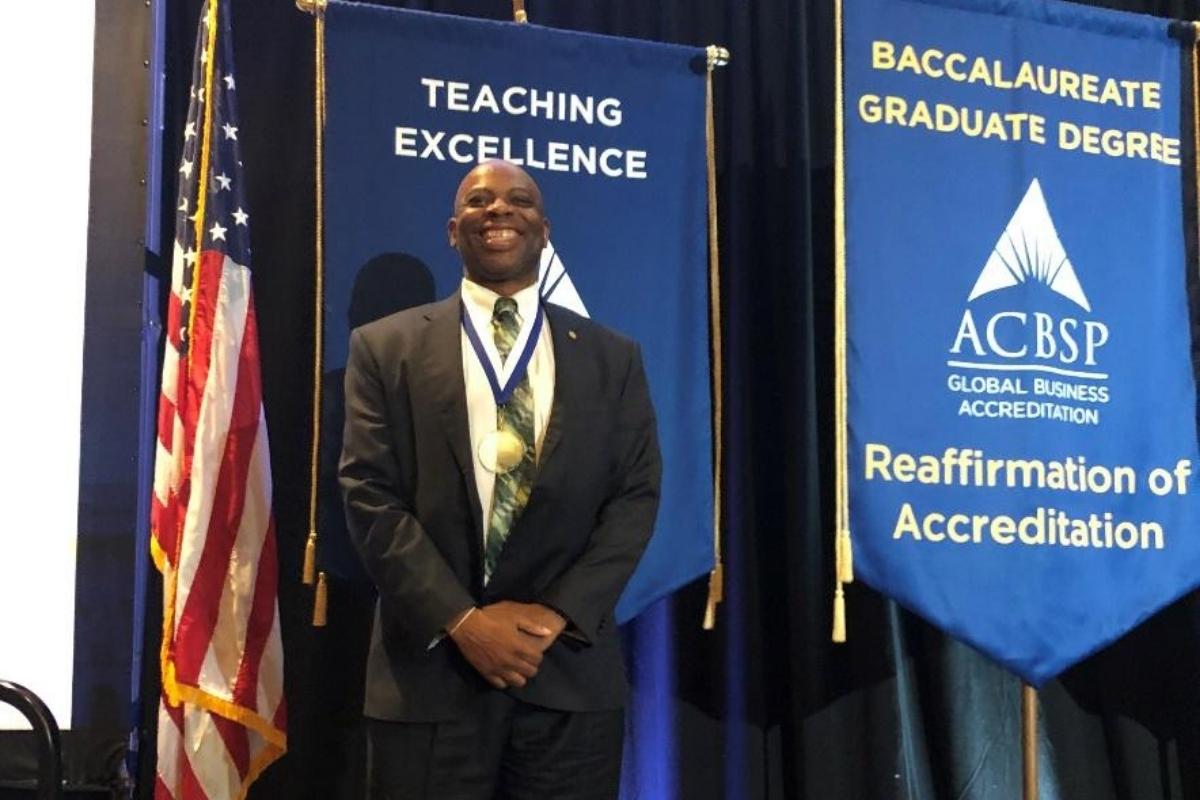
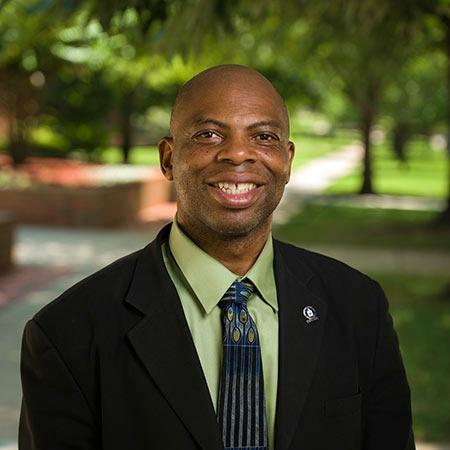
OVERLAND PARK, KS, USA (June 30, 2022) Dr. Daryl Green, Associate Professor, Oklahoma Baptist University, Shawnee, Oklahoma, was named a regional recipient of the 2022 ACBSP Teaching Excellence Award. The Accreditation Council for Business Schools and Programs (ACBSP) recognizes individuals each year who exemplify teaching excellence in the classroom.
Dr. Green was honored, along with other regional recipients, at the ACBSP Conference 2022 on June 20th in Washington, D.C. He received a crystal medallion and a $500 check.
“Dr. Green is a high energy and dynamic professor. He excels in the use of technology in the classroom. He uses advanced simulations in many of his courses to help the students apply the material and measure student learning outcomes. He has created micro-internships to build bridges with industry and to provide meaningful class projects. He co-publishes scholarly activity with both undergraduate and graduate students. He shares his results in regional and national ACBSP conferences,” said Dr. David Houghton, Dean, College of Business Oklahoma Baptist University.
The ACBSP Associate Degree Commission established the International Teaching Excellence Award in 1995 to recognize outstanding classroom teachers. In 2002, the Baccalaureate Degree Commission created a similar award to recognize excellence in teaching at the baccalaureate/graduate degree level. ACBSP is the only specialized body for business schools that presents an award recognizing excellence in teaching, open to application by the entire membership. “It is more important than ever for business programs to produce graduates who are ready to enter the global marketplace,” said Jeffrey Alderman, ACBSP President and CEO. “ACBSP has a mission to develop, promote and recognize best practices that contribute to continuous improvement of business education. Recognition of teaching excellence is one way we achieve this goal,” he stated.
Dr. Green chats with National Urban League President Marc Morial at the ACBSP National Conference in DC. Dr. Green and President Morial are both Louisiana natives.
About ACBSP
ACBSP’s mission is to promote continuous improvement and recognize excellence in the accreditation of business education programs around the world. ACBSP, www.acbsp.org, is recognized by the Council for Higher EducationAccreditation (CHEA) as a specialized accreditation agency for business education. ACBSP is the only global accrediting body to accredit business, accounting, and business-related programs at all degree levels. ACBSP currently over 1,000 member campuses in more than 60 countries. Of those campuses, 851 have achieved accreditation and more than 160 are in candidacy for accreditation. Individual members on these campuses now exceed 13,000. FAQs / Accreditation FAQs
Contact: Marta Garcia de la Cruz, Manager, Member Services — 913-339-9356 — mcruz@acbsp.org
Leadership development expert Dr. Daryl D. Green provides Father’s Day tribute from a business viewpoint.
When I think about how far I have come from the humble beginnings as a boy growing up in Shreveport, LA, to a retired manager from the Department of Energy with several national achievements, including books that I’ve authored, I must thank my parents for raising me the ”right way.” My father, Edward Elias, in particular, was an immeasurable influence on my life. He was old school… hard, stern, and purposeful in making sure that his children did not end up on the wrong side of life.
Several years ago, I spoke at my father’s funeral and I could not hold back the tears. God had given me a great mentor to guide me through manhood. God was now taking him back. My father had achieved so much in his life, despite his lack of formal education. He had set a standard for me. He was my measuring stick. I felt my father’s shoes were too large to fill. However, I could not hide from my responsibilities. It was my turn. Would I falter under the pressure? Passing the family’s collective experience on to the next generation is a necessary part of building strong leadership within families. How can families preserve this rich knowledge base? Who is going to remind us of the old ways?
With that as introduction, I’d like to share one special story about the power of a good father’s influence on a boy’s business perspective. My father, who was called Elie by all who knew him, was a faithful employee of the public library system in Shreveport for several decades. He was also entrepreneurial. He had a lawn service on the side. On many cases, my father would leave one full-time job to work his part-time job. He never complained. I now recognize that good parents sacrifice a lot for their children, even to their own detriment. The purpose of this article is to share five business principles I learned from my own father.
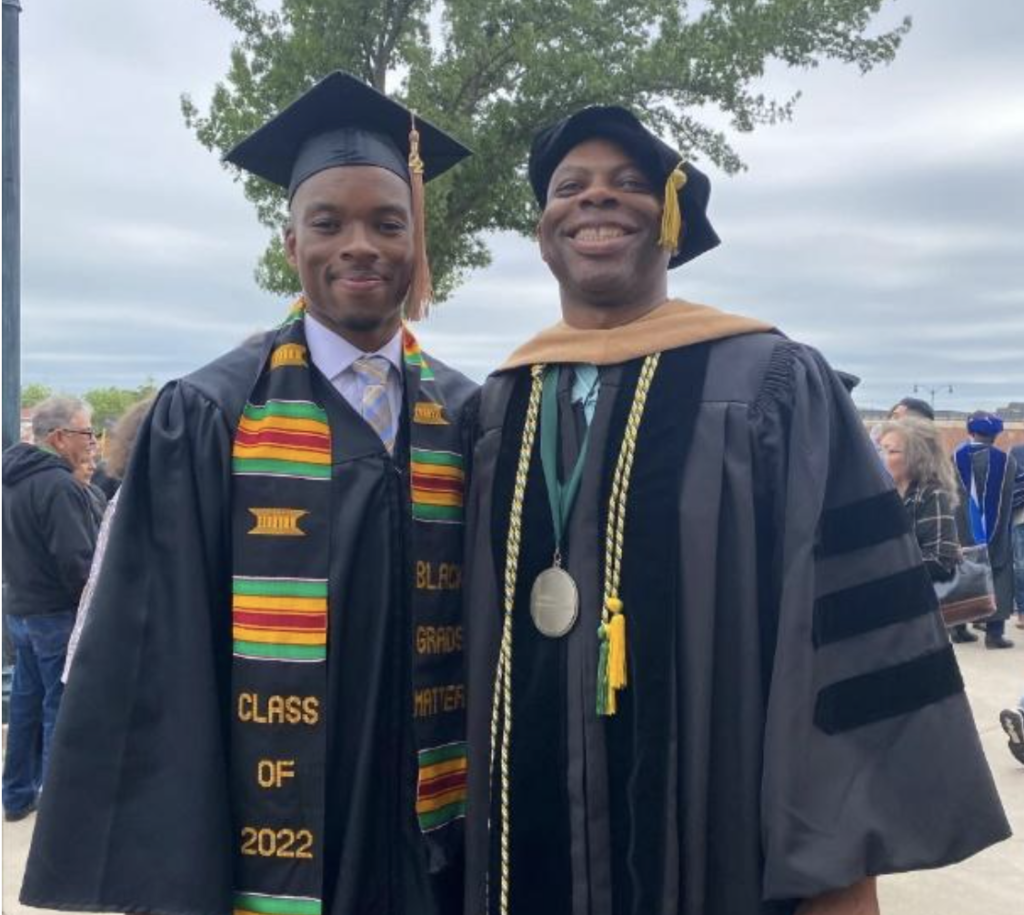
Dr.Green poses with his student, Sayvon Milton, at graduation. Regardless of your social status, you can be a father-figure for young people.
My father had several customers whose lawns he serviced. I remember him push mowing large yards (an acre) for $20. To me, that was cheap. He would perform a lot of work for small sums of money. When I was in junior high school, my father got me a job working for one of his customers, a wealthy family with a huge home. I was a Boy Friday. I did all sorts of odd jobs outside, including cleaning out flower beds. It was really a lot of work and it was hard work. In the middle of the day, my father would visit me. The wife of the family would bring us water and prepare lunch for me… peanut butter and jelly sandwiches. I could tell that, inside, my father was laughing at me.
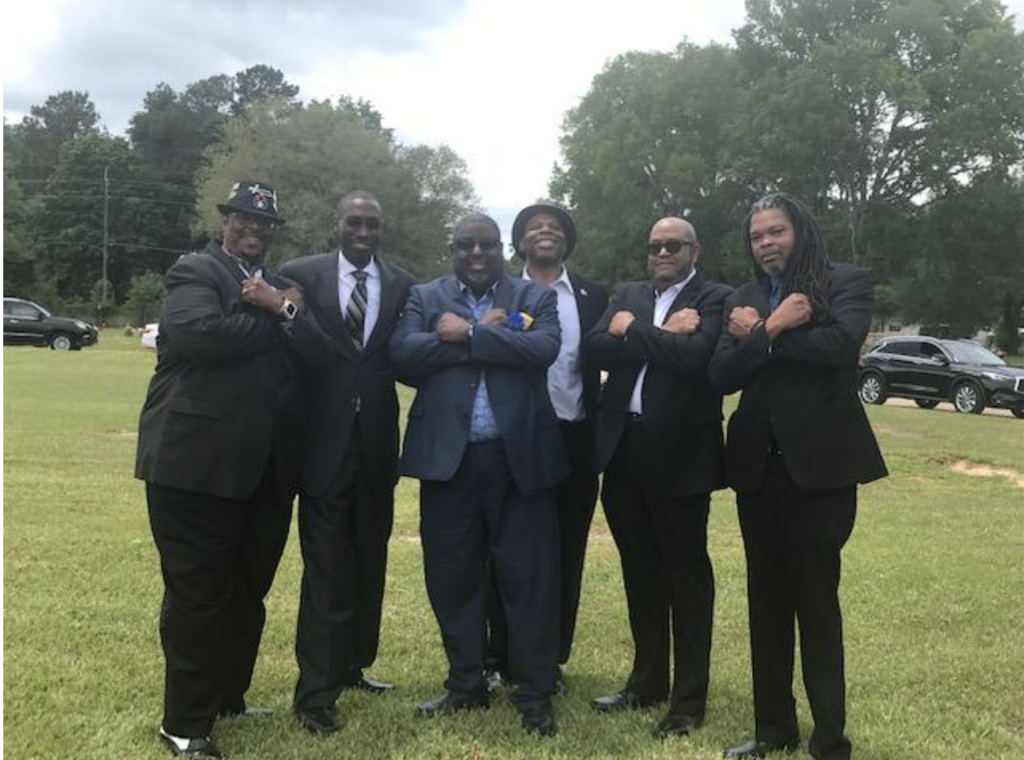
Dr.Green, fourth from left, was reunited with his college friends (Raymond Cotton, Theron Moore, Ante Jefferson, Allen Smith, and Gerald Rye) at Southern University. These highly successful professionals came together to pay tribute to Raymond Cotton’s father.
He knew I hated peanut butter and jelly sandwiches. But I ate those sandwiches and thanked the lady. I would work at least five hard hours for a dollar an hour. At the end of the day, the wealthy owner, who was extremely cheap, would come out and hand me $6. He thought he was doing me a favor by giving me a dollar for an extra hour. However, I can remember that the minimum hourly wage at the time was about $3.15. My father knew that it was crazy to work a teenager that hard for nothing. Yet, my father never said anything to me about the situation. These are the lessons I learned from my father:
Always work hard, even when people are not watching you.
Master a skill to the best of your abilities.
Create a product or service of value, and someone will always pay you for it.
Always be respectful and polite to customers, even when you think you are being taken for granted.
Always know your worth. People will often pay what you suggest. Make sure you are not underselling your value.
My father taught me some hard business lessons in life. Working for that wealthy family, with my father as my infomal mentor, taught me that you should always get paid what you are worth in any job situation. I learned that I had to value my expertise, and that some people would take advantage of me if I did not understand my value. My experience with that wealthy family taught me lessons I could never get at a business school or from a management expert. I learned these lessons from the School of Hard Knocks, taught my father.
In his own way, my father was grooming me for the decisions I would later have to make as a man. I know he never imagined that I would become an engineer. He would not have thought I would be an author of several books. He probably never envisioned me as a business owner. But my father knew I would need to have a basic understanding of life’s lessons and how to manage my responsibiliites as a man, regardless of whatever situation I would find myself in. The lasting impression my father made on me as a man and a hard-working business owner was invaluable. I will be certain that this business savvy will have a lasting impact on future entrepreneurs in our family. Knowledge is wasted if it isn’t used. I have always tried to pass on the simple wisdom of my father to everyone that I happened to meet. R.I.P my dear father!
Dr. Daryl Green provides consulting, guidance and management training for today’s small businesses. He and his wife Estraletta are the owners of AGSM Consulting, LLC, based in Tennessee. Dr. Green is a noted researcher and business professor in Oklahoma. Prior to his academic carrer, Dr. Green retired in 2016 from the U.S. Depatment of Energy, where he worked in the Environmental Management Program for over 27 years. He is the co-author of the books, A Call to Destiny – How to Create Effective Ways to Assist Black Boys in America and Real Dads, Real Leaders: Over 40 Stories To Help Men Be Better Dads. Additionally, Dr. Green is the executive producer of the DVD “Saving Our Sons: Dealing With Black Male Underachievement.” If you would like to schedule a media interview or more information about this article, please contact Dr. Green at drdarylgreen@gmail.com or visit www.drdarylgreen.com.
Everyone predicted the demise of Bass Bakery in Baker, Louisiana. Walmart came into the area and destroyed several small businesses. Bill Bass, the bakery’s longtime owner, knew he needed to do something different. He saw his friends who were in business ignored Walmart; his friends banked on loyalty from their past customers. They were disappointed. Bill called in his five sons to develop a plan.
Bobby, who was his youngest son and who had graduated with a marketing degree, talked to his father about implementing three different marketing strategies. One strategy was to sell 2-3 days-old baked goods to low-cost customers; a differentiation strategy was to sell premium-priced goods with home delivery to affluent customers; a niche strategy was to sell local berry products that Walmart could not offer. With no options left, Bill implemented his younger son’s plan. This combination of strategies worked so spectacularly that Bass Bakery became more profitable than ever before.
How are you going to stay in business if you do not make significant adjustments? Today’s small businesses need to retool their business strategies. Marketing plays a critical role. Yet, poor planning can hurt a business’ attempt to make a profit. Dr. Frank Rothaermel, the author of Strategy Management, writes: “A business strategy, therefore, is more likely to lead to a competitive advantage if it allows a firm to either perform similar activities or offer similar products or services at lower costs.” This article examines how small businesses should formulate a marketing strategy that is tailored to their intended customers.
The pandemic continues to wreak havoc on the U.S. economy. Small businesses are no exception. According to a 2020 survey of more than 5,800 small businesses, the pandemic has caused massive dislocation among this business sector. The survey found that 43% of businesses had temporarily closed, and nearly all of these closures were due to COVID-19. Thus, businesses that have not made sufficient adjustments in their planning and strategy are at a disadvantage. Sadly, some individuals start a business with lots of passion and knowledge, but without a plan. With good planning, many businesses can avoid the pitfalls that drive some businesses to failure.
Successful businesses implement a marketing strategy. Dr. Michael Porter outlined three types of generic strategies: low cost, differentiation, and niche-focused. The low-cost strategy allows a business to use low pricing to stimulate demand and gain market share. This strategy requires companies to maintain especially tight control of their costs. An example of the low-cost strategy in the fast-food industry is McDonald’s.
The differentiation strategy is an approach in which companies attempt to set their products or services apart from their competition. Businesses must find ways to distinguish their products from other similar products by developing uniqueness through product design, features, quality, or other noticeable factors that attract customers. For example, Burger King attempts to distinguish itself from McDonald’s and other competitors by offering flame-broiled burgers.
Finally, businesses can employ a niche strategy that targets a specific sub-group of customers or focus on serving a particular area. Most small businesses want to protect themselves from too much competition by targeting a specific group of buyers.5 Although large organizations may have more financial resources, their size makes it difficult for them to adjust to market forces. Therefore, being small and nimbler has its advantages.
To formulate the appropriate marketing strategy, small business owners must address the following questions:
What are the specific customer segments?
What markets do you currently own and what is the future outlook for those markets?
What are the customer needs, wishes, and desires that you can serve?
Why do you want to satisfy these customers?
What is the value of your product/service to customers?
How do you distinguish your products from those of your competition?
How do you plan to satisfy these customers?
In closing, the pandemic and the financial crisis have ruined many small businesses. Unfortunately, some business owners have not adjusted. Yet, changing customer expectations and stiff competition have put more pressure on small businesses. Successful small businesses want to stay ahead of their competitors. Nike Emeritus Chairman Phil Knight explains, “I may be over the top on this, but I just don’t want to be like my competitors. I want my people to believe that whenever our competitors succeed, we will be less able to do all the things we want to do.” This article discussed how and why today’s small businesses must go about crafting a marketing strategy that is tailored to their intended customers. An effective marketing strategy can be a game-changer for small business owners. Let’s pray that it is not too late.
Dr. Daryl Green provides consulting, guidance and management training for today’s small businesses. He holds the Dickinson Chair in the College of Business at Oklahoma Baptist University. He has assisted more than 100 organizations across the nation in the region with marketing and management expertise. If you would like more information about this article or business assistance, please contact Dr. Green at drdarylgreen@gmail.com or visit www.drdarylgreen.com.
Hilton Smith, a 60-year-old business owner, was a staple in his local community. His store of 100 years had passed 6 generations of owners. The business had seen good times and bad times. While his youngest son (a business degree) tried to help his dad adjust to the changing landscape, Hilton rejected these ideas, including having a website and developing a social media presence. Hilton barked at the idea of interacting with his customers virtually instead of in-person. Covid-19 hit the community. Lockdowns occupied. Hilton put a sign on his front door: “CLOSED INDEFINITELY!”
Bringing in a New Year creates a sense of renewal and opportunities. Yet, many small businesses have a ‘wait and see’ attitude riddled by uncertainty and unpredictability of the future. Most organizations have limited resources and must be cautious about their business growth. However, if small businesses were given a master list of areas to improve based on market forces, these companies would be in a better position for the upcoming year. This article examines the seven critical trends that small businesses should consider in the economy to better manage market disruption in their organization.
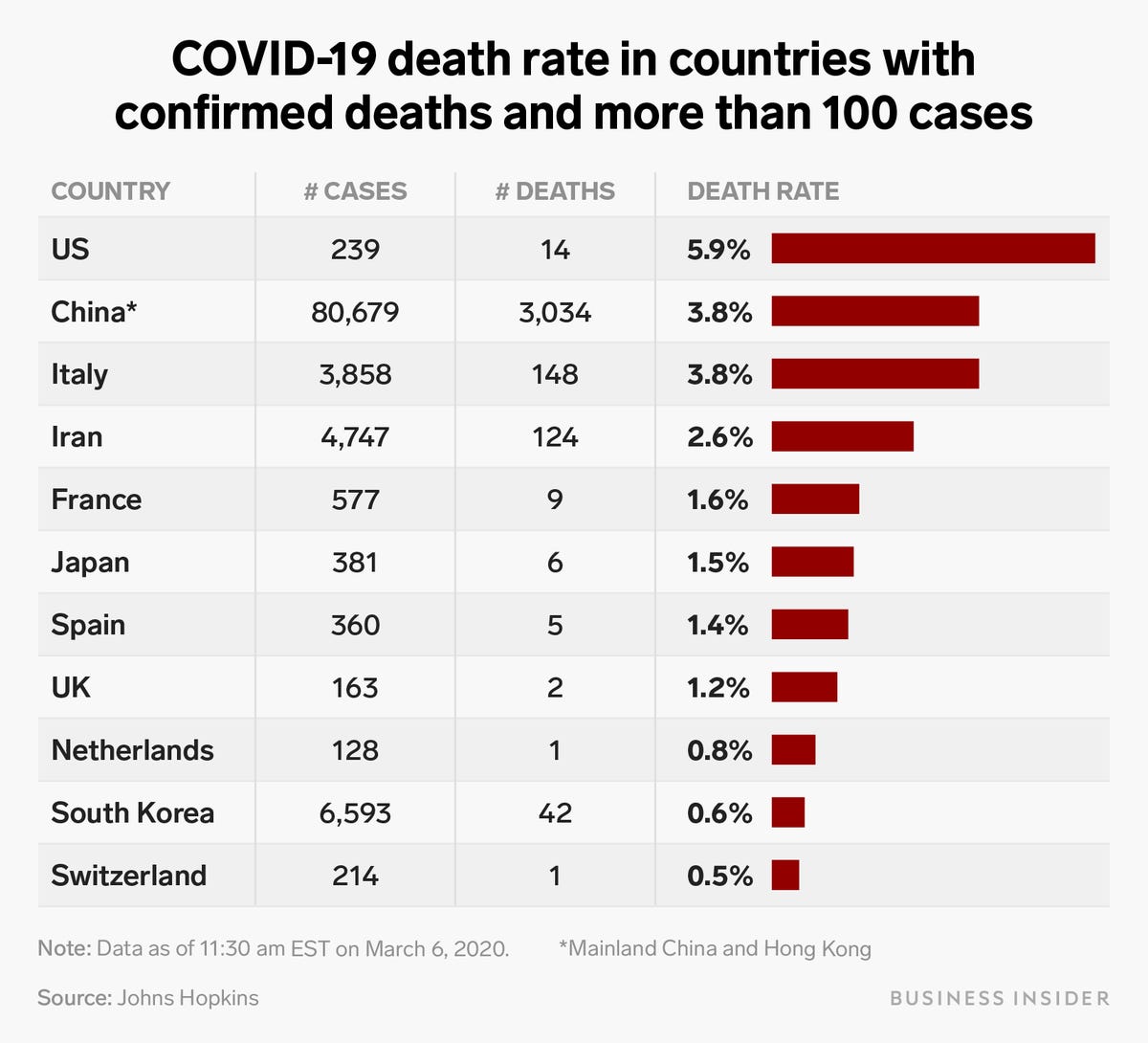
With the uncertainty of a new presidential administration in the United States and the lingering impacts of Covid, many organizations should rethink their business strategies. Small businesses are no exception. According to a business study conducted between March 28 and April 4, 2020, small businesses have been heavily damaged by the lockdowns due to Covid-19. In an analysis of more than 5,800 small businesses (reaching a network of 4.6 million small businesses), the research highlighted the damage caused by the pandemic. At this juncture, 43% of businesses had temporarily closed, and nearly all of these closures were due to COVID-19. Respondents stated that they had temporarily closed, largely pointed to reductions in demand and employee health concerns as the reasons for closure. In fact, the businesses, on average, reported having reduced their active employment by 39% since January. All industries have been impacted.
Why evaluate emerging trends as a small business? Many larger companies can withstand the destructive nature of disruption in the marketplace. However, small businesses are more vulnerable. While incremental change is often slow and predictable, disruptive change can be characterized as rapid and unpredictable. These traits of disruption bring uncertainty into the marketplace. Managers worry. With market disruption, experience can be seen as a liability. McKinsey expert defines market disruption as “a profound change in the business landscape that forces organizations to undergo significant transformation rather than steady incremental changes.” Historical examples can be found in transportation (i.e., horse carriage to the automobile) to communications (i.e., telegraph to the Internet). Furthermore, the fact that nearly 9 of every 10 Fortune 500 companies in 1955 are gone today demonstrates the significance of market disruption. Yet, savvy businesses can take advantage of disruption if they understand the principles. Dr. Clayton Christenson, the author of The Innovator’s Dilemma, argues the opportunity brought by disruption: “Disruptive technologies typically enable new markets to emerge.
Looking ahead to 2021, there are seven trends that small businesses should consider. Yet, nearly a year after this pandemic, the full impacts on the U.S. economy are not fully clear. Small businesses should review the following trends to capture new, unmet customer needs in the future:
Global Market – We are connected! Small businesses can tap into resources worldwide, whether searching for new customers in emerging markets or locating talent for hire. According to the Global Trends 2030: Alternative Worlds, individual employment will accelerate due to globalization.
AI and Automation – Artificial intelligence is a disruptive technology. Companies can avoid the high expense of labor through automation. According to a 2013 Oxford University study, nearly half of American jobs are at risk of being taken over by computers by 2033. Small businesses can leverage technology by empowering their employees to utilize AI where appropriate so that that technology is not viewed as a negative.
New Work Model – 2020 brought in the explosion of working from home due to Covid-19. Employees already wanted to have more flexibility in life. They got it from employers. Companies responded by offering 70% of full-time workers the ability to work from home!
Freelancing – Freelancing is part of the gig economy. It goes much further than Airbnb and Uber. In the gig economy, businesses hire independent contractors to perform individual jobs, called “gigs.”The total freelancing income is almost $1 trillion. With the gig economy, small businesses can find the necessary talent without the burden of full-time employees.
Digital & Ecommerce – Covid-19 ushered the digital economy. If companies did not have a digital platform in 2020 with the lockdowns, they did not exist. According to the Internet World Stats, there are currently 4,208,571, 287 internet users. Small businesses cannot afford to miss this continuing trend of digital platforms.
Changing Career Landscape – Due to market disruption, the employers’ needs continue to evolve, especially driven by automation and technology trends. Employers cannot afford to utilize unmotivated employees. They want self-starters. The National Association of Colleges and Employers (NACE) has identified eight competencies associated with career readiness. Sadly, most students are not aware of employers’ expectations of career readiness competencies. With that said, small businesses will need to keep up with the changing workforce in the United States.
Continuous Learning – Keeping up with the latest trends and disruption requires a learning culture in organizations. Therefore, a trained employee pool is essential, especially during disruptions. With the numerous non-traditional learning platforms like Udemy and MOOC, individuals can stay up to date and advance their skills. Small businesses should be embracing this trend.
Today’s small businesses and entrepreneurs must retool themselves, given the potential impacts of Covid-19 have the necessary capacity to change their way of thinking because of their passion. Disruption will be the word of 2021 as organizations consider the impacts of Covid-19 in 2020. This article discussed the seven critical trends that small businesses should consider in the economy to better manage market disruption in their organization. While larger organizations may survive the impacts of market disruptions, most small businesses cannot. By taking the necessary steps to understand these market trends and maximize capturing unmet needs in the market, small businesses can make a positive investment in their future. Let’s pray that it is not too late.
Dr. Daryl Green provides consulting, guidance, and management training for today’s small businesses. He is the Dickinson Chair at Oklahoma Baptist University. He and his students have assisted more than 100 small businesses in the region with marketing and management expertise. If you would like more information about this article or business assistance, please contact Dr. Green at drdarylgreen@gmail.com or visit www.drdarylgreen.com.
“The Impact of COVID-19 on Small Business Outcomes and Expectations” by Alexander W. Bartik, Marianne Bertrand, Zoe Cullen, Edward L. Glaeser, Michael Luca, and Christopher Stanton
A research on the sustainability in the scope of higher education led by Dr. Daryl D. Green, Dr. George Taylor III, and Mrs Violet Ford has opened many windows of opportunities. The study is known as ‘Cultivating the Entrepreneurial Mindset In Today’s Small Liberal Colleges & Universities’ outlines the importance of restructuration in colleges and universities with an entrepreneurial mindset for long-term sustainability.
The coronavirus situation has led to disruptive changes in the academic workflow of students in universities and colleges. With an ongoing volatile market, higher education has been impacted immensely with a direct connotation about underachieving and unprepared pass outs from these educational institutes. This has also propagated stark declining numbers in college enrolments and projections and surveys across the United States point at as much as 450,000 drops in students in years beyond 2025. Previous research, undertaken by Harvard professor, DR. Clayton Christensen also states that in the scope of organizational sustainability in educational institutes, disruptive changes and innovation will lead to 50% of 4,000 colleges and universities in the country to go bankrupt in the next 10 to 15 years.
The outcome of these regressive changes has hit independent liberal art colleges the most. Traditional institutes are also at risk of getting negatively impacted by disruptive change. This brings about uncertainty and unpredictability in various verticals of the market, innovation, industry, and more. “Cultivating an entrepreneurial mindset will infuse innovative thinking to difficult problems and provide new revenue streams to universities that utilize student tuition as the principle income for these academic institutions,” Dr. Green notes. Fellow research scholar, Mrs. Ford adds, “At the heart of entrepreneurship is pursuing opportunities with a vision. Traditional organizations will keep creativity within the confines of the classroom; whereas, entrepreneurial driven educational organizations will cultivate and develop creativity throughout an educational system. Thus, the presence of institutional entrepreneurial practice is needed to both create business models and actively participate in implementing changes that can drive transformational change.”
The study leads to a fundamental understanding of the importance of entrepreneurial objectives among students. Dr. Taylor further suggests, “Early considerations of the entrepreneurial mindset within liberal art colleges show that liberal arts students were encouraged to develop characteristics fundamental to entrepreneurial thinking….Although the entrepreneurial mindset is receiving increased attention that encourages students to think in new, innovative ways while improving their life skills, there is little evidence to support its widespread consideration and implementation at a significant level within traditional liberal arts colleges.” Ford, Green, and Taylor hope that the current paradigm among academic institutions will change. The collective effort by the scholars will further inculcate ideas of founding a more sustainable education system that is flexible and progressive.
To view this research, please visit https://tinyurl.com/y3wydycz
For more information about the researchers, you may contact Dr. Green at daryl.green@okbu.edu or 405-585-4414
Explore the right kind of leadership in a volatile world. Lois dedicated herself to her patients. Her patients loved her, and she loved her patients too. She was a Head Nurse in a major hospital. Work was steady. Then, the coronavirus hit. The world was changed. Lois’ nurses were asking her questions. They were asking her leadership questions. There was silence because things were happening so fast. Lois only tried to worry about things she could control—care of her patients, as well as the safety of her staff. After 3 months into the pandemic, Lois felt the impacts. Hospitals were consolidated along with employees. Lois found herself working on the 10th floor of another hospital. She had been reduced from a Head Charge Nurse at a major hospital to a Nursing Assistant. Her pay was reduced by 25% and her status to part-time. As she gave care to her patients in her new situation, she would share her story with some patients to show how things had changed after the coronavirus threat, not for pity. Lois had seen good nurses and doctors laid off during this time. Lois was happy to have a job, thus feeding her family. That was the coronavirus effect! Workers exist in a volatile world. The coronavirus has damaged the economy across the globe – the United States is no exception. Since more than 22 million U.S. workers are filing for unemployment, government officials and business executives attempt to balance public health against economic survival. More layoffs are surely going to occur as the pandemic keep people at home. Yet, the economic pains can be felt across the country. Food lines are growing. A sagging economy persists. In fact, the U.S. has not seen these job losses during the Great Depression. The world is interconnected, thanks to globalization. As the U.S. dollar spirals downward, the foreign currency goes upward. China and India have added millions to their labor force, creating products as well as outsourcing their services abroad at a fraction of what American workers can provide. These upstart countries are positioning themselves to become the next Super Power. The U.S. middle class hold their breath as the threat of more job cuts become a reality, thereby further eroding their quality of life. With the coronavirus before us, this article examines the right kind of leadership in a volatile world. The coronavirus has made its presence known, resulting in disruptive change throughout the globe. According to the World Health Organization, the coronavirus has infected more than 2,000,000 people in at least 177 countries. To date, more than 800,000 Americans have been diagnosed with Covid-19, resulting in over 40,000 deaths. Although New York has been the center of the discussion, every state has been impacted. Unintended consequences continue to happen. While the federal government rolls out a $2 Trillion stimulus package, President Trump and the state governors argue about who’s in control. Big Brother has arrived. The government dictates how private businesses must operate while restricting how citizens gather in the name of public safety. The results of the private infringements have sparked anti-government protests. There needs to be a different type of leadership in a volatile world. Today’s pandemic, hypercompetitive environment needs high-performance organizations to sustain market success. Yet, many organizations operate from the same business structure from the Industrial Revolution. In this setting, managers oversee workers to control their performance due to the fact that managers believe workers are inferior and have no passion to work. Yet, most workers are willing to work if they are placed in a position to be successful, and there are shared rewards. Yet, I have heard too many complaints about bad bosses and uncaring organizations. There are too many managers and organizations that do not value the importance of their employees. These same managers are great at distributing tasks, but are unsuccessful in motivating their own workers. According to a RAND Corporation survey, the nation is not producing enough future leaders with substantive depth in international experience and outlook. In fact, the survey outlines the following top attributes for having a successful career in an international organization in the public environments: (a) general cognitive skills (problem-solving, analytical ability, etc.), (b) interpersonal and relational skills, (c) adaptivity, (d) cross-cultural competency, and (e) the ability to work in teams. However, in many businesses, the chore of developing leadership competencies is left to human resource managers. In fact, working in a global environment requires a different skill mix. J. Stewart Black, Allen Morrison, and Hal Gregersen, authors of Global Explorers, argue that every global leader has a set of global characteristics regardless of his or her country or industry. The four key areas include inquisitiveness, perspective, character, and savvy. Business savvy becomes the word of the day because one must be able to think globally and adjust activities on the local level, as well as satisfying customers at all levels. Leaders must be visionary so that they provide the organization a vision of what the organization wants to transform itself into in spite of the current situation. Leaders must push the decision making down to the lowest levels and empower employees to perform. Leaders must have integrity and lead by example. Leaders must have a global perspective in understanding that the world is interconnected. Leaders must be strategic so that they will look beyond today’s struggles to anticipate threats and seize opportunities. Leaders must know how to inspire and motivate workers to perform. Leaders must value diversity and maximize the most out of their talents. In fact, these competencies promote the necessity for leaders to learn how to work effectively with people who have different languages, customs, and social values. Leaders must make people accountable but share the rewards of the organization’s success. Leaders must learn how to listen and respect their employees so that they can maintain trust throughout the organization. In summary, the coronavirus is not leaving our planet any time soon. Societies across the globe will need to make adjustments to the new normal. Therefore, organizations cannot continue to stumble through this global environment. In fact, desperate times should demand immediate actions. With millions of unemployed and outsourcing of high paying jobs abroad, these market trends should get more of anybody’s attention. Organizations that want to sustain success in the future can no longer continue in the same mode of operations. This article demonstrated the critical need to select the right kind of leadership in a volatile world. Success will largely depend on their ability to manage their resources, seize strategic opportunities, and inspire their workforce toward greater performance. Let us pray that it is not too late.
“Our 82-year-old mother was gone. It was a startling surprise to her three adult children. We each have a special relationship with her; we simply called her ‘Mama!’ Now, we were challenged with the tasks of planning our mother’s funeral services. We had never worked together entirely on any single project. Mama was always the senior project manager giving instruction to us as children: Gail – fix your sister’s hair, Daryl – go find your father, Lottie – practice your piano, and Mary – allow your sister to do your hair. Yet, at this moment, no commands were being given by Mama. We were solo pilots now. Mama anticipated there were going to be disagreements, as we started a debate about one of the sticking points of our mother’s funeral arrangements at Lester’s home. Lester went into the back room and gave us a hand-written letter from Mama dated a few days before her death. We were stunned. The letter carefully addressed our disagreement. Since it was clear what Mama’s expectations were on this matter, we stopped the argument and started implementing our mother’s wishes. She had managed to lead us through this problem. Mama had given us another leadership lesson.” In today’s hectic environment, many executives and business professionals are so overwhelmed by demanding shareholders, boards, and customers that they forget about the lessons from everyday life. In December, I lost my mother – Annette Green Elias. Although it was painful to see her leave Planet Earth, I was encouraged when I reflected on my mother’s legacy and what she and my father had taught us. My mother was a good example of how to model the behavior you desire in your family. This quality is also true for organizations. James Kouzes and Barry Posner, authors of The Leadership Challenge, outline the critical nature of leadership modeling: “When it comes to deciding whether a leader is believable, people first listen to the words; then they watch the actions. They listen to the talk and watch the walk. Then, they measure the congruence… Actions, then, are the evidence of a leader’s commitment.” If you are going to be an effective leader, you must model the way. Followers will not respect just lip service. Our mother was a good example of leading us to her vision. This article examines five leadership lessons learned from my mother’s death. Leadership is a quality that doesn’t change over time or through generations. There are many definitions of leadership. However, one simple definition of leadership is: “the art of motivating a group of people to act towards achieving a common goal.” My mother was part of ‘The Greatest Generation’ – those individuals who were born from 1910 to 1945. Individuals born during this time suffered through the Great Depression and World War II. There aren’t many of these people left. Over 1,000 war veterans are passing away per day. Like my mother, these individuals born at that time can be described by the following characteristics: dedicated, hardworking, loyal, close to family, love of God. Within this generation, there were distinct roles. The father was the provider and protector of the family. From my father, I learned the importance of hard work and keeping your word. The mother was the nourisher and caregiver of the family. Since my mother had to work to ‘make ends meet’ financially, I learned how to empathize and give to the needs of others. My mother always stated, “I know all my kids and what they are capable of doing.” With that said, my mother saw something else in me that led her to give me tasks that would further develop me as a leader. She was a Proverb 31 woman who garnishes respect in the community. Dr. Peter Northouse, the author of Leadership, notes, “From this perspective, leadership emergence is the degree to which a person fits with the identity of the group as a whole or they become most like the group prototype. Being similar to the prototype makes leaders attractive to the group and gives them influence with this group. If you are a leader and your followers are not engaged, what are you really doing as a leader? Leadership matters! During the funeral arrangement process with my siblings, Lottie and Mary, I reflected on how my mother had shaped us as children to become responsible adults today. Mother definitely helped shape me as a leader. As we come to the close of another year, there are some invaluable leadership lessons discovered during my mother’s passing:
HAVE A FAITH – In 2018, our mother had a brain aneurysm, fell, and broke her pelvis. Lying in the hospital, our mother was depressed, anxious, and in despair. Doctors thought she might never walk, but she did. At 82 years old, she was working, driving, and traveling in 2019. Leaders will eventually run across situations where they are powerless and hopeless. A strong faith will sustain a leader.
KNOW YOUR FOLLOWERS – My mother routinely told us: “I know all my kids and what they are capable of doing.” She recognized that each of her children were different. While one child might need encouragement, another child might need tough love to help them navigate. Likewise, leaders need to understand their employees in order to get the best out of them.
BUILD AN ORGANIZATION THAT THIRST FOR LEARNING – Learning was part of the family dynamics and an unwritten expectation. My mother went back to college in her late 60s to encourage her grandchildren to seek higher learning beyond high school. She instilled a need for learning. Effective organizations need to create this desire.
STAND UP FOR YOURSELF – When we were growing up, our mother told us this before going to school: “If someone HIT you, you…. HIT THEM BACK.” OK! This mandate got us into trouble… sometimes. Yet, what my mother taught us was more than picking a fist fight. You must stand up to the principles that you believe. In the business world, there are times when a leader must stand by himself or herself.
HAVE YOUR OWN PLAN
Because of the problems that families were having after the death of a loved one, we tried to convince our mother to have a will so that everyone would understand her wishes. Our mother would not listen. She said, “I have raised you all the right way; you should be able to figure it out.” She never did write that Will. But—Mama had her own plan. She left her instructions in a manilla envelope addressed to her children. She had left her children with no debt, had a prepaid funeral arrangement, written her funeral program, and left us a letter describing her wishes. We, the children, were all shocked. Mother had managed to implement her own plan. Likewise, leaders need to have a plan. Yet, the plan does not have to be like other leaders. Create a unique plan for your situation. In closing, good life lessons are invaluable to leadership development. Perhaps, you are also lamenting the loss of your mother or a loved one this year. My mother is gone now, but she left a legacy of meaningful leadership lessons. She had a clear vision of leadership. To mother, leader’s vision was an action word. Dr. Jimmy Atkins, the author of Leading Strategic Community Change, suggests the power of vision: “The vision must go beyond lofty dreams and be put into action… Leaders must bring the vision to life by rolling up their sleeves and participating with everyone else.” My mother breathed the leadership qualities into me. This article demonstrated that there are leadership lessons that today’s organizations can learn from others especially mothers. Both leaders and followers can use this time of reflection to seek to learn from what you learned from your mother. Let’s pray that it is not too late.
Examine how to grow personal philanthropy in today’s leaders. In many organizations, the personal trait of giving to others is not often admired by others due to the competitive environment. However, building personal philanthropy in today’s leaders could make organizations to flourish. Businesses that are built on teamwork and supporting others offer an unselfish environment. According to Craig Hickman, author of Mind of A Manager, leaders empower people by creating organizational cultures in which people gain a sense of meaning from their work. Hickman notes, “In our economy and society, the leadership-driven organization fulfills the vital role of breaking with current tradition and past approaches in order to innovate and bring about breakthroughs that benefit everyone. Such organizations can help us find new solutions to old problems in ways that management-dominated organizations never can. This role demands strong leadership.” The article examines how to grow personal philanthropy in today’s leaders. Leaders must model the way in personal philanthropy, and this giving mindset must be strategic in nature. James Kouzes and Barry Posner, premier leadership experts and authors of The Leadership Challenge, argue the importance of leaders modeling the way: “When it comes to deciding whethera leader is believeable, people first listen to the words; then they watch the actions…Actions, then, are the evidence of a leader’s commitment.” According to Vanguardcharitable.org, a strategic philanthropist can be defined as “one who follows a long-term giving plan, one that includes a budget, investment strategy, appropriate time horizon, and specific goals for a charitable impact that allow for current and future success.” When most people think about philanthropy, they think about the wealthy among us, such as Bill Gates or Warren Buffet. Personal philanthropy can be so much more than that. In fact, individuals can have the same philanthropist mindset when giving to organizations or people. Social responsibility is a buzzword in a society demanding more accountability from its corporate citizens. Social responsibility speaks to a company’s stance on the way its managers and employees view their duty or obligation to make decisions that protect, enhance, and promote the well-being of stakeholders and society as a whole. Gareth Jones and Jennifer George, authors of Contemporary Management, argue about the importance of social responsibility: “The way a company announces business problems or admits its mistakes provides strong clues about its stance on social responsibility.” With the economic crisis, there are many institutions in trouble. For example, Noriko Chapman is a prominent manager in Tennessee in the automotive industry. In her co-authored book, Second Chance, Noriko pledged 30% of her book proceeds to the Tennessee Rehabilitation Center in Maryville, a regional rehabilitation center that provides the following services to adults with disabilities. She was leveraging her expertise to support a local community cause. Noriko’s giving attitude helped the Center’s financial needs. With the current economic crisis and the holiday season before us, citizens should use personal philanthropy as an option to improve society. Yet, philanthropy must start with a mindset and an attitude for giving regardless of where a person stands on the economic ladder. Marc Benioff, Chairman & CEO of Salesforce.com, built his organization with a philanthropic focus. Salesforce.com is a cloud computing company with a mission of ‘The End of Software.” Benioff has had a history of successful business ventures, including The Oracle Corporation and the Macintosh Division. However, he is noted for the achievement of designing a new philanthropic model. The Salesforce.com Foundation aims to inspire companies across the globe to give 1% of their resources to support charities and social causes. This 1%; 1%; 1% philanthropy model includes 1% of its company’s time, 1% of its equity, and 1% of its products be donated to charity. For Salesforce.com, this model means giving employees 6 paid days of volunteer time to use over the course of the year. To date, Salesforce.com employees have donated over 178,000 hours. Other companies like Google have embraced this model. The following tips can gain an individual toward greater personal philanthropy:
Define your personal goals and values.
Dedicate yourself to a cause that fulfills your life mission.
Research an organization that contains the mission and vision that support your core beliefs.
Meet with key decision-makers of the organization to find out how you can assist the organization (i.e., financial and personal time).
Determine how you are going to ‘act out’ personal philanthropy in the organization.
Set a date for implementing your personal philanthropy.
Monitor and track results for future personal philanthropy.
Welcome to the Nu Leadership Revolution! This blog explores the changing workforce and social environment as it relates to emerging leaders. The status quo will not do! “Nu” represents a change from the old ways of doing things at least for emerging leaders.
Our lives continue to unravel as things we believe in disintegrate before our eyes. Institutions are failing. Personal conduct is at an all time low. Wall Street continues to prosper as Main Street bears the financial hardship for our country.
Everyone is impacted–from the executive to the factory worker. According to the Conference Board research group, only 45% of Americans are satisfied with their work. This was the lowest level ever recorded by this group over 22 years of researching this area. One major reason cited was that workers do not find their jobs interesting. In order to be more competitive, organizations need to retool and inspire workers to new levels of performance. Clearly, organizations need good leadership.
What is needed, however, is a different kind of leader during these times of uncertainty. How can you become a stronger, more effective leader? I feel this revolution will start with a fresh, positive outlook from a new kind of engaging leader. Kevin Kelly, who helped launched Wired Magazine, noted,
“Wealth in the new regime flows directly from innovation, not optimization; that is, wealth is not gained by perfecting the known, but by imperfectly seizing the unknown.”
For over 20 years, I have tried to guide and inspire thousands through my lectures, seminars, and columns. As I speak to the issues facing organizations and emerging leaders, I solicit your input and insight. Therefore, I ask that you join me on a journey towards improved leadership and personal empowerment.