Tag: customer service

  • Building Winning Customer Service for Small Businesses: Key Strategies After the Pandemic

    Building Winning Customer Service for Small Businesses: Key Strategies After the Pandemic

    Erin, a budding entrepreneur in his community, had always managed to stay ahead of the competition by being adaptable and quick to respond to market changes. On this day, he was headed to the airport to pick up a rental car when he encountered a long line of disgruntled customers. Some had been unexpectedly bumped from their flights, while others were frustrated by the lack of staff at the rental car counter. It was a chaotic scene, reminiscent of a day at the zoo.

    When Erin finally reached the counter and handed over his license, insurance card, and credit card, he was told that he had no reservation. Naturally, he was exasperated and showed the clerk his proof of reservation. However, the employee casually explained that any third-party reservation is automatically cancelled by the system, and that Erin should have booked directly. To make matters worse, the rental company was already double-booked and couldn’t accommodate any more customers, including direct bookings. Frustrated and feeling helpless, Erin demanded to speak with the manager, only to find out that the manager was busy cleaning out cars since his staff had failed to show up for work. Dejected, Erin walked away from the counter, feeling defeated.

    Today’s businesses must build value for customers if they hope to be successful. Yet, value is a moving target. All customers do not have the same measuring stick for sellers to apply a cookie-cut approach. Sadly, today’s customers are not happy with the quality of most businesses’ customer service.  Companies seek to reduce their inputs (i.e., outsourcing labor, using better technologies) to obtain greater profitability. Still, the process is often self-serving, with little regard for the customer and lesser value on employees. Therefore, many people might insist that some businesses simply stumble on what customer value is and how it affects their business. This article examines how small businesses can utilize great customer service to give them a competitive advantage in the marketplace.  

    Is Covid to blame for poor customer service today? The negative impacts of the pandemic have been significant for customer service. Many organizations are short-staffed. Before Covid-19, customer service was already declining. Yet, the pandemic threw customer service on a fast downward spiral. According to an NBC study, 75% of buyers noted that customer service worsened during the pandemic; 78% of them stated they had contacted a company multiple times to address a single concern. As a result of the pandemic, many employees exited their jobs in search of purpose. In fact, 76% of employees experienced burnout on their jobs at least once, according to a 2020 Gallup report. The aftermath of the pandemic continues to haunt many businesses today.
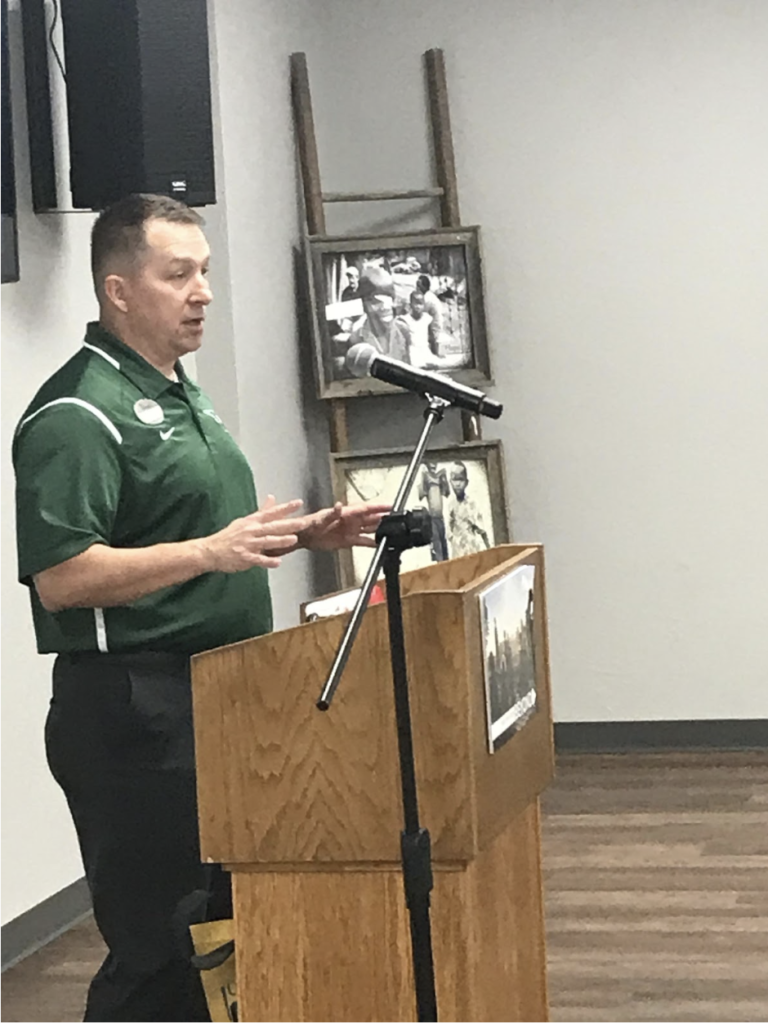
    Shawnee Business Owner Jeff Madison chats with business students at the University.

    What is good customer service? According to Salesforce.com, customer service can be defined as ‘the support you offer your customers-both before and after they buy and use your products or services – that helps them have an easy and enjoyable experience. Good customer service involves creating a great customer experience. Jalene Nemec, co-author of Great Customer Service: The Definitive Handbook for Today’s Success Business, explains, “The customer service of these companies has seen the most drastic decline. It has been carelessly devalued. Contrary to popular belief, customer service is not just about solving problems; it is about being the ‘face of the company.’” Thus, disgruntled employees and overworked managers do not speak well of a business. Yet, creating value for customers isn’t easy. Some businesses seek to take shortcuts in building relationships with customers with marketing smoke and mirrors.

    Some organizations simply believe that hiring a large sales force is enough. Jeb Blount, author of Fanatical Prospecting: The Ultimate Guide for Starting Sales Conversations and Filing the Pipeline by Leveraging Social Selling, Telephone, E-Mail, and Cold Calling, explains, “Lots of salespeople have the intelligence, talent, skills, and education to be top performers. Lots of salespeople are competitive, understand the sales process, and know how to ask for business. Yet they consistently underperform the superstars… Superstars are relentless, unstoppable prospectors. They are obsessed about keeping their pipeline full of qualified prospects.” Thus, knowing your customers intimately will serve small businesses in creating value for customers.  
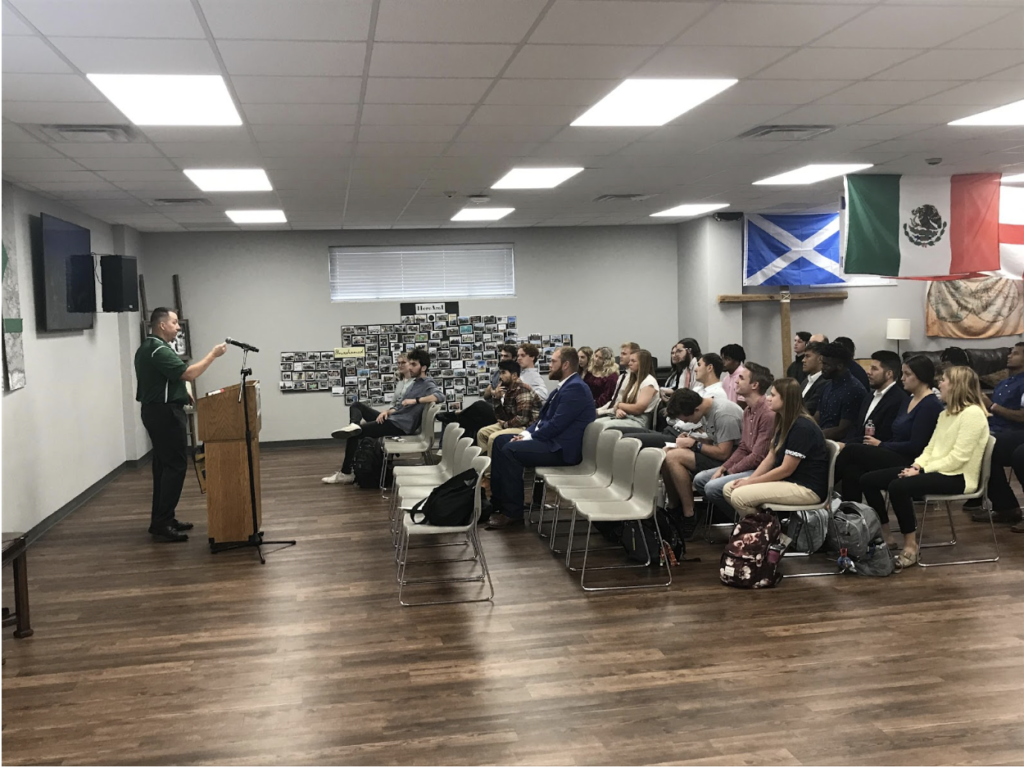
    Jeff shares how Chick-fil-A delivers great customer service.

    Shawnee’s Chick-fil-A owner, Jeff Madison, understands the merit of good customer service. Retired U.S. Army Colonel with 26 years of leading U.S. and multinational soldiers and civilians from the cavalry scout platoon to the Pentagon, Jeff recognizes the essential of deploying a combat-proven, critically reflective, innovative, and decisive strategy in ever-changing conditions. Despite all the MBA-type strategies, success starts with building value for customers. Jeff explains, “We create value for our guests by connecting with our guests beyond the transaction (taking their money at the cash registers). We offer genuine hospitality and Matthew 5:41 Second-Mile Service. We carry trays to the table for guests who need assistance.” Madison seeks to build an emotional connection with customers. Most businesses want to distinguish themselves from their competition, so creating value is a clear distinction.

    College students are able to relate to Jeff examples of great customer service at Chick-fil-A

    Below are some winning strategies for building good customer service:

    • Communicate your mission, values, and expectations for good customer service to all employees and stakeholders.
    • Benchmark other companies that have distinguished themselves with great customer service.
    • Create product and service offerings that customers want and desire.
    • Develop processes through business operations that create value for customers.
    • Provide customers with a written guarantee about the quality of your customer service.
    • Hire employees who will buy into your good customer service customer.
    • Reward and incentive employees and managers for their quality customer service.
    • Listen to customers, employees, and other stakeholders so that you can continuously make improvements to your customer service systems.

    Are you building a culture that values great customer service? Do your employees project a warm, positive attitude to potential customers? If not, today is a good time to change what has not worked, especially in the aftermath of the pandemic. This article demonstrated how small businesses could utilize great customer service to give them a competitive advantage in the marketplace. When small businesses place value creation as a high priority, providing great customer service is a lot easier and more beneficial in the long run. Let’s pray that it is not too late.

    © 2023 by D. D. Green

    About Dr. Daryl D. Green:

    Dr. Daryl D. Green is a business strategist, speaker, and noted author. He is the Vice President of Marketing at AGSM Consulting LLC. He is the author of the business book Small Business Marketing
    Dr. Green has been noted and quoted by USA Today, Ebony Magazine, and the Associated Press. He provides consulting guidance and management training for today’s small businesses. Additionally, he is an award-winning college professor, developing new innovative approaches for today’s small businesses. If you would like more information about this article or business assistance, please contact Dr. Green at drdarylgreen@gmail.com or visit www.drdarylgreen.com.

  • Providing Good Customer Service

    Providing Good Customer Service

    If America is going to survive this economic crisis, businesses will need to change what they are doing. Behind this backdrop is a lack of understanding of a holistic approach in providing good customer service. Companies should not believe that they can provide good customer service while treating their employees badly. Bad treatment of employees will eventually show up in unpredictable ways.  
    I’ve spent some time studying customer service as a practitioner and scholar. In fact, one of my star MBA students, Jalene Nemec Davis, and I co-authored book Good Customer Service: The Definitive Handbook for Today’s Successful Businesses.  United States companies are finding it harder to compete abroad. Is there any wonder why some individuals want to give up? This article examines how to create an amazing customer service for sustainable success. What follows will help you revamp your organization and, hence, the focus of your business’ customer service.
    Defining good customer service is an essence. Before you can decide what good customer service is, you must first think about what it means to your company or your industry. Defining what good customer service is for any one company is difficult. A hospital’s idea of good customer service will differ from that of a restaurant. To help you determine how it is defined for your company, look first to your mission statement.
    Every little detail counts for good customer service.  Paul B. Thornton, a Massachusetts-based business consultant and author of Leadership-Best Advice I Ever Got, suggests, “Customer service should, if written well, state what is most important to your company and why it exists. It should focus on the organization and keep everyone going in the same direction to achieve the same goal.” After all, when it comes to customer service, no matter the industry, isn’t it getting everyone to work as a team believing in the same mission? The mission being to service their customers to the best of their ability, regardless of whom they might be (shareholders, consumers, suppliers, co-workers, etc.). Look again at your company’s mission statement; does it include providing good service to your customers?
    Build an organization that is built to serve the needs of the customers and be prepared to see better results. In fact, the business must determine what kind of customer service you and your company want to provide. Businesses should ‘WOW’ their customers. Organizations should create memorable moments for their buyers. Here’s a test. Take out a piece of paper and jot down what first comes to mind. Review your list. Are the items listed those that your customers truly value? If not, that is okay. In business operations, sometimes it is difficult to separate what the company wants versus what the customer wants because most companies only want to see the bottom line.
    In fact, review some businesses that are very successful in the realm of customer service and see where they place customer service as part of who they are as an organization. For example, Let’s review Southwest Airlines, one of the most reputable airline companies. This airline states, “Southwest Airlines is a company that is for anyone and everyone that wants to get from point A to point B by flying. Our service and philosophy are to fly safe, with high frequency, low-cost flights that can get passengers to their destinations on time and often closer to their destination. We fly in 58 cities and 30 states and are the world’s largest short-haul carrier, and we make sure that it is run efficiently and in an economical way.”  
    With enormous competition for customers, can you afford not to provide good customer service? Does your mission state measure up to the needs of your intended customers? This article demonstrated how to create an amazing customer service for sustainable success. In the end, customers are individuals who determine good customer service. Therefore, businesses should think from the mindset of the buyer, not the seller. Even if you cannot see room for improvement off-hand, what I have to say may strike up some ideas that will prove beneficial to you and your company. I pray that it is not too late.
    Please share your insight on this topic.
     
    © 2019 by Daryl D. Green
    About Dr. Daryl Green:
    Dr. Daryl D. Green is the Dickinson Chair of Business professor at OBU’s Paul Dickinson College of Business, teaching leadership, management, and marketing. In 2016, Dr. Green retired from the DOE, where he worked in the Environmental Management Program for over 27 years. He is the author of Amazon.com Hit Job Strategies for the 21st Century: How to Assist Today’s College Students during Economic Turbulence. For more information, please visit www.darylgreen.org.

  • Customer Value Differences

    Customer Value Differences

    young-business-professionals-discussing-seriously
    Companies must focus on value for customers. However, all customers are not the same. Globalization has created all types of problems for businesses.  One of the issues is how to stay ahead of the competition by exploring new markets while keeping the same customer base.  This action is not easy.
    Mark Johnston and Greg Marshall, authors of Relationship Selling, maintain that customers expect and deserve consistency in the way an organization’s value-added message is put forth. [1]
    Being strategic conscious about these business relationships is not simple.  Marketing expert Ken Favaro further suggests that putting value creation consistently first requires leadership skills, discipline, and perseverance. He further challenged organizations to demand higher standards from managers who would jeopardize these business relationships.
    These marketing problems are worthy of the most decorated scientists. In fact, the right value proposition is critical because all customers are not created the same. When organizations place value creation as a high priority, organizations will beat their competition because they will deploy capital better and develop internal talent better.[2]
    Customer expectations and customer needs are often different. Management expert Ray Miller further suggests a “strategic trap” for businesses seeking to meet customer expectations. Delivering below expectations is obviously bad.  However, simply satisfying customers will not guarantee customer loyalty either because they are getting nothing more or less than they expect.

     https://www.youtube.com/watch?v=d7vwhHLmdWI

    Furthermore, some businesses get caught up being efficient in developing cookie cutter solutions for the masses. Yet, they overlook that value seeking customers are looking for products and services that solve their specific needs.
    Consequently, employees should be motivated to provide value for customers if the businesses want to be successful.  In fact, this reality involves being compensated fairly, being treated with respect, and being given meaningful work. Finally, companies must understand that customer value expectations are often different. Therefore, businesses that  manage customer expectations effectively will possess a distinctive advantage in the market.
    Please discuss your professional experience with customer value differences.
    © 2013 by Daryl D. Green


    [1] Relationship Selling by Mark Johnston and Greg Marshall
    [2] Put Value First by Kevin Favaro
  • Guest Blogger – Jalene Nemec

    Guest Blogger – Jalene Nemec


    We face unprecedented economic times in a globalized marketplace where purchasing from places as far away as China are just a click away. As a direct result companies have had to review, refocus and revamp their business scope to compete and sustain their livelihood.

    Some have opted to accomplish this by changing their product line, cutting costs, slashing prices, removing excess overhead and reducing pay. All these options can prove successful and have. But there is a better solution. Improve your customer service and earn loyal customers!

    Customer service by definition is to provide assistance with courtesy those who patronize a business. [1] A company that provides great customer service over their competitors creates loyal customers who will patronize their business year over year.

    The direct result of this is increased profits. Customers become loyal when they know they can trust your company to take care of their needs, even their most frivolous complaints and to do it with kindnesses.
    To illustrate this, John Goodman used a simple calculation for getting customers to complain and then satisfying them. The assumption in this example is that a customer is worth at least $30 in profit over a year’s time.

    The cost of handling a complaint is about $5 and at least 75% of callers are satisfied. To quantify the payoff of soliciting and handling complaints, it’s critical to know the prevalence rate of non-complainants and their loyalty, as well as the loyalty of those who complain and are not satisfied. The calculation for moving a customer with a problem from non-complainant to satisfied complainant is provided.
    Payoff due to improved loyalty – Typically, moving a customer with a problem from non-complainant to complainant to a satisfied caller raises loyalty by about 30%, meaning loyalty) x (.75 satisfied) x $30 value). After covering the $5 cost of handling the complaint, one is left with $1.75 in profit and/ or an ROI of 35% ($1.75/$5 cost to handle complaint).

    Over time, marketing executives have awakened to the fact that between 20% and 70% of all new customers are won by personal referrals, positive word-of-mouth. Research has also consistently shown that personal service interactions have 20 times the positive impact as advertising in fostering word-of-mouth referrals.

    Payoffs due to enhanced word-of-mouth referrals: if, conservatively, one out of ten satisfied customers produce a word-of-mouth referral and one new customer worth $30 is won for every 40 who hear good things, then satisfying 10 customers adds $30 in word-of-mouth benefits, or $3 for each customer satisfied. That adds an additional $3 payoff for each satisfied customer, raising the ROI to 95%. [2]
    The concept of these figures is intriguing. However they cannot come to fruition by doing nothing. Companies must be actively engaged in the task of improving and providing superior customer service.

    Through my research, I determined that there were five key characteristics that lead to great customer service and ultimately increased profits. Those characteristics include: Attitude, Awareness, Accountability, Action, and Affability. Together they are my “5A-Wheel.”

    Change begins with the right attitude. Before a company can change their customer service, they must establish a mission to provide quality service. Furthermore, the company should be aware of the current state of the service they provide. Change cannot be made without understanding the situation at hand. A business may question, has there been a noticeable decline in sales? If so, could it be a result of the customer service?

    The best way to kick-start change is to hold employees and managers accountable. Without effectively maintaining accountability for everyone involved, people will not see a reason to change their behavior and the business will suffer.

    Holding personnel accountable is the first part of taking action. Unless a company makes a conscious decision to actively improve, change will be temporary or non-existent.

    The final characteristic is affability. It seems like a minor detail, but consider some of your past consumer experiences. There were probably a few instances where an employee helped you in an “I have to” way, and there were times where you were helped in an “I want to” way.

    This is the difference between attitude and affability. An employee has the right attitude if he or she understands a need to help the customer, but wanting to help the customer provides the best possible experience for everyone.

    Using these five characteristics as a guideline will help companies succeed in their customer service department. As you begin your career or start up your own business, be better than your competition and provide the customer service of yesteryear that people value, a customer service that people are loyal to.

    Please share your thoughts with this guest blogger.

    ABOUT THE BLOGGER

    Jalene Nemec, MBA,  is the author of the upcoming book, Great Customer Service. She is also one of the brightest business thinkers in the world, having both extensive customer service and leadership experience.  She is a former Lincoln Memorial University MBA graduate.
    REFERENCES
    Entrepreneur. http://www.entrepreneur.com/encyclopedia/printthis/82148.html. 2011. (accessed   16 March 2011).
    Goodman, John. “Manage Complaints to Enhance Loyalty.” Quality Progress, (2006).


    [1] Entrepreneur.com
    [2] Manage Complaints to Enhance Loyalty by John Goodman