Reiko Farr & Noriko Chapman pose for new Japanese book.
There is nothing more flattering to a professor than a student taking his academic advice and being successful. This situation played out for me with one of my own MBA students this year. However, this week she took it to a different level.
For Noriko Chapman, it has created an international collaboration between a local U.S. nonprofit organization and a global leader in the automobile industry which led to the empowerment and economic independence of disabled workers.
Chapman, who is a DENSO production manager, had worked with the Tennessee Rehabilitation Center (TRC) in Maryville to help increase its operations efficiency as part of her MBA project. In 2009, the Maryville TRC was ranked at eighth in contract sales in Tennessee.
Its mission is to provide services that help lead individuals who have a physical and/or mental disability to employment and are designed to meet individual needs.
However, Chapman’s goodwill had many unintended consequences. She has had four versions of her first book published in one year, which is impressive for a beginning writer. She pledged 30 percent of the book proceeds to this organization. Chapman also helped to restore $75K of government funding to the Center. Chapman became connected to this organization. She observed, “I was inspired by the staff and by individuals with disabilities who were trying very hard to learn work skills and seek permanent employment.”
[youtube=http://www.youtube.com/watch?v=FmfbsNvO5s4&feature=channel_video_title]
Through her first book, she was able to bring more attention by the media and the public in general to this disability cause. In fact, it landed the TRC’s director an expense-paid visit to DENSO in Japan.
DENSO Corporation, headquartered in Kariya, Aichi prefecture, Japan, is a leading global automotive supplier with customers that include all the world’s major carmakers. With more than 200 subsidiaries and affiliates in 35 countries and regions (including Japan), DENSO had worked to assist the nonprofit organization with a contract that allowed disabled workers to earn income. In reality, DENSO was offering these workers a second chance. Chapman had made this relationship possible.
Any student can tell you I set high expectations for them, regardless of their backgrounds and college classifications. Yet, any time you ask some people to go beyond their comfort zone and stretch themselves a bit mentally, a professor is going to get some backlash.
Nevertheless, I designed a new final project called Real World Application based on one of the top tiered business schools. The objective was to provide students in my Operations Management course some practical applications from the course and assist local organizations with their problems. This is when I fully understood the challenges that many nonprofit organizations faced in this economic climate.
Most students selected private businesses while a few opted for nonprofit organizations. Noriko Chapman, the past guest blogger, got me involved more with her project since she complained she needed to do well in my course. Her project entailed assisting the Tennessee Vocational Rehabilitation Center (TRC’s), located in Maryville, to be more efficient and effective. TRC’s mission is to provide services that help lead individuals who have a physical and/or mental disability to employment and are designed to meet individual needs.
Her employer, DENSO, had been working to assist this nonprofit organization with a contract that allowed disabled workers to earn income. Her research helped TRC become more efficient. Noriko’s final project was the main inspiration for her new book, Second Chance: An In-depth Case Study on Nonprofit Organization’s Resource Allocation and Operational Maximization.
During the economic crisis this year, the organization nearly lost $72K from government funding. It was clear to me that nonprofits needed to get their act together and create more value to the sponsors and customers or face extinction.
With shrinking funds for programs and a more competitive environment, nonprofit organizations will need to rethink their corporate strategies for future success. In 2005, there will be approximately 1.4 million nonprofit organizations registered to the IRS.
The majority of nonprofits depend on volunteers at various levels. In fact, 74% of all public charities and 83% of all foundations are small; they have less than $500,000 in expenses and limited staff.
Nonprofit organizations are different from traditional organizations and require special considerations in their operations. Operations management (OM) has been a vital instrument in the pursuit of greater productivity in the business sector.
OM includes planning, coordinating, and executing all activities that create goods and services. Robert Jacobs, Richard Chase, and Nicholas Aquilano, authors of Operations & Supply Management, suggest that implementing OM assists organizations to be more competitive: “Compared with most of the other ways managers try to stimulate growth – technology investments, acquisitions, and major market campaigns, for example – innovations in operations are relatively reliable and low cost.” Today’s businesses have built elaborate systems for better efficiency and effectiveness. Yet, most nonprofits are forced to rely upon low-end technologies and outdated practices.
On 3/11/2011, my younger son, Zane, and I were enjoying a beautiful early spring afternoon in Japan during our spring break. After strolling around the city of Kumamoto, we went back to my sister’s home where we were staying. As soon as my sister heard us come in the front door, she asked if we had heard the news about the earthquake that had just happened in the northern Japan.
“Oh no, a tsunami is taking over the Sendai airport!” she screamed.
As I listened to the radio, I couldn’t believe the amount of grid lock in the Washington, D.C. area. Would both parties be so petty as to bring the nation to the brink of credit default?
There were many people depending on government official to survive. I turned the radio station to catch Dave Ramsey, national radio personality, go into a passionate appeal for Americans to take responsibility for their own lives and quit depending on the government. It sparked my attention. Yet, what Dave Ramsey suggested was no easy matter. How does an individual turn their ideas into a profitable venue?
Making money isn’t easy! People look for magical equations such as productivity equals outputs divided by inputs. Decrease your inputs and you can expand your outputs. Many businesses build their profitability on this simple equation.
Companies seek to reduce their inputs (outsourcing labor, better technologies) to obtain ‘more get.’ Yet, it’s pretty self-serving with little regard to the customer (places less value on employees too). Over the years, I have seen experts suggest that making millions is really easy if you have the right method.
Loral Langemeier, author of the Millionaire Maker, has created her own version of a Wealth Cycle Process. She notes, “You can make the decision to make a lot of money at any age and in any stage of your life….No matter who and where you are, wealth building is well within your grasp. You just need to step up to the plate.” Some of these processes may work. Yet, most are only ‘get-rich-quick’ schemes that leave people broken-hearted and empty pocketed!
Prof. Green had asked me if I could write something for the upcoming MBA graduates. I am happy to oblige because, in my opinion, a career in operations management is very exciting and full of opportunities.
There are a few important things to keep in mind as you start searching for a job in the field of operations management. Don’t be hasty Aim to find a job that will give you most responsibility. While the position will come with a learning curve, it will also make you a more valuable employee in the long run.
Let’s examine the following charts from Career Builder to give you a further look into the career of operations management:
Please take a look at the charts, before you read any further. Try to absorb the meaning behind the numbers.
Ask yourself the following questions:
Does education plays a large role in compensation?
Does experience plays a large role in salary?
What is notable about the industry and compensation graph?
Take a few minutes to think about these questions and see what hidden information those numbers hold. The ability to read between the lines is one of the most important things that an operations manager can do. This is something you will need to do on a daily basis.
Now that you’ve done the exercise. Let’s delve into it.
First, let’s notice how education gives you a large edge in salary compared to experience in this field. If you are getting MBA or Masters in operations management, you can pat yourself on the back. It would take you 20 years of experience to get a slightly lower salary just by working. This is of course a rough, aggregated date, but what it really says is: education will get you a higher position that will give you a higher salary compared to just getting experience in the field.
Under the ‘Compensation based on Industry’ chart, you can see that between the #1 industry (Health care) and the #6 industry (Aerospace and Defense), the salary gap is $30,000 a year (or approximately 36% less), just based on one factor: field. All fields are not equal. Making a proper selection of what you want to do in the ops career and focusing your job search on one or two specific fields, is not only smart thing to do, but mandatory.
I have good news for all of the aspiring operations managers. There’s a very high demand for your services. It is one major in business schools that a lot of people and even students don’t think about or even know about and yet almost every business has a need for it.
This results in a high demand for operations managers. Unlike finance majors who continue struggling after the crash, demand for operations managers is still growing due to the increasing complexities of supply chain, online logistics, international trade and a number of other factors. The higher the complexity, the more there is a need for a person to make sure that everything runs smoothly.
According to Career Builder’s current statistics, for every 87 job seekers, there are 100 openings in operations management field. This is a huge discrepancy in supply and demand; especially in the economy we are in, where in some fields there are hundreds of candidates for one position.
As operations managers entering the workforce, you have one of the best job opportunities available to you. This is why you should focus on the field that can get you further, give you the most experience, and will give you the most room to grow. Be aware of what’s happening in the job market.
Follow where the new trends are moving, keep your fingers on a pulse and you will not be disappointed with a payoff in terms of great job and bright career path. Please comment on this topic and provide the guest blogger with meaningful feedback. Artyom Malkov is the author of “Interviews with Masters of Operations Management.” He is one of the founders and the current CEO of OperationsManager.com. Artyom has an MBA in Operations Management from New York’s Zicklin School of Business. When he is not handling the day-to-day business at OperationsManager.com, he consults companies on the best practices and trends in operations management.
Some MBA students find there is no relevancy in what they learn in class and the practical world. Yes, I was one of these doubters until I was engaged by one of my professors in an operations management course at Lincoln Memorial University. The end results was assisting a local nonprofit organizations, writing my first book, and being thrust on the expert stage.
Operations management (OM) should be important to nonprofit organizations too. With shrinking funds for programs and a more competitive environment, nonprofit organizations will need to rethink their corporate strategies for future success.
This reality means managing their operations more efficiently and shifting their traditional thinking to a more entrepreneurial approach. Unlike businesses that are driven primarily by profit, nonprofits use any monies earned to be put back into the organization to cover their own expenses, operations, and programs. In 2005, there will be approximately 1.4 million nonprofit organizations registered to the IRS according to “Non-profit market” by Closerware.com.
My OM project called a “Real World Application” project was on the Tennessee Vocational Rehabilitation based in Maryville, Tennessee; it is one of these nonprofit organizations looking for more operational effectiveness in the future.
Tennessee Vocational Rehabilitation is a federal and state-funded program run by the Tennessee Department of Human Services Division of Rehabilitation Services to assist individuals of work age with physical and/or mental disabilities to compete successfully with others in earning a livelihood.
Based on the research data from the 2007 American Community Survey, approximately 12.8% of Americans between the ages of 21 and 64 have a disability. In Fiscal Year 2009, the Division of Rehabilitation Services provided services to 30,289 individuals in Tennessee and 27,932 individuals met the eligibility criteria of the program.
It is projected that 30,000 individuals will receive services and that 27,000 individuals will meet the eligibility criteria of the program and receive services during Fiscal Year 2011. Tennessee Vocational Rehabilitation in Maryville supplies automotive parts to Denso where I work.
The work usually requires a packaging or simple sub-assembly task while is a training tool for clients to learn work skills and experience. The average training length is 4 months. However, I found all the staff being occupied with the daily routine and the primary mission of serving the clients. The staff didn’t have enough time to observe and evaluate its capacity and capability.
Also, the Center manager was afraid of committing to additional work and contracts due to the unique labor population and the number of clients being fluctuated. My recommendations were to provide a tool to analyze the capacity frequently and to establish the fine balance of time-sensitive and non time-sensitive jobs to absorb the fluctuations. For instance, the center can prioritize and focus on the time-sensitive jobs for the Just-in-time customer due to high absenteeism.
Working with Dr. Green, I published my results. My new book, Second Chance, provides nonprofit organizations with information about how to use
operations management tools to make them more efficient and better equipped to assist their clients and constituents in meeting their needs.
Nonprofit organizations like for profit organizations must find innovative ways to compete with others. This includes competing on several dimensions which are (a) cost or price, (b) quality, (c) speed, (d) delivery reliability, and (e) coping with change. The concepts, theories, tools, technology or reading materials learned in the classroom are not to keep in a closet.
They are to practice in a real world for an advanced career or a way to help organizations who need the knowledge and expertise. The support can be a time study, data analysis, plotting graphs for visual control, standardized work, material flows, and finally mock interviews for clients who were ready for job placement.
Noriko Chapman helps social causes as an industry expert.
Noriko Chapman is the mother of two children. She lives in Maryville, Tennessee. She is a Production Control supervisor in the Instrument Cluster Division of DENSO Manufacturing Tennessee, Inc. She worked at DENSO specializing in production planning, new products start up, service parts operations, supply chain and warehouse operations for 16 years and for 2 years as a full- or part-time translator at the beginning before the first Tennessee DENSO plant was built. Given the fact that she was raised in Japan, she wrote a chapter “Japanese Practices in an Autoparts Plant” for the book, Effects of Japanese Investment In a Small American Community by Scott Brunger and Young-Bae Kim. Her Maryville College undergraduate research paper, “A Dramaturgical Analysis of Japanese Organization Behavior” won an undergraduate award by North Central Sociological Association. She is currently attending Lincoln Memorial University MBA program and now serves on the board of directors for the Tennessee Department of Human Services, Division of Rehabilitation Services.
I chat with June and Robin, my publicists, about the future of the publishing business. [I had several books already published. Yet, I needed a book contract from an established commercial publisher if I wanted to be respected in academia. Academia prefers the traditional publishing route. This reality placed me on a journey to receive many rejection letters. I had written a book manuscript as part of my doctorate requirements in 2008. In 2009, I still didn’t have a commercial publisher. June and Robin were now providing new insight.] After attending a publishing conference on emerging trends, my publicists inform me that major publishers were telling emerging authors to self-publish or work with smaller publishers. The ladies now tell me I am moving in the right direction. I am shocked!
Traditional publishing is a business with established processes. Robert Jacobs, Richard Chase, and Nicholas Aquilano, authors of Operations & Supply Management, define a process as any part of an organization that takes inputs and transforms them into outputs of great value. This means turning an idea into a concrete product (a book). This process isn’t easy! The major publishers
(aka commercial or traditional publisher) continue to lose money. Yet, the major purpose for traditional publishers is to turn a profit. Therefore, large publishing houses prefer to publish: (a) proven, established writers, (b) celebrities, (c) marquee names, and (b) authors with a large, established following. Traditional publishers normally launch 20 or more books at the same time with the hope of one hitting. The three basic elements for publishing a book are planning, promotion, and distribution. Planning covers the entire process from the initial book idea to printing, marketing, and distribution.
In the traditional process, an individual normally needs to develop a book proposal and find a literary agent to pitch a book to a major publisher. However, there are gatekeepers (literary agents and editors) that often keep most new writers from publication. In fact, getting a literary agent is just as tough as getting a book deal. For some individuals, it takes years to obtain a book deal—for some people it’s never.
When getting Impending Danger published, I found a commercial publisher. It took over two years from concept to a published book. This meant the publisher would take care of the publishing details and provide me with a royalty. Yet, I lost the control of dictating the specifics such as the book cover design or the marketing of the book.
The publishing industry has already been reshaped by disruptive change, including Print-on-Demand (POD) Publishing,
the Internet, and more entrepreneurial writers. Mergers of the major publishers, the advent of the large booksellers such as Barnes & Noble and Amazon.com, and niche marketing of small, independent publishers continue to reshape the industry standards. There are over 60,000 books being published yearly. Contrary to popular belief, the majority of books (over 53%) are
purchased outside of traditional bookstores.
When publishing Job Strategies for the 21st Century, I was able to get the book out into the market within a few months
and obtain royalties on a monthly basis. Under this new publishing model, most books can be published within a
month or two, making it timelier than the traditional method.
In the 1957 classic movie “Desk Set, the technology revolution begins. The setting takes place at the “Federal Broadcasting Network.” Bunny Watson (Katharine Hepburn), is responsible for researching and answering questions at the organization’s library. With a merger pending, the company looks to automation. In fact, organization ordered two computers called “Electronic Brains.” Richard Sumner (Spencer Tracy), the computer inventor, is brought into the network in order to phase out the library functions in lieu of the human staff. Bunny Watson fights to demonstrate the value of her human existence.
If you want to research how to be a successful NBA franchise, you need to review the history of the Los Angeles Lakers. Yet, it is the run in the 1980s that is most intriguing to me as an organization. With the retirement of Jerry West and Wilt Chambertain in the 1970s, many people probably wrote them off. Even with acquiring 7 footer Kareem Abdul-Jabbar, the Lakers couldn’t duplicate their past success.
However, the Lakers started building the framework for a future success. This process included selecting a young 6-9 point guard from Michigan State named Earvin “Magic” Johnson in the NBA draft. With visionary coach Pat Riley, the franchise surrounded their 7 footer with much talent, including James Worthy, Spencer Haywood, Michael Cooper, and Jamaal Wilkes.
However, winning required All Star talent to become role players and swallow their egos so that they could win as a team, instead of individuals. This process thinking was successful. The 1980s Lakers, known as ‘Showtime” due to their electrifying performances, won five championships in a nine year span, including beating their rivals, the Celtics, several times in key games. Like the Lakers, organizations need a process for success.
If I could be a fly on the wall during student evaluations, I know my students would note that Professor Green is overly obsessed with process thinking. In fact, I even have a process for naming files for submission. In a world that often promotes free thinking and spontaneity, some folks may believe that process thinking is too rigid to be used in an uncertain future. On the contrary, having a process-oriented mindset will help organizations navigate the future. In this discussion, we will explore how a process mindset provides a competitive advantage during this economic crisis.
On Tuesday (November 4, 2010), political chatter was all the rage as Republicans gained control over the House, sending a clear message to President Obama that the political landscape had shifted. The Democrats now occupy the US Presidency and Senate while the Republicans dominate the House of Republications.
Most experts wonder if Congress will ever get anything done. As a result of not passing a budget bill in 1995, the federal government was shutdown. With President Bill Clinton and Speaker Newt Gingrich at the helm, the shutdown was fueled by political fighting. Sadly, many people look to the government for all of the answers when their own ingenuity would work.
Yes, the government has an important role to play. I don’t believe that market forces are always the answer to societal problems…the market is not driven by morals or ethics. In fact, find a cheap labor force across the globe and some businesses will abandon their own creed of “America First.”
Individuals need to take control of their lives by developing strategies to produce results. If we are to equip people for the future as scholars, we need to make sure they understand that the future will belong to the aggressor, not the passive in the new economy. During this discussion, we will explore how companies develop value for their customers and how it contributes toward wealth building.
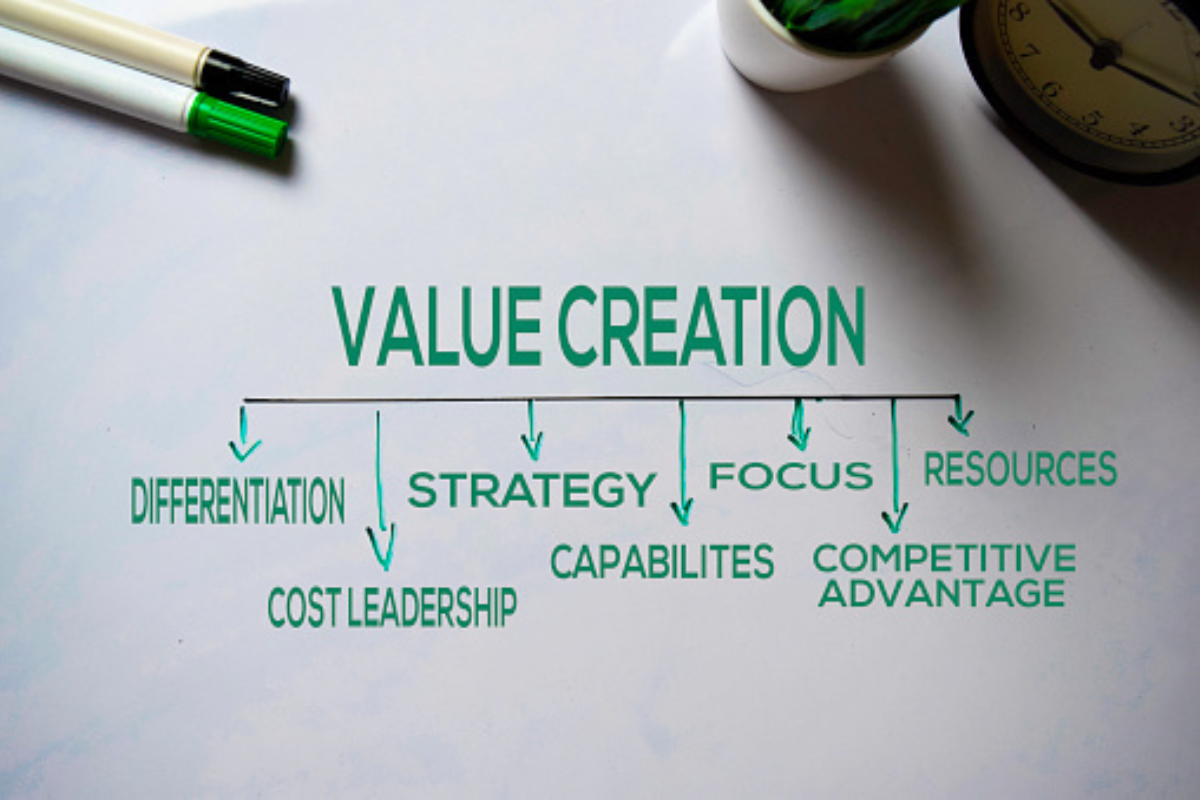
In uncertain times, it’s virtually impossible to navigate the market without fully engaging customers. Any operations that fail that economic maxim of the 21st century will fail. Management guru Brian Tracy argues that the duty of businesses is to create and keep customers: “The two most important words to keep in mind in developing a successful customer base are positioning and differentiation.”
Of course, it was possible several decades ago to create products and services without knowing the customer and later convince them to buy. Many companies during the Industrial Revolution built their success due to scarcity of commodity, limited competition, and uneducated buyers. This is not the case today.
Today’s operations must be value conscious as it relates to the market. Alvin Toffler and Heidi Toffler, authors of Revolutionary Wealth, research how tomorrow’s wealth will be created, and who will get it and the wealth method. Customer value is defined as the ‘difference between what a customer gets from a product, and what he or she has to give in order to get it.’ They argue, “Today’s wealth revolution will unlock countless opportunities and new life trajectories, not only for creative business entrepreneurs but for social, cultural and educational entrepreneurs as well.”