Tag: Small Businesses

  • Building Winning Customer Service for Small Businesses: Key Strategies After the Pandemic

    Building Winning Customer Service for Small Businesses: Key Strategies After the Pandemic

    Erin, a budding entrepreneur in his community, had always managed to stay ahead of the competition by being adaptable and quick to respond to market changes. On this day, he was headed to the airport to pick up a rental car when he encountered a long line of disgruntled customers. Some had been unexpectedly bumped from their flights, while others were frustrated by the lack of staff at the rental car counter. It was a chaotic scene, reminiscent of a day at the zoo.

    When Erin finally reached the counter and handed over his license, insurance card, and credit card, he was told that he had no reservation. Naturally, he was exasperated and showed the clerk his proof of reservation. However, the employee casually explained that any third-party reservation is automatically cancelled by the system, and that Erin should have booked directly. To make matters worse, the rental company was already double-booked and couldn’t accommodate any more customers, including direct bookings. Frustrated and feeling helpless, Erin demanded to speak with the manager, only to find out that the manager was busy cleaning out cars since his staff had failed to show up for work. Dejected, Erin walked away from the counter, feeling defeated.

    Today’s businesses must build value for customers if they hope to be successful. Yet, value is a moving target. All customers do not have the same measuring stick for sellers to apply a cookie-cut approach. Sadly, today’s customers are not happy with the quality of most businesses’ customer service.  Companies seek to reduce their inputs (i.e., outsourcing labor, using better technologies) to obtain greater profitability. Still, the process is often self-serving, with little regard for the customer and lesser value on employees. Therefore, many people might insist that some businesses simply stumble on what customer value is and how it affects their business. This article examines how small businesses can utilize great customer service to give them a competitive advantage in the marketplace.  

    Is Covid to blame for poor customer service today? The negative impacts of the pandemic have been significant for customer service. Many organizations are short-staffed. Before Covid-19, customer service was already declining. Yet, the pandemic threw customer service on a fast downward spiral. According to an NBC study, 75% of buyers noted that customer service worsened during the pandemic; 78% of them stated they had contacted a company multiple times to address a single concern. As a result of the pandemic, many employees exited their jobs in search of purpose. In fact, 76% of employees experienced burnout on their jobs at least once, according to a 2020 Gallup report. The aftermath of the pandemic continues to haunt many businesses today.
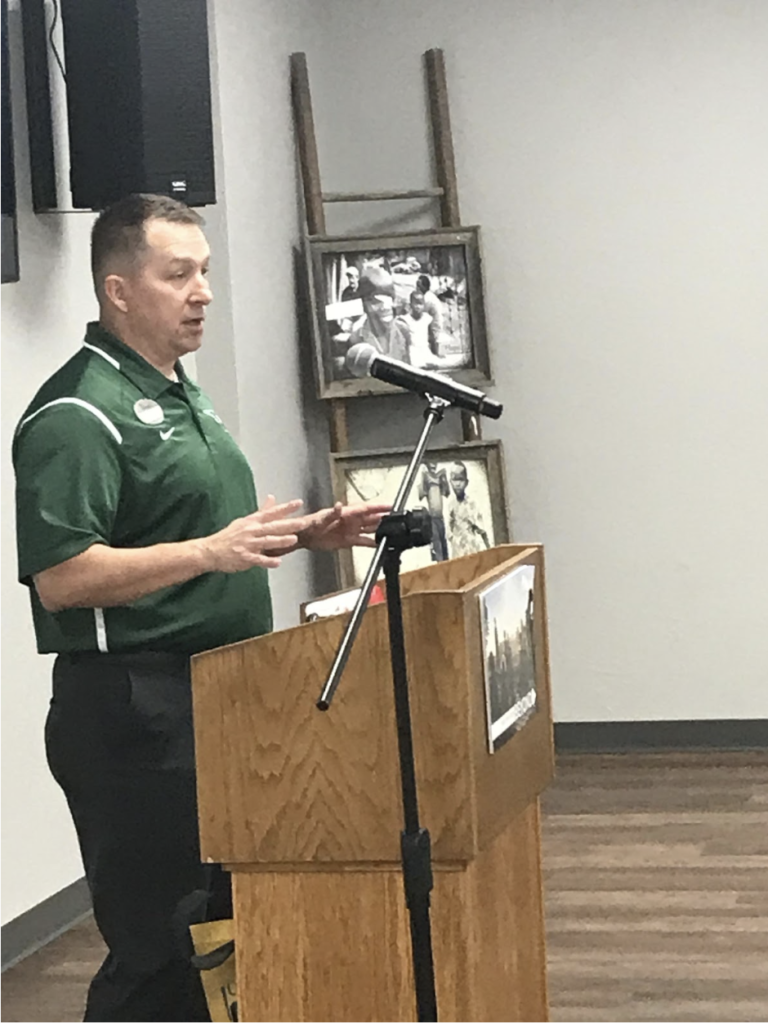
    Shawnee Business Owner Jeff Madison chats with business students at the University.

    What is good customer service? According to Salesforce.com, customer service can be defined as ‘the support you offer your customers-both before and after they buy and use your products or services – that helps them have an easy and enjoyable experience. Good customer service involves creating a great customer experience. Jalene Nemec, co-author of Great Customer Service: The Definitive Handbook for Today’s Success Business, explains, “The customer service of these companies has seen the most drastic decline. It has been carelessly devalued. Contrary to popular belief, customer service is not just about solving problems; it is about being the ‘face of the company.’” Thus, disgruntled employees and overworked managers do not speak well of a business. Yet, creating value for customers isn’t easy. Some businesses seek to take shortcuts in building relationships with customers with marketing smoke and mirrors.

    Some organizations simply believe that hiring a large sales force is enough. Jeb Blount, author of Fanatical Prospecting: The Ultimate Guide for Starting Sales Conversations and Filing the Pipeline by Leveraging Social Selling, Telephone, E-Mail, and Cold Calling, explains, “Lots of salespeople have the intelligence, talent, skills, and education to be top performers. Lots of salespeople are competitive, understand the sales process, and know how to ask for business. Yet they consistently underperform the superstars… Superstars are relentless, unstoppable prospectors. They are obsessed about keeping their pipeline full of qualified prospects.” Thus, knowing your customers intimately will serve small businesses in creating value for customers.  
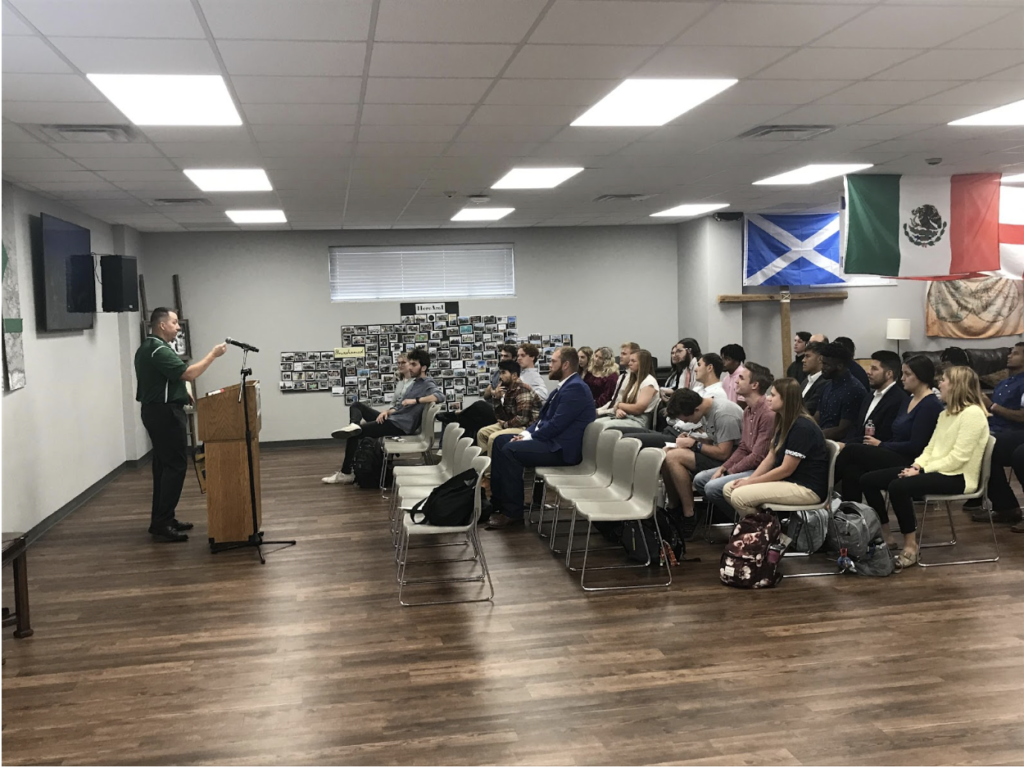
    Jeff shares how Chick-fil-A delivers great customer service.

    Shawnee’s Chick-fil-A owner, Jeff Madison, understands the merit of good customer service. Retired U.S. Army Colonel with 26 years of leading U.S. and multinational soldiers and civilians from the cavalry scout platoon to the Pentagon, Jeff recognizes the essential of deploying a combat-proven, critically reflective, innovative, and decisive strategy in ever-changing conditions. Despite all the MBA-type strategies, success starts with building value for customers. Jeff explains, “We create value for our guests by connecting with our guests beyond the transaction (taking their money at the cash registers). We offer genuine hospitality and Matthew 5:41 Second-Mile Service. We carry trays to the table for guests who need assistance.” Madison seeks to build an emotional connection with customers. Most businesses want to distinguish themselves from their competition, so creating value is a clear distinction.

    College students are able to relate to Jeff examples of great customer service at Chick-fil-A

    Below are some winning strategies for building good customer service:

    • Communicate your mission, values, and expectations for good customer service to all employees and stakeholders.
    • Benchmark other companies that have distinguished themselves with great customer service.
    • Create product and service offerings that customers want and desire.
    • Develop processes through business operations that create value for customers.
    • Provide customers with a written guarantee about the quality of your customer service.
    • Hire employees who will buy into your good customer service customer.
    • Reward and incentive employees and managers for their quality customer service.
    • Listen to customers, employees, and other stakeholders so that you can continuously make improvements to your customer service systems.

    Are you building a culture that values great customer service? Do your employees project a warm, positive attitude to potential customers? If not, today is a good time to change what has not worked, especially in the aftermath of the pandemic. This article demonstrated how small businesses could utilize great customer service to give them a competitive advantage in the marketplace. When small businesses place value creation as a high priority, providing great customer service is a lot easier and more beneficial in the long run. Let’s pray that it is not too late.

    © 2023 by D. D. Green

    About Dr. Daryl D. Green:

    Dr. Daryl D. Green is a business strategist, speaker, and noted author. He is the Vice President of Marketing at AGSM Consulting LLC. He is the author of the business book Small Business Marketing
    Dr. Green has been noted and quoted by USA Today, Ebony Magazine, and the Associated Press. He provides consulting guidance and management training for today’s small businesses. Additionally, he is an award-winning college professor, developing new innovative approaches for today’s small businesses. If you would like more information about this article or business assistance, please contact Dr. Green at drdarylgreen@gmail.com or visit www.drdarylgreen.com.

  • Getting Your Business Check-Up for 2022

    Getting Your Business Check-Up for 2022

    Are you happy with how your business did this year? What are you going to do differently? How can you hire the right people to support your vision? Unfortunately, many small business owners do not spend enough time planning for the future. It’s quite understandable.

    Owners must keep pace with the daily demands of their businesses, including payroll, taxes, product/service delivery, and managing customer expectations.  In addition to all these usual demands for the entrepreneur’s attention, COVID-19 and its variants have wreaked havoc on the traditional thinking of operating a successful business.  

    Here we are at the end of the year, a perfect time for a comprehensive evaluation of your business. Albert Einstein once said, “The true sign of intelligence is not knowledge but imagination.” Small business must think differently in the throes of a pandemic.  What about doing a business checkup?  Most people can relate to the kind of checkup they have with their doctor, during which he or she will conduct a variety of tests, including blood, vision, heart, and hearing. This article examines the significance of conducting just as effective a checkup to improve your business’s situation in 2022.

    Did the pandemic set your business back? Certainly things are not the same. According to Gartner survey of 129 executives, 22% of corporate leaders have delayed their office reopenings while 34% of these executives have made no decisions about reopenings in 2022 due to the Omicron virus.  Additionally, nonresidential construction remains 20% below the pre-pandemic level, while consumer purchases of durable goods soared to almost 30% above the pre-pandemic level noted Deloitte Insight.

    Furthermore, the Great Resignation of 2021 brought a worker shortage across almost the entire United States. Small businesses were not immune to labor shortages.  According to the JOLTS report in the fall of 2021, the number of workers quitting their jobs remained high, about 4.2 million workers or 2.8% of the workforce.  Small and medium-sized businesses accounted for 90% of these job openings.

    Today’s small businesses need to retool and innovate products and/or processes so that they can become more efficient and effective.  Staying one step ahead of the competition isn’t good enough in the kind of disruptive environment we have experienced over the past couple of years.  Eventually customers grow weary of what they perceive as a lack of adaptability in your business, and they will look to find a competitor that meets their needs.  Sadly, the shortage of workers doesn’t make your challenge any easier.

    So it’s imperative that small businesses must be willing to evaluate their current operations and make the required changes. An end-of-the-year check-up may be the turning point of your business.  What constitutes a business checkup or business evaluation? It is one that involves a comprehensive review of the critical elements in your operations, one of which is customer service. By this process, a business can identify its strengths and its opportunities for improvement that can lead it to build a competitive advantage in the market.

    In our book, Small Business Marketing, Dr. McCann and I provide a roadmap and simple checklist small businesses can use to evaluate themselves.  Businesses must have an effective means of evaluating the internal and external factors that are integral to their operations.

    Photo by Amina Filkins on Pexels.com

    With the appropriate diagnosis, a business can develop more sustainable success. Thus, the right checkup is critical. Below are some critical questions to help you conduct your own self-checkup:

    1. Do you have a clear vision for your business? What is it?
    2. Do you know why your customers buy from you and why others do not?
    3. What results are you getting from your marketing? Do you have an effective online presence on the internet?
    4. Are you collecting the right kind of data about your customers and competitors?
    5. Are you keeping pace with your industry trends? If so, what are the key trends?
    6. How are you measuring results (i.e., key performance indicators like cash flow and revenue)?
    7. What are your key competitors’ marketing strategies?
    8. Have you evaluated your strengths and weaknesses (i.e., SWOT Analysis)?

    Do you desire better outcomes for your business in 2022? If so, the better results won’t come by accident?  Your actions must be deliberate.  Thinking outside of the box in a pandemic environment is a neccessity, not merely something on a wishlist.  Management guru Peter Drucker famously said, “If you want something new, you have to stop doing something old.” 

    Thus, small businesses that want to succeed in this uncertain environment must conduct a self-evaluation or checkup. This article demonstrated the significance of an effective checkup to improve your business’s situation in 2022.  Don’t miss this opportunity. There are various organizations like the Small Business Administration and local universities that can assist in this process. Start the new year with a healthy business checkup.  I pray that it isn’t too late.

    © 2022 by D. D. Green                                                            

    About Dr. Daryl D. Green:


    Dr. Green assists small businesses across the globe.
    Dr. Daryl Green provides consulting, guidance, and management training for today’s small businesses. He is a business professor and a small business owner. Viewers can tuned into his talk show, Small Business Marketing on his YouTube Channel. If you would like more information about this article or business assistance, please contact Dr. Green at drdarylgreen@gmail.com or visit www.drdarylgreen.com.
  • Providing Good Customer Service

    Providing Good Customer Service

    If America is going to survive this economic crisis, businesses will need to change what they are doing. Behind this backdrop is a lack of understanding of a holistic approach in providing good customer service. Companies should not believe that they can provide good customer service while treating their employees badly. Bad treatment of employees will eventually show up in unpredictable ways.  
    I’ve spent some time studying customer service as a practitioner and scholar. In fact, one of my star MBA students, Jalene Nemec Davis, and I co-authored book Good Customer Service: The Definitive Handbook for Today’s Successful Businesses.  United States companies are finding it harder to compete abroad. Is there any wonder why some individuals want to give up? This article examines how to create an amazing customer service for sustainable success. What follows will help you revamp your organization and, hence, the focus of your business’ customer service.
    Defining good customer service is an essence. Before you can decide what good customer service is, you must first think about what it means to your company or your industry. Defining what good customer service is for any one company is difficult. A hospital’s idea of good customer service will differ from that of a restaurant. To help you determine how it is defined for your company, look first to your mission statement.
    Every little detail counts for good customer service.  Paul B. Thornton, a Massachusetts-based business consultant and author of Leadership-Best Advice I Ever Got, suggests, “Customer service should, if written well, state what is most important to your company and why it exists. It should focus on the organization and keep everyone going in the same direction to achieve the same goal.” After all, when it comes to customer service, no matter the industry, isn’t it getting everyone to work as a team believing in the same mission? The mission being to service their customers to the best of their ability, regardless of whom they might be (shareholders, consumers, suppliers, co-workers, etc.). Look again at your company’s mission statement; does it include providing good service to your customers?
    Build an organization that is built to serve the needs of the customers and be prepared to see better results. In fact, the business must determine what kind of customer service you and your company want to provide. Businesses should ‘WOW’ their customers. Organizations should create memorable moments for their buyers. Here’s a test. Take out a piece of paper and jot down what first comes to mind. Review your list. Are the items listed those that your customers truly value? If not, that is okay. In business operations, sometimes it is difficult to separate what the company wants versus what the customer wants because most companies only want to see the bottom line.
    In fact, review some businesses that are very successful in the realm of customer service and see where they place customer service as part of who they are as an organization. For example, Let’s review Southwest Airlines, one of the most reputable airline companies. This airline states, “Southwest Airlines is a company that is for anyone and everyone that wants to get from point A to point B by flying. Our service and philosophy are to fly safe, with high frequency, low-cost flights that can get passengers to their destinations on time and often closer to their destination. We fly in 58 cities and 30 states and are the world’s largest short-haul carrier, and we make sure that it is run efficiently and in an economical way.”  
    With enormous competition for customers, can you afford not to provide good customer service? Does your mission state measure up to the needs of your intended customers? This article demonstrated how to create an amazing customer service for sustainable success. In the end, customers are individuals who determine good customer service. Therefore, businesses should think from the mindset of the buyer, not the seller. Even if you cannot see room for improvement off-hand, what I have to say may strike up some ideas that will prove beneficial to you and your company. I pray that it is not too late.
    Please share your insight on this topic.
     
    © 2019 by Daryl D. Green
    About Dr. Daryl Green:
    Dr. Daryl D. Green is the Dickinson Chair of Business professor at OBU’s Paul Dickinson College of Business, teaching leadership, management, and marketing. In 2016, Dr. Green retired from the DOE, where he worked in the Environmental Management Program for over 27 years. He is the author of Amazon.com Hit Job Strategies for the 21st Century: How to Assist Today’s College Students during Economic Turbulence. For more information, please visit www.darylgreen.org.

  • Finding Your Ideal Customers

    Finding Your Ideal Customers

    Today’s businesses must build value for customers if they hope to be successful. Yet, value is a moving target. In our discussion, we will examine how businesses should target their ideal customers by building value for their customers. All customers do not have the same measuring stick for sellers to apply a cookie-cut approach. In fact, globalization has created all types of problems for businesses. One of the issues is how to stay ahead of the competition by exploring new markets while keeping the same customer base. Doing this action is not easy. Many businesses build their profitability on this simple equation. Companies seek to reduce their inputs (i.e., outsourcing labor, using better technologies) to obtain greater profitability. Still, the process is often self-serving with little regard to the customer and lesser value on employees. Therefore, many people might insist that some businesses simply stumble on what customer value is and how it affects their business.

    Creating value is not that simple. Some businesses seek to take shortcuts in building relationships with customers with marketing smoke and mirrors. Some organizations simply believe that hiring a large sales force is enough. Jeb Blount, author of Fanatical Prospecting: The Ultimate Guide for Starting Sales Conversations and Filing the Pipeline by Leveraging Social Selling, Telephone, E-Mail, and Cold Calling explains, “Lots of salespeople have the intelligence, talent, skills, and education to be top performers. Lots of salespeople are competitive, understand the sales process, and know how to ask for the business. Yet they consistently underperform the superstars… Superstars are relentless, unstoppable prospectors. They are obsessed about keeping their pipeline full of qualified prospects.” Thus, knowing your customers intimately will serve small businesses in creating value for customers.  

    Creating value does generate ideal customers.  In identifying ideal customers, businesses target group of marketings who are most attracted to their products and services.  Therefore, businsses tailor their marketing, advertising, and sales efforts for these type of customers. Value is defined as “the total benefit that the seller’s products and services provide to the buyer.” Stephen Castleberry and John Tanner, Jr., authors of Selling: Building Partnerships, argued the critical need for value creation: “Selling is about creating value… The manner in which a product is handled suggests value. Careful handling communicates value, whereas careless handling implies that the product has little value.” Sadly, some business owners do not comprehend how value creation works.

    John Jantsch, the author of Duct Tape Marketing, also maintains that building value for customers is no accident: “You can choose to attract clients that value what you offer, view working with you as a partnership, and want you to succeed…” For example, Shawnee’s Chick-fil-A Owner Jeff Madison understands the merit of this concept. Retired U.S. Army Colonel with 26 years of leading U.S. and multinational soldiers and civilians from cavalry scout platoon to the Pentagon, Jeff recognizes the essential of deploying a combat-proven, critically reflective, innovative and decisive strategy in ever-changing conditions. Despite all the MBA type strategies, success starts with building value for customers. Jeff explains, “We create value for our guests by connecting with our guests beyond the transaction (taking their money at the cash registers). We offer genuine hospitality and Matthew 5:41 Second-Mile Service. We carry trays to the table for guests who need assistance.” Madison seeks to build an emotional connection with customers.

    With the economic crisis, local businesses need to consider changing what has not worked. In today’s discussion, I demonstrated how businesses can benefit themselves by understanding how to create more value for their customers. Being strategically conscious of these business relationships is stress-free. This process takes everyone’s total involvement. When small businesses place value creation as a high priority, prospecting for winning customers is a lot easier and more beneficial in the long run.
    Please share your comments on this topic.

    © 2019 by D. D. Green

  • Growing Your Small Business With Fiverr.com: Tapping into the Gig Economy

    Growing Your Small Business With Fiverr.com: Tapping into the Gig Economy

    Bringing in a New Year creates a sense of renewal and opportunities. Yet, many small businesses have a ‘wait and see’ attitude riddled by uncertainty and unpredictability of the future. Most organizations have limited resources and must be cautious about their business growth. If you own a small business, what could you do with an extra stack of cash in your pocket by reducing your expenses while improving the quality of your goods and services? Over the last few years, I have been researching the freelance market in order to assist small businesses with the resource deficiencies that most organizations face.
    With uncertainty in the market and competition at a peak, most organizations should rethink their business strategies. December’s outlook was not entirely positive. The fourth-quarter marked the worst start for stocks in 10 years. Many experts are skeptical about the economy for several reasons including: failure of popular tech stocks and the fallout from the trade fight between the U.S. and China. There is a weakening global economy that is wreaking havoc to U.S. companies. According to the Commerce Department in December, U.S. factory outputs were showing signs of slowing down. All of these realities demonstrate that businesses are not safe by maintaining the status quo. Things are changing… like it or not. One of the glaring trends was a search globally for talent. While Fortune 500 Companies have the financial strength for this international initiative, most small businesses could not do this… until now.  In this discussion, we examine how today’s small businesses can leverage the power of the gig economy to secure great freelance talent to maximize their performance. (more…)